
Raw Paws Blog
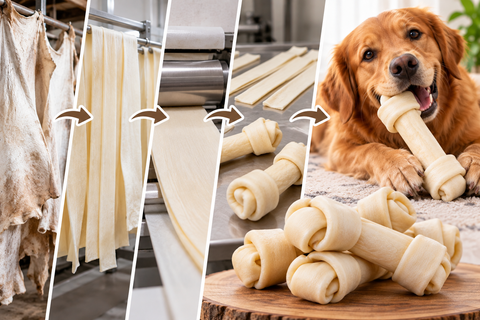
Follow the process of making compressed rawhide bones from cattle hide through cleaning, hair removal, compression, forming, drying, inspection, and final hand-packing.
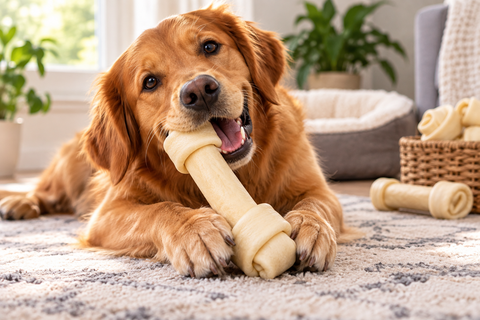
Learn how compressed rawhide bones work, which dogs may be a good fit, how compressed construction differs from traditional rawhide, and why proper sizing and supervision are essential.
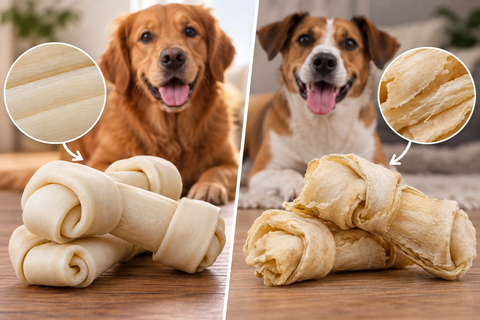
Learn how compressed rawhide differs from regular rawhide in construction, density, chewing experience, piece separation, processing, and how dogs work through each type of chew.
Discover how compressed rawhide differs from traditional rawhide, from dense pressed construction and sourcing to processing, chewing behavior, supervision, and how dogs work through the chew.

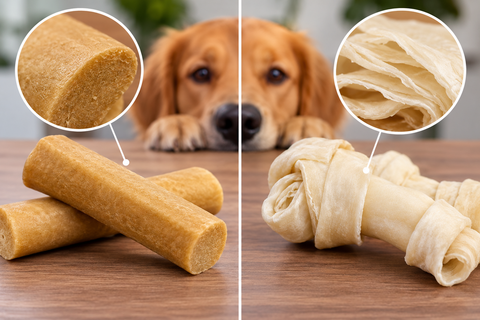
Learn the differences between bully sticks and collagen sticks, from ingredients and texture to chew duration and sizing, and discover which natural beef chew best fits your dog's chewing style.

Discover why one dog can make a bully stick disappear while another enjoys it for hours, and how chewing style, jaw strength, thickness, length, technique, and natural variation affect chew time.

Learn when a bully stick has become too small for continued chewing, what behaviors to watch for, and how supervision, proper sizing, and bully-stick holders can help manage the final piece.

Learn the differences between bully sticks and rawhide, from beef pizzle vs. animal hide to digestibility, construction, texture, chew duration, and compressed rawhide.

Learn how bully sticks and beef cheek rolls differ in ingredients, shape, texture, sizing, and chewing experience so you can choose—or rotate—the right natural chew for your dog.

Learn why bully sticks naturally have some odor, why smell can vary from chew to chew, and how moisture, chewing, processing, thickness, and storage affect what you notice.

Learn how often bully sticks can fit into your dog's routine and why portion size, calories, chew dimensions, dog size, and other daily treats matter more than a one-size-fits-all schedule.
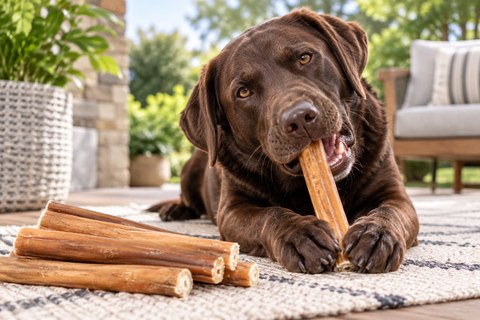
Discover why thicker bully sticks can provide power chewers with a more substantial chewing challenge and how to choose the right combination of thickness, length, and size for your dog.