

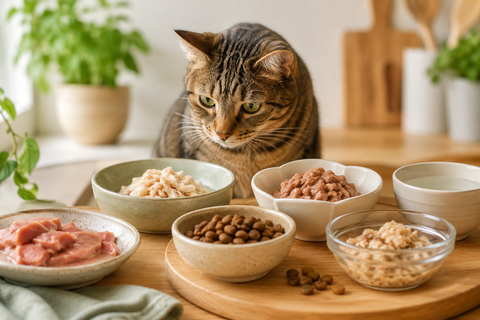
Yesterday, your cat couldn't get to dinner fast enough.
Today?
One sniff.
A long stare at the bowl.
Then they walk away as if you've served something completely unacceptable.
Cat owners know this routine well.
Cats have a reputation for being picky, but changing enthusiasm around food doesn't always mean they suddenly dislike what's being served. Cats experience meals through aroma, texture, temperature, routine, and even the way food is presented.
When those experiences become extremely predictable, some cats may simply become less interested.
The solution doesn't always require replacing their entire diet.
Sometimes you just need to make the familiar feel interesting again.
First, Is It Boredom—or Something Else?
Before calling your cat a picky eater, pay attention to the bigger picture.
A cat that occasionally seems less enthusiastic about a familiar meal is very different from a cat that suddenly stops eating.
Changes in appetite can have many causes unrelated to food boredom.
If your cat refuses food, eats substantially less than usual, loses weight, vomits repeatedly, seems uncomfortable, or shows other unusual behavior, contact your veterinarian rather than assuming they're simply tired of the menu.
Cats shouldn't go prolonged periods without eating.
Once health concerns have been ruled out, you can start looking at the feeding experience itself.
Cats Experience Food With Their Noses First
We tend to think about flavor.
Cats often begin with aroma.
Before taking the first bite, they're gathering information about what's in front of them through scent.
That's why a meal can become more interesting without changing the nutritional foundation underneath it.
A small amount of an aromatic animal-based topper can make a familiar bowl smell completely different.
Freeze-dried Beef Liver, Chicken Hearts, Chicken Breast, or Whole Minnows, for example, can be crumbled over food in small amounts to introduce another scent while leaving the primary meal largely unchanged.
Sometimes the nose just needs something new to investigate.
Change the Protein Around the Meal
If your cat's complete food is working well, you don't necessarily need to replace it just to create variety.
Change the rewards surrounding it.
For example:
Monday: Chicken Breast treat
Wednesday: Chicken Heart
Friday: Beef Liver
Weekend: Whole Minnow
Now your cat experiences different animal proteins and tissues throughout the week while the complete and balanced primary diet remains familiar.
At Raw Paws Pet Food, single-ingredient freeze-dried treats make this especially easy because each product clearly identifies the animal ingredient being introduced.
Don't Forget About Texture
Imagine eating exactly the same texture at every meal.
Cats notice texture too.
Some prefer soft foods.
Others love crunch.
Some happily eat both.
Introducing small amounts of different appropriate textures can create another layer of interest.
A freeze-dried chicken breast provides a light crunch.
Chicken hearts offer a different structure.
Beef liver may crumble differently.
Whole minnows create the distinctive texture of an entire small fish.
The nutritional ingredient matters, but so does the physical experience of eating it.
Change How the Food Arrives
Here's an easy trick:
Don't change the food.
Change the delivery.
Cats naturally investigate and search for resources rather than expecting every interesting thing in life to appear in one stationary bowl.
You can use appropriate portions of treats or food with:
- Puzzle feeders
- Food-search games
- Treat balls
- Different feeding locations
- Supervised hide-and-seek activities
A familiar food suddenly becomes something your cat has to discover.
The calories may be the same.
The experience isn't.
Let Your Cat "Hunt" for Part of the Meal
Food and enrichment can work beautifully together.
Try hiding a few small treats around a safe room.
Place one on a lower level of the cat tree.
Another near a familiar scratching area.
A third somewhere your cat has to sniff and investigate.
Now your cat isn't simply receiving food.
They're searching for it.
This taps into natural feline behaviors while making a small amount of food considerably more interesting.
Interactive Play Can Make the Reward More Meaningful
Sometimes the best way to make food more interesting is to stop making food the entire activity.
Start with play.
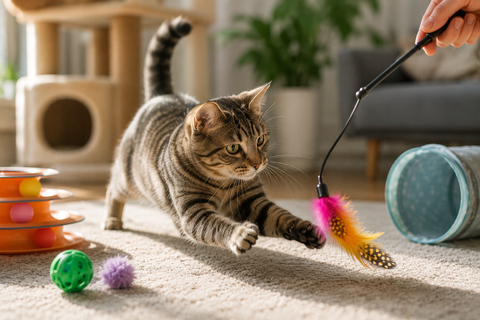
Use a wand or other interactive toy to encourage your cat to:
Watch.
Stalk.
Chase.
Pounce.
Catch.
Then finish the session with a small animal-based reward.
A piece of freeze-dried chicken heart or a portion of a whole minnow can become the conclusion to the activity rather than a random treat handed out with no context.
Now food is part of an experience.
Fish Can Introduce a Completely Different Aroma
If your cat usually receives poultry or beef, fish can provide a dramatic sensory change.
Whole minnows smell different.
Look different.
Crunch differently.
They also introduce another animal protein without requiring a complicated multi-ingredient recipe.
For cats interested in fish, even a small amount can create plenty of excitement.
Can Cats Eat Minnows? A Guide to Whole-Fish Treats for Cats – Raw Paws Pet Food
Try Changing Temperature
Temperature influences aroma.
Food served extremely cold may smell less noticeable than food that's closer to an appropriate serving temperature.
For refrigerated foods, allowing them to lose some of that refrigerator chill before serving may make the natural aroma more noticeable.
Never leave perishable food sitting out for extended periods, and follow the handling directions for the specific food you're feeding.
The goal isn't heating everything.
It's recognizing that cats experience the same food differently depending on how it's presented.
Keep the Feeding Area Worth Visiting
Sometimes the issue isn't what's in the bowl.
It's what's around it.
Cats can be sensitive to their environment.
Consider whether the feeding area is:
- Quiet
- Easy to access
- Away from disruptive household activity
- Comfortable for the cat
- Separate from litter areas
The bowl itself can matter too.
Some cats prefer wider, shallow dishes that provide more room around their face and whiskers.
Before changing the diet, look at the entire feeding setup.
Don't Accidentally Train Your Cat to Hold Out
There's a funny pattern that can develop with selective cats.
Cat hesitates.
Owner adds something better.
Cat learns hesitation produces upgrades.
Next meal, cat waits.
Owner upgrades again.
Suddenly, you're operating a feline restaurant with an increasingly demanding customer.
Variety can be useful, but it doesn't need to become constant negotiation.
Use toppers and treats intentionally rather than automatically replacing every meal your cat doesn't immediately rush toward.
New Doesn't Always Mean Better
Cats often appreciate familiarity.
That's why the goal isn't making every meal completely different.
Too much change can create the opposite problem, particularly for cats that prefer predictable routines.
A better approach is:
Stable nutritional foundation + small amounts of intentional variety.
Keep the complete diet consistent when it's working.
Then rotate treats.
Change textures occasionally.
Use enrichment.
Introduce different animal proteins thoughtfully.
That gives your cat novelty without turning every meal into an experiment.
Make the Experience Bigger Without Making the Portion Bigger
This may be the most useful idea of all.
Making food more interesting doesn't require feeding more food.
One small freeze-dried treat handed directly to your cat lasts seconds.
Break that same treat into several pieces and hide them around a room?
Now it's an activity.
Crumble a small amount over dinner?
Now it's an aroma change.
Use pieces during interactive play?
Now it's a reward.
Same ingredient.
Different experiences.
That's where enrichment and nutrition work together.
Keep the Bowl Familiar and the Experience Fresh
Cats don't necessarily need a constantly changing menu to stay interested in food.
They need an environment that gives them opportunities to smell, investigate, search, play, and experience appropriate variety.
At Raw Paws, options like Freeze-Dried Chicken Breast, Chicken Hearts, Beef Liver, and Whole Minnows make it easy to introduce different animal ingredients without replacing your cat's complete diet every few days.
Rotate a protein.
Change the texture.
Hide a treat.
Use a puzzle.
Finish a hunting-style play session with a reward.
Small changes can make familiar routines feel completely different.
Because sometimes your cat isn't asking for an entirely new dinner.
They're asking for dinner to stop being quite so predictable.
Comments (0)
There are no comments for this article. Be the first one to leave a message!