

Cats and change don't always have the easiest relationship.
Move their favorite chair three feet to the left and they may look personally offended.
Food can be even more complicated.
Many cats become comfortable with a particular protein, texture, aroma, or feeding routine—and suddenly replacing everything in the bowl can be a much bigger adjustment than owners expect.
Fortunately, adding nutritional variety doesn't require reinventing your cat's entire diet.
Variety can happen around the edges.
A different animal protein here.
A new whole-food treat there.
A meal topper occasionally.
A new texture during enrichment.
Small changes can create a much broader feeding experience while allowing your cat's complete and balanced primary diet to remain familiar.
For selective cats especially, that can be the best of both worlds.
Variety Doesn't Have to Mean Switching Foods
When people hear "dietary variety," they often imagine rotating from one complete food to another.
That's certainly one option.
It isn't the only one.
Think of your cat's primary diet as the foundation of a house.
You don't need to rebuild the foundation every time you want something different.
You can introduce variety through smaller additions such as:
- Different animal-based treats
- Occasional meal toppers
- New protein sources
- Different treat textures
- Food-based enrichment
The nutritional foundation stays consistent while the experiences surrounding it change.
Start With Protein Variety
One of the simplest ways to expand your cat's menu is by introducing different animal proteins.
If chicken is already familiar, you might occasionally offer:
- Beef
- Fish
- Another poultry protein
- Different animal tissues
Each animal source naturally has its own aroma, texture, and nutritional characteristics. Protein variety doesn't mean one source is superior to another.
The value comes from exposing your cat to different whole-food ingredients rather than making every reward taste exactly the same.
Change the Animal Tissue, Not Just the Animal
Here's where variety becomes much more interesting.
Imagine offering four treats:
- Chicken Breast
- Chicken Heart
- Beef Liver
- Whole Minnow
You're not simply rotating between chicken, beef, and fish.
You're also rotating between different animal tissues.
Muscle meat.
Heart.
Liver.
Whole fish.
Each creates its own nutritional and sensory experience.
This is one of the easiest ways to introduce meaningful variety without making complicated changes to your cat's primary food.
Treat Rotation Is an Easy Place to Experiment
Treats provide a low-pressure opportunity to discover what your cat enjoys.
At Raw Paws Pet Food, single-ingredient freeze-dried options such as Chicken Breast, Chicken Hearts, Beef Liver, and Whole Minnows make rotation straightforward because you always know exactly what you're offering.
Try one protein for a while.
Introduce another.
Notice which aromas and textures capture your cat's attention.
There's no need for a rigid schedule.
The goal is simply to prevent the treat cabinet from becoming nutritionally and experientially repetitive.
Single-Ingredient Cat Treats: Why Simpler Can Be Better – Raw Paws Pet Food
Use Toppers to Change the Experience, Not the Entire Meal
Sometimes a familiar meal only needs a small change to feel different.
Crumbling a little freeze-dried chicken heart or beef liver over the top introduces a new aroma and texture without replacing the food underneath.
This can be especially useful for cats that prefer predictable meals but still enjoy interesting smells and flavors.
The key word is little.
Toppers should complement a complete and balanced diet rather than gradually displacing meaningful portions of it.
You're adding interest—not rebuilding the meal.
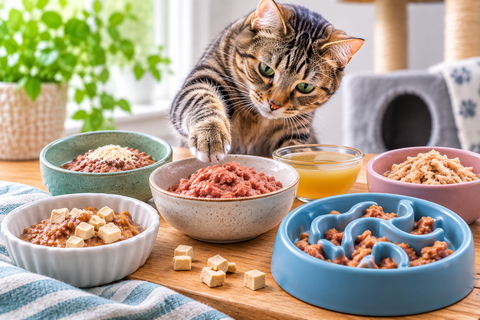
Texture Variety Counts Too
Variety isn't only about ingredients.
Cats experience food physically.
Think about the difference between:
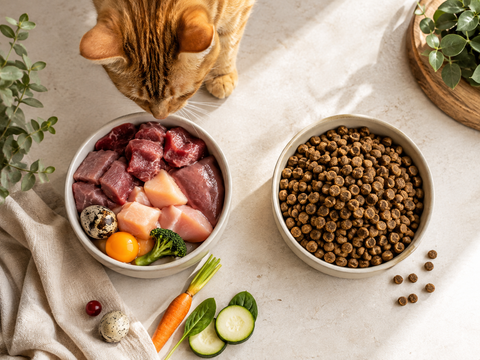
A moist raw meal.
A crisp piece of freeze-dried chicken breast.
A crunchy whole minnow.
A crumbly piece of freeze-dried liver.
Each requires a slightly different interaction.
For cats accustomed to one consistent texture, occasional exposure to other appropriate textures can create a richer feeding experience.
And because cats can be extremely texture-sensitive, introducing those differences gradually can help them become more comfortable with variety over time.
Turn Treats Into Something Your Cat Has to Find
You can create variety without changing the food at all.
Change how it's delivered.
Instead of handing your cat a freeze-dried treat, try:
- Placing it inside a puzzle feeder
- Hiding pieces around a room
- Putting a reward on different levels of a cat tree
- Offering it after interactive play
- Creating a supervised food-search game
Now the ingredient may be familiar, but the experience is new.
This is an important distinction because dietary variety and enrichment can work together.
Sometimes your cat doesn't need a different treat.
They need a different way to experience it.
Let Fish Introduce Something Completely Different
Fish can create a particularly noticeable change because its aroma and texture differ so much from common poultry and beef treats.
Freeze-Dried Whole Minnows provide an entire small fish rather than one isolated cut of muscle meat.
That means the treat can contain muscle, skin, soft bone, and naturally occurring marine nutrients within one recognizable ingredient.
For a cat accustomed primarily to land-based proteins, whole fish introduces a genuinely different experience without requiring a complete diet change.
Can Cats Eat Minnows? A Guide to Whole-Fish Treats for Cats – Raw Paws Pet Food
Don't Introduce Everything at Once
Variety works best when you can tell how your cat responds to each new addition.
If you introduce chicken hearts, beef liver, minnows, a new complete food, and three new toppers simultaneously, you won't learn much about individual preferences.
Instead, make one small change.
Let your cat experience it.
Observe.
Then introduce something else later.
This is especially helpful for selective cats because new foods remain manageable rather than overwhelming.
Watch Your Cat's Reaction
Cats give plenty of feedback.
You just have to notice it.
When introducing something new, watch whether your cat:
- Approaches immediately
- Sniffs for an extended period
- Takes a cautious first bite
- Eats enthusiastically
- Returns looking for more
- Walks away
None of those responses needs to become a dramatic judgment after one attempt.
Some cats need repeated exposure before becoming comfortable with an unfamiliar food.
Curiosity can take time.
Variety Shouldn't Disrupt Complete Nutrition
This is the guardrail that keeps everything simple.
Your cat's complete and balanced primary diet should remain the nutritional foundation unless you're intentionally transitioning to another complete diet.
Treats, toppers, and enrichment foods are additions.
Even nutritious whole foods like beef liver or chicken hearts shouldn't gradually become such a large part of the routine that they displace the balanced meal underneath.
Variety works best when it complements nutritional consistency rather than competing with it.
Small Changes Can Create a Much Bigger Menu
Adding variety to your cat's diet doesn't require opening a different can, bag, or package at every meal.
It can be surprisingly simple.
Keep the complete diet consistent.
Rotate a few animal-based treats.
Introduce different tissues.
Offer fish occasionally.
Experiment with textures.
Change how treats are presented.
Let enrichment create novelty when the food itself stays familiar.
At Raw Paws, our single-ingredient freeze-dried treats make this kind of gradual variety easy because each product introduces one clearly recognizable animal ingredient at a time.
Your cat doesn't need fifty different foods tomorrow.
They simply need opportunities to discover that the menu can be a little bigger than they thought.
And with cats, expanding that menu one small bite at a time is often the smartest way to do it.
Comments (0)
There are no comments for this article. Be the first one to leave a message!