

Walk into any pet store and you'll find hundreds of options claiming to be complete, balanced, premium, natural, or veterinarian recommended.
With so many choices, it's easy to assume all pet foods are built around the same idea.
They're not.
Behind every bag, can, frozen recipe, or freeze-dried meal is a philosophy about what dogs and cats are designed to eat.
One philosophy focuses on creating food that is convenient to manufacture, store, and serve.
The other begins with a much simpler question:
If we started with the biology of the animal instead of the production line, what would we feed them?
That's the foundation of a species-appropriate diet.
It's not a trend or a marketing phrase. It's an approach that looks at how dogs and cats are naturally built to eat and asks how modern feeding can better reflect that biology.
Your Pet's Body Was Designed Long Before Commercial Pet Food
Dogs have shared our homes for thousands of years.
Cats have lived alongside humans for nearly as long.
But commercial pet food, as we know it today, is a relatively recent invention.
The digestive systems of dogs and cats didn't evolve around pellets, biscuits, or highly processed meals. They developed over countless generations consuming animal-based foods that provided protein, fat, moisture, organs, connective tissue, and edible bone.
While today's pets enjoy safer, longer, and more comfortable lives than their wild ancestors, their basic digestive anatomy remains remarkably similar.
That's why many pet owners begin exploring species-appropriate nutrition—not because they want to recreate the wild, but because they want to better understand the animal standing in front of them.
A Species-Appropriate Diet Starts With Biology
Rather than asking, "What ingredients are easiest to manufacture?" a species-appropriate diet asks:
"What types of foods is this animal naturally equipped to digest and utilize?"
Dogs are classified as facultative carnivores, meaning they thrive on animal-based nutrition while also being able to digest a wider range of foods than their wolf ancestors.
Cats take specialization even further.
As obligate carnivores, they rely heavily on nutrients that naturally occur in animal tissues and require a diet rich in high-quality animal protein.
Although dogs and cats have different nutritional needs, both are fundamentally designed to consume diets centered on animal ingredients.
That biological starting point shapes every other decision.
Looking at the Whole Animal Instead of Individual Nutrients
A species-appropriate diet isn't simply about feeding more meat.
It's about feeding a broader representation of the animal.
That may include:
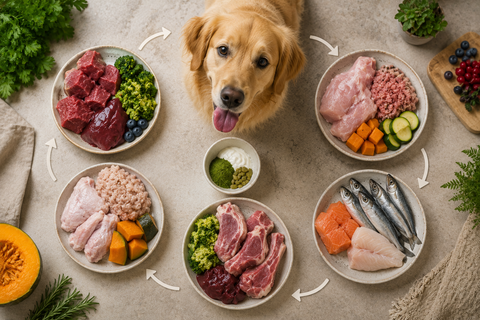
- Muscle meat
- Organs
- Edible bone
- Naturally occurring fats
- Connective tissue
Each part contributes something different to the overall nutritional picture.
Rather than relying on one ingredient to provide everything, the goal is to create balance through a variety of whole-food components.
Whole Foods Stay at the Center
One of the defining characteristics of species-appropriate feeding is the emphasis on recognizable ingredients.
Instead of asking how much a food can be transformed, the focus shifts toward preserving its natural qualities.
A chicken heart still looks like a chicken heart.
A beef liver still resembles beef liver.
A whole fish remains exactly that—a whole fish.
That transparency gives pet owners a clearer understanding of what they're feeding while providing dogs and cats with foods that remain close to their original form.
Moisture Is Part of the Nutrition Story
One characteristic often shared by fresh, raw, and minimally processed animal foods is their naturally high moisture content.
Moisture isn't simply something that makes food softer.
It's part of how animal tissues naturally exist.
Traditional dry foods remove much of that moisture to improve shelf stability, while frozen raw foods retain it as part of the original ingredient.
Species-appropriate feeding recognizes moisture as one more element of a food's natural composition rather than something separate from nutrition itself.
Variety Becomes Part of the Plan
In nature, animals don't consume one identical meal every day.
Different prey.
Different cuts.
Different organs.
Different nutritional profiles.
Many pet owners adopt a similar philosophy by rotating proteins over time rather than relying exclusively on one source.
For example, rotating between:
- Beef
- Chicken
- Turkey
- Pork
- Salmon
provides a wider range of naturally occurring nutrients while keeping meals interesting.
Species-Appropriate Doesn't Mean Complicated
Sometimes the phrase sounds intimidating.
In reality, the concept is refreshingly straightforward.
Feed foods built around real animal ingredients.
Choose recipes made from recognizable whole foods.
Introduce variety thoughtfully.
Select treats that complement—not complicate—the overall diet.
It isn't about achieving perfection in every bowl.
It's about making feeding decisions that align more closely with your pet's natural nutritional needs.
Where Freeze-Dried Foods Fit In
Species-appropriate feeding isn't limited to frozen raw meals.
Freeze-dried treats can also play an important role.
Single-ingredient options like:
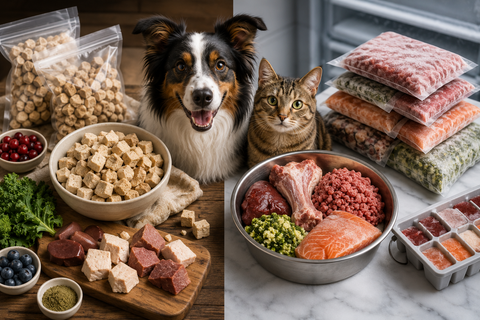
- Freeze-Dried Beef Liver
- Freeze-Dried Chicken Breast
- Freeze-Dried Chicken Hearts
- Freeze-Dried Whole Minnows
offer convenient ways to reward, train, or enrich your dog's or cat's diet using recognizable animal-based ingredients.
Because these treats begin with whole foods rather than complex recipes, they naturally complement a species-appropriate feeding philosophy.
The Ultimate Guide to Freeze-Dried Treats for Dogs & Cats – Raw Paws Pet Food
Putting the Philosophy Into Practice
At Raw Paws Pet Food, species-appropriate nutrition begins with the ingredients themselves.
Our frozen raw recipes are crafted with responsibly sourced meat, organs, and bone to provide complete and balanced nutrition for dogs and cats using whole-food ingredients. We also offer single-ingredient freeze-dried treats, raw meaty bones, and other minimally processed products that make it easier to build variety into your pet's routine.
Whether you're transitioning to raw feeding or simply adding more whole-food options to your pet's diet, every small step can help create a feeding routine centered on foods that better reflect how dogs and cats are naturally designed to eat.
Feeding the Animal, Not Just the Label
Marketing terms come and go.
Feeding philosophies evolve.
New products appear every year.
But one thing hasn't changed:
Dogs and cats are still the same species they were before commercial pet food existed.
A species-appropriate diet simply starts there.
It looks at the animal first, the ingredient second, and the manufacturing process last.
For many pet owners, that shift in perspective changes everything.
Instead of asking, "What's the newest pet food?"
They begin asking a much more meaningful question:
"What kind of food makes the most sense for the animal I'm feeding?"
And sometimes, the simplest questions lead to the smartest decisions.
Comments (0)
There are no comments for this article. Be the first one to leave a message!