

Ask ten raw feeders why they chose a raw diet, and you'll probably hear ten slightly different answers.
Some wanted to feed less processed food.
Some were searching for more recognizable ingredients.
Others wanted to provide meals that more closely reflect what dogs and cats are naturally designed to eat.
But once someone decides to embrace a raw lifestyle, another question almost always follows:
Should I feed frozen raw or freeze-dried raw?
It's a common comparison, but it's also the wrong way to think about it.
These two options aren't competing philosophies.
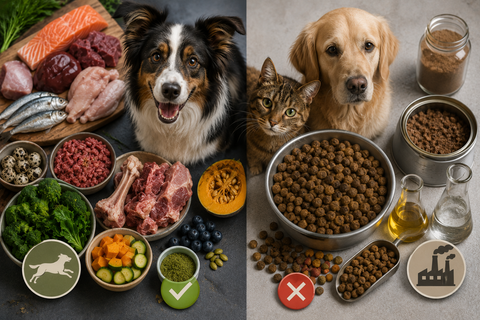
They're two different ways of bringing whole-food nutrition into your pet's life.
The better question isn't "Which one is better?"
It's "Which one fits this moment?"
Two Paths, One Philosophy
Frozen raw and freeze-dried raw begin with the same goal:
Preserve real food.
Neither starts with the idea of creating something that merely tastes like meat.
Instead, both begin with recognizable animal ingredients and work to maintain as much of their natural character as possible.
Where they differ is in how they're preserved and when they're most useful.
Once you understand that distinction, choosing between them becomes much easier.
Frozen Raw: The Foundation of Everyday Feeding
For many raw feeders, frozen raw serves as the everyday meal.
Because it remains frozen until thawed, it closely maintains the ingredient's natural moisture and texture.
Meals often include a thoughtful balance of:
- Muscle meat
- Organ meat
- Bone
- Naturally occurring fats
Frozen raw offers an experience that's remarkably close to fresh food while providing complete and balanced nutrition when fed according to the product's directions.
At Raw Paws Pet Food, our frozen raw recipes are available in multiple proteins, including:
- Beef
- Chicken
- Turkey
- Pork
- Salmon
- Beef & Mackerel
That variety makes it easy to rotate proteins while keeping mealtime interesting.
Freeze-Dried Raw: Convenience Without Leaving the Philosophy Behind
Life isn't always predictable.
Road trips happen.
Weekend adventures happen.
Busy workdays happen.
That's where freeze-dried raw shines.
Instead of requiring freezer storage, freeze-dried products are lightweight, shelf-stable, and easy to keep on hand.
They're ideal when convenience matters but you still want to offer recognizable whole-food ingredients.
For many pet owners, freeze-dried products become the bridge between busy schedules and consistent nutrition.
It's Not Either-Or
One of the biggest surprises for new raw feeders is discovering they don't have to choose one forever.
Many households use both.
Frozen raw may be served at breakfast and dinner.
Freeze-dried treats might come out during:
- Training sessions
- Walks
- Hiking trips
- Veterinary visits
- Puzzle toys
- Travel
Rather than replacing frozen raw, freeze-dried products often complement it.
They expand the ways you can stay consistent with your feeding philosophy, even when life gets hectic.
Different Jobs Around the House
Think of frozen raw and freeze-dried products as members of the same team with different responsibilities.
Frozen Raw Excels At:
- Daily meals
- Protein rotation
- Complete nutrition
- Maintaining natural moisture
Freeze-Dried Products Excel At:
- Training rewards
- Meal toppers
- Travel
- Enrichment activities
- Quick snacks
- Easy storage
When viewed this way, the comparison becomes much less about competition and much more about versatility.
Bringing Variety Beyond Mealtime
A raw lifestyle doesn't stop when the food bowl is empty.
Training, enrichment, and positive reinforcement all create opportunities to continue feeding whole-food ingredients.
Raw Paws offers single-ingredient freeze-dried favorites like:
Because these treats begin with real animal ingredients, they naturally complement frozen raw feeding without introducing overly complex recipes.
The Best Freeze-Dried Treats for Training Dogs
Matching the Food to the Moment
Imagine two different days.
On Saturday morning, you're home.
Breakfast comes from the freezer.
You thaw a frozen raw recipe and prepare your pet's meal.
On Wednesday afternoon, you're at the park practicing recall.
Pulling out a frozen meal isn't practical.
A bag of freeze-dried chicken breast or beef liver, however, fits perfectly in your pocket.
The feeding philosophy hasn't changed.
Only the format has.
Sometimes choosing the best food simply means choosing the one that works best for the situation.
Building a Flexible Raw Lifestyle
Many people think feeding raw requires an all-or-nothing commitment.
In reality, flexibility is one of its greatest strengths.
Some families feed frozen raw every day.
Others combine frozen meals with freeze-dried toppers.
Some primarily use freeze-dried treats for training while keeping frozen raw as the nutritional foundation.
There isn't one "correct" routine.
The best approach is the one your family can maintain consistently.
Why Raw Paws Offers Both
At Raw Paws Pet Food, we know every household looks a little different.
That's why we offer complete frozen raw recipes for everyday feeding alongside a growing selection of single-ingredient freeze-dried treats and chews.
Whether you're filling your pet's bowl with frozen raw, rewarding good behavior with freeze-dried beef liver, sprinkling freeze-dried chicken hearts over dinner, or packing whole minnows for a weekend camping trip, every product begins with the same commitment to real, recognizable ingredients.
Our goal isn't to make you choose between frozen and freeze-dried.
It's to give you the flexibility to feed whole foods wherever life takes you.
The Best Raw Diet Is One You Can Sustain
The debate between frozen raw and freeze-dried raw often assumes there's a winner.
But most experienced raw feeders eventually discover something different.
Each has a purpose.
Frozen raw creates an outstanding foundation for everyday nutrition.
Freeze-dried products make that same philosophy easier to maintain outside the kitchen.
Together, they offer something even more valuable than convenience or variety.
They make it easier to stay consistent.
And consistency is one of the most important ingredients in any successful feeding routine.

Comments (0)
There are no comments for this article. Be the first one to leave a message!