

One of the biggest misconceptions about feeding a raw diet is that dogs should eat the exact same protein every day.
Another is that changing proteins will automatically cause digestive upset.
The truth lies somewhere in the middle.
Protein rotation is one of the most rewarding parts of feeding a raw diet, but like any dietary change, how you introduce variety matters just as much as what you're feeding.
Think of your dog's digestive system like a well-trained team. It performs best when changes are introduced thoughtfully rather than all at once. A gradual approach gives your dog's digestive tract time to adapt while allowing you to build a more diverse and interesting diet over time.
So, how do you enjoy the benefits of protein rotation without turning mealtime into a stomach ache?
Let's break it down.
Your Dog's Digestive System Likes Routine—But It Can Learn Flexibility
Every meal your dog eats supports a complex community of beneficial bacteria living in the digestive tract.
These microbes help break down nutrients, support normal digestion, and play an important role in overall health.
When your dog has eaten the same protein for months—or even years—that digestive community becomes very familiar with that particular food.
Introducing a completely different protein overnight asks the digestive system to adapt immediately, which may temporarily result in softer stools or mild digestive changes.
That doesn't necessarily mean the new protein is a poor choice.
More often, it simply means your dog's digestive system needs a little time to adjust.
Begin With One New Protein at a Time
If you're introducing variety, resist the urge to buy several different recipes and rotate them all at once.
Instead, choose one new protein.
Feed it consistently for several meals while paying attention to how your dog responds.
This approach allows you to answer important questions:
- Does your dog enjoy the new recipe?
- Is stool quality remaining consistent?
- Is your dog's appetite normal?
- Is energy level unchanged?
Once everything looks good, adding another protein becomes much easier.
Small steps usually lead to the smoothest transition.
Blend Before You Switch
One of the easiest ways to rotate proteins is by mixing the old recipe with the new one.
For example:
Days 1–3: About 75% current protein and 25% new protein
Days 4–6: Roughly half of each
Days 7–9: About 25% current protein and 75% new protein
Day 10 and beyond: Feed the new protein on its own if your dog is doing well.
Some dogs transition more quickly, while others benefit from moving through each stage more slowly.
There's no prize for finishing first.
The goal is a comfortable transition.
Don't Judge a New Protein After One Meal
It's easy to become concerned if stool looks slightly different after introducing something new.
Minor, temporary changes can happen while the digestive system adapts.
Instead of making immediate changes after one meal, look for overall trends across several days.
If your dog is acting normally, eating enthusiastically, and maintaining good energy, a brief adjustment period is often just that—an adjustment.
If digestive issues are severe, persistent, or accompanied by vomiting, lethargy, or other concerning symptoms, discontinue the new food and consult your veterinarian.
Protein Rotation Isn't Just About Beef and Chicken
Many pet owners think rotation simply means switching between two meats.
In reality, variety can include a much broader selection of proteins.
At Raw Paws Pet Food, dogs can enjoy recipes featuring:
- Beef
- Chicken
- Turkey
- Pork
- Salmon
- Beef & Mackerel
Each protein brings its own naturally occurring nutritional profile, aroma, texture, and flavor.
Over time, rotating among several quality proteins helps create a more diverse feeding experience while keeping meals exciting.
Consider More Than Just Muscle Meat
Protein variety isn't limited to complete meals.
Single-ingredient treats can introduce additional diversity without dramatically changing your dog's primary diet.
For example, you might feed a chicken-based raw recipe while rewarding with:
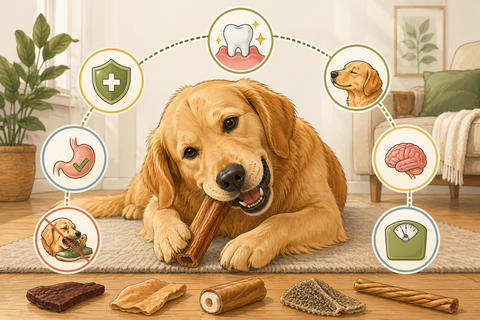
These treats expose your dog to different animal proteins while serving as training rewards, enrichment treats, or meal toppers.
The Benefits of Single-Ingredient Freeze-Dried Treats – Raw Paws Pet Food
Let Your Dog Set the Pace
Every dog is different.
A young, healthy dog with experience eating multiple proteins may transition quickly.
A senior dog or one that's been eating the same recipe for years may need more time.
Watch your dog—not the calendar.
Healthy digestion, normal appetite, consistent energy, and well-formed stools are better indicators of success than reaching a specific transition date.
There's nothing wrong with slowing down if your dog needs a little extra time.
Consistency Still Matters
Protein rotation doesn't mean changing recipes every day.
In fact, constantly switching meals without giving your dog time to adapt may create more problems than benefits.
Many raw feeders find success by rotating proteins every few weeks or after finishing a package.
That approach provides variety while allowing the digestive system to settle into each new recipe before moving on.
The key is consistency within the rotation—not constant change.
Build Confidence Before Expanding Variety
Once your dog comfortably enjoys two different proteins, adding a third often feels much easier.
Then a fourth.
Then a fifth.
Over time, your dog develops experience with a broader range of whole-food ingredients, making future transitions smoother and giving you greater flexibility when shopping or introducing seasonal proteins.
Rotation becomes less of an event and more of a natural part of your feeding routine.
Variety Is a Long-Term Goal, Not a Race
Protein rotation isn't about changing your dog's bowl every morning.
It's about gradually creating a diet that reflects the natural diversity found in whole foods.
By introducing new proteins one at a time, transitioning gradually, and paying attention to your dog's individual response, you can expand your dog's menu with confidence.
At Raw Paws Pet Food, our selection of responsibly sourced frozen raw recipes and single-ingredient freeze-dried treats makes it easy to introduce new proteins at a pace that works for your dog. Whether you're rotating between beef, chicken, turkey, pork, salmon, or Beef & Mackerel recipes—or using freeze-dried treats to add variety outside of mealtime—you can build a feeding routine that's both flexible and thoughtfully balanced.
After all, successful protein rotation isn't measured by how quickly you switch foods.
It's measured by how comfortably your dog enjoys the journey.
Comments (0)
There are no comments for this article. Be the first one to leave a message!