

You pick up a package of beef collagen sticks.
The front says they're made from beef.
The ingredient list may contain just one ingredient.
But there's still a question worth asking:
What exactly is beef collagen?
Is it meat?
Is it rawhide?
Is it something added to a chew?
Or is collagen naturally found inside the animal?
The answer is simpler than you might expect.
Beef collagen is a structural protein naturally found in cattle, particularly in connective tissues such as skin, tendons, ligaments, and cartilage.
Beef collagen sticks are made using collagen-rich cattle-derived material that's processed and formed into a firm, edible dog chew.
And understanding where that material comes from helps explain why collagen sticks feel and behave differently from bully sticks, beef cheek rolls, and other natural chews.
First, What Is Collagen?
Collagen is one of the primary structural proteins found in animals.
Its job is to provide strength and support to connective tissues throughout the body.
Think about the different parts of an animal.
Muscles help create movement. Bones provide structural support.
Organs perform specialized functions.
Connective tissues help hold those structures together.
Collagen is an important component of that connective tissue.
It's naturally present throughout the animal rather than being something invented specifically for pet products.
That's what makes beef collagen sticks an interesting example of using animal-derived materials beyond ordinary muscle meat.
Where Does Beef Collagen Come From?
Beef collagen comes from cattle.
But unlike a beef liver treat or a bully stick, the name doesn't identify one specific anatomical part.
Collagen can be sourced from several collagen-rich tissues, including:
- Skin
- Tendons
- Ligaments
- Cartilage
- Other connective tissues
Many commercial beef collagen chews are made from collagen-rich layers of cattle hide.
However, the exact source and processing method can vary between manufacturers.
That's why it's worth checking the specific product information rather than assuming every collagen stick is produced identically.
Is Beef Collagen the Same as Beef Meat?
Not exactly.
When most people think of beef, they picture muscle meat.
Steak.
Ground beef.
Roast.
Those foods contain proteins associated primarily with muscle tissue.
Collagen is different.
It's a structural protein found in connective tissues.
That difference influences its amino acid profile and physical characteristics.
Both originate from cattle, but they don't provide identical nutritional or chewing experiences.
Beef muscle meat and beef collagen are two different animal-derived ingredients.
How Are Beef Collagen Sticks Made?
The exact manufacturing process varies by producer, but collagen sticks generally begin with collagen-rich animal material.
The material is prepared and processed before being formed into the desired chew shape. A simplified production process may involve:
- Sourcing: Collagen-rich cattle tissue is selected.
- Preparation: The material is cleaned and prepared for further processing.
- Processing: The tissue is treated according to the manufacturer's production method.
- Forming: The collagen-rich material is shaped into sticks or other chew formats.
- Drying: Moisture is reduced to create the finished firm chew.
- Packaging: The finished product is inspected and packaged for distribution.
Not every manufacturer uses identical methods or equipment.
The important distinction is that collagen-rich animal material becomes the finished chew rather than simply serving as a flavoring ingredient.
Why Are Collagen Sticks So Firm?
Collagen naturally provides structure within animal tissues.
When collagen-rich material is processed and dried into a dog chew, the finished product can become firm and dense.
That creates resistance when your dog begins gnawing.
As chewing continues, saliva gradually moistens the surface.
The material begins to soften.
Your dog can then work through it section by section.
This changing texture is part of what makes collagen sticks different from quick treats that disappear after only a few bites.
Are Collagen Sticks Made From Rawhide?
This is where things can get confusing.
Collagen sticks and rawhide may both originate from cattle hide.
In fact, collagen is one of the major proteins naturally present in animal skin.
The distinction is often in how the material is prepared, processed, and constructed into the finished chew.
Traditional rawhide is made from processed animal hide, commonly formed into rolled, twisted, knotted, or compressed shapes.
Collagen sticks are marketed as chews made from collagen-rich material, often processed and formed into a stick shape.
Because the starting materials can overlap, the terms aren't necessarily descriptions of completely unrelated ingredients.
The exact manufacturing process matters.
Collagen Sticks vs. Rawhide: What's the Difference for Dogs? – Raw Paws Pet Food
What Makes Collagen Different From a Bully Stick?
Although both can be beef-based, they begin with different animal tissues.
Bully Stick: Made from beef pizzle.
Collagen Stick: Made from collagen-rich cattle tissue.
That difference creates distinct textures and chewing experiences.
Bully sticks retain the characteristics of dried pizzle tissue.
Collagen sticks use collagen-rich material processed into a firm chew.
Both can provide satisfying chewing activities, but they aren't interchangeable products.
Bully Sticks vs. Collagen Sticks: Which Is Better for Dogs? – Raw Paws Pet Food
Is Beef Collagen a Protein?
Yes.
Collagen is a protein.
But its nutritional composition differs from proteins found in ordinary muscle meat.
Collagen contains relatively high amounts of amino acids such as:
- Glycine
- Proline
- Hydroxyproline
These amino acids are associated with collagen's structural characteristics.
However, collagen doesn't provide all essential amino acids in the proportions required to serve as a complete protein source for dogs.
That's why collagen sticks should be considered treats rather than replacements for nutritionally complete meals.
Do Beef Collagen Sticks Support Joint Health?
Collagen is naturally present in connective tissues, including cartilage, tendons, and ligaments.
That's why collagen products are frequently associated with joint and connective tissue support.
But there's an important distinction between containing collagen and demonstrating a specific health benefit.
Eating a collagen stick doesn't automatically mean a dog will experience improved joint mobility or cartilage health.
Those outcomes depend on factors such as the type and amount of collagen, processing, and available research.
Collagen sticks are best understood primarily as animal-based chews rather than treatments for joint problems.
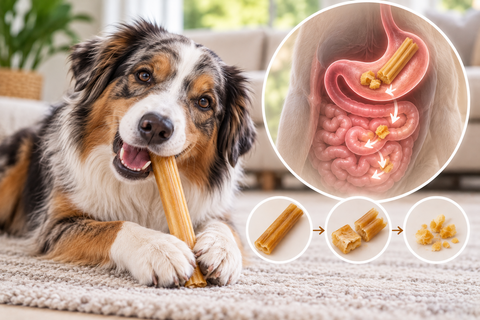
Are Beef Collagen Sticks Digestible?
Collagen is an animal protein that dogs can digest.
As a dog gradually chews and consumes small portions of a collagen stick, digestive enzymes can break down the protein into smaller peptides and amino acids.
However, the digestibility of the finished chew can vary depending on its formulation and processing.
And there's another important point:
Digestible doesn't mean safe to swallow whole.
Even edible animal-based chews can create choking or obstruction concerns if a dog attempts to swallow large pieces.
Why Do Dogs Enjoy Collagen Sticks?
Dogs naturally enjoy chewing for several reasons.
Chewing allows them to interact physically with an object while using their jaws and teeth.
Collagen sticks provide:
A firm texture.
A natural animal-derived aroma.
Resistance.
A shape that's often easy to hold.
Material that gradually changes during chewing.
For dogs that enjoy settling down with a substantial chew, those characteristics can make collagen sticks particularly appealing.
The dog isn't simply eating a treat.
They're working through an activity.
How Long Do Beef Collagen Sticks Last?
There's no universal chew time.
A gentle chewer may work through a collagen stick slowly.
A persistent chewer may make steady progress.
A power chewer may finish the same product much faster.
Duration depends on:
- Stick length
- Thickness
- Density
- Dog size
- Jaw strength
- Chewing intensity
- Individual technique
That's why choosing an appropriately sized collagen stick matters more than relying on a generic number of minutes.
Are All Collagen Sticks Single-Ingredient?
Not necessarily.
Some collagen sticks contain only collagen-rich animal material.
Others may include additional ingredients, flavors, or coatings.
If you're specifically looking for a single-ingredient chew, read the ingredient list on the individual product.
Don't assume every package labeled collagen stick contains exactly the same ingredients.
The product name tells you the primary type of chew.
The ingredient panel tells you more about the actual formulation.
Are Collagen Sticks Good for Power Chewers?
Collagen sticks can provide a substantial chewing experience, but the right fit depends on the individual dog.
A thicker stick generally provides more material than a thinner version of similar length.
However, extremely aggressive chewers may work through even substantial collagen sticks quickly.
Don't choose the hardest product simply because your dog chews intensely.
The goal is finding an appropriate balance between resistance, size, and your dog's chewing behavior.
How to Choose the Right Beef Collagen Stick
Before purchasing, consider several factors.
Ingredient List: Is the chew made from the ingredients you want to feed?
Size: Is it appropriately sized for your dog's mouth and body?
Thickness: Does it provide suitable resistance for your dog's chewing style?
Chewing Behavior: Does your dog gnaw gradually or attempt to swallow large pieces?
Product Information: Does the manufacturer explain the ingredients and intended use?
A little attention to these details can help you choose a chew that better matches your dog.
Collagen Sticks Can Add Variety to a Natural Chew Rotation
One of the interesting things about natural dog chews is how many different products can come from cattle.
Consider:
Bully Sticks: Beef pizzle.
Collagen Sticks: Collagen-rich cattle tissue.
Beef Cheek Rolls: Beef cheek tissue.
Compressed Rawhide: Prepared cattle hide.
Cow Ears: Ear tissue.
All can come from the same animal species.
Yet each offers a different shape, texture, and chewing experience.
That makes collagen sticks a useful option for owners looking to add variety without necessarily changing the animal protein.
Always Supervise Your Dog
Like other edible natural chews, collagen sticks should be offered under supervision.
Monitor the product as your dog works through it.
Remove the chew if:
- Your dog attempts to swallow a large section
- Substantial pieces break away
- The remaining portion becomes small enough to swallow whole
- The chew becomes unsuitable for continued use
- Your dog's behavior raises concerns
Choose an appropriate size and follow the product's handling instructions.
A natural chew can be enjoyable without being a hands-off activity.
Understanding the Ingredient Makes Choosing Easier
So, what are beef collagen sticks made from?
Collagen-rich animal tissue sourced from cattle, often from layers of beef hide or other connective tissues.
That material is processed and formed into a firm chew dogs can gradually gnaw and consume.
At Raw Paws Pet Food, collagen sticks are part of our broader natural chew collection because they provide a different texture and experience from bully sticks, beef cheek rolls, ears, and other animal-based options.
Understanding the ingredient helps you understand the chew.
It's not ordinary muscle meat.
It's not simply beef flavor added to a manufactured biscuit.
And it isn't necessarily identical to every rawhide product on the market.
It's a chew built around one of the structural proteins naturally found throughout the animal.
And for dogs that love to settle in and work through something substantial, that structure is exactly what makes collagen sticks interesting.

Comments (0)
There are no comments for this article. Be the first one to leave a message!