

Some dogs love a chew they can finish.
Others want something they can return to again and again.
That's where cow hooves enter the picture.
They're naturally hard, hollow, and very different from edible chews like bully sticks or collagen sticks. Some dogs enjoy gnawing the surface, while others are particularly interested in the fillings that can be added to the center.
But their durability raises an important question.
Are cow hooves actually good for dogs?
Cow hooves can provide chewing and enrichment opportunities for certain dogs, but they're not appropriate for every dog. Their extreme hardness can increase the risk of tooth fractures, and broken pieces may create choking or digestive concerns.
Understanding those trade-offs is essential before offering one.
Because when it comes to natural dog chews, long-lasting doesn't automatically mean safer or better.
What Exactly Are Cow Hoof Dog Chews?
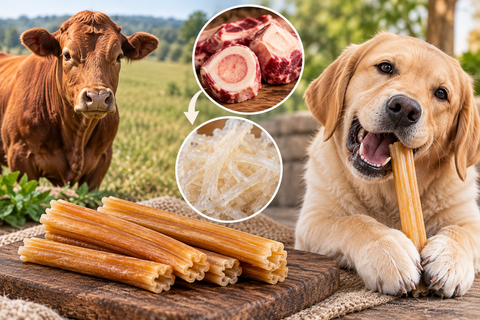
Cow hooves are natural chews made from the hooves of cattle.
Unlike bully sticks, which are made from beef pizzle, or collagen sticks, which use collagen-rich animal tissue, cow hooves are primarily composed of keratin.
Keratin is a tough structural protein also found in hair, nails, and claws.
That composition helps explain why cow hooves are so firm.
Instead of being designed to soften and disappear like a typical edible treat, a cow hoof provides a hard structure that dogs may repeatedly gnaw.
The natural hollow center also makes hooves useful for certain food-enrichment activities.
Why Do Dogs Like Chewing Cow Hooves?
Dogs naturally explore objects through their mouths.
Chewing gives them opportunities to manipulate an object, apply pressure, investigate textures, and engage in a focused activity.
Cow hooves offer a distinctive experience because of their:
- Hard surface
- Natural animal-derived aroma
- Hollow shape
- Irregular edges
- Resistance to chewing
Some dogs enjoy working around the outer surface.
Others become interested in what's inside.
That combination of texture and shape can make hooves appealing, even though their hardness also requires caution.
Cow Hooves Are Different From Edible Dog Chews
This is one of the most important distinctions.
A bully stick is designed to be gradually consumed.
A collagen stick is also intended to be chewed and eaten.
A cow hoof is different.
The hard hoof itself should not be treated as something your dog needs to consume completely.
Dogs may gradually wear down portions of the material, but swallowing substantial hoof pieces can create digestive and choking concerns.
Think of cow hooves primarily as recreational gnawing objects rather than edible treats meant to disappear.
That distinction should guide how they're offered and supervised.
Why Are Cow Hooves So Hard?
The answer comes back to keratin.
Keratin provides strength and durability to structures such as hooves.
When a cow hoof is cleaned and prepared as a dog chew, that naturally tough material remains.
Unlike softer animal tissues, it doesn't readily break down simply because saliva reaches the surface.
That resistance can make a hoof last a long time.
But there's a trade-off.
A chew that's extremely difficult to break down may also place considerable stress on a dog's teeth.
Can Cow Hooves Damage a Dog's Teeth?
Yes.
This is one of the biggest concerns with cow hooves.
Because they're extremely hard, dogs that bite down forcefully may risk fractured or chipped teeth.
The risk can be especially concerning for dogs that attempt to crack hard objects rather than gently investigate or lick them.
Veterinary dental professionals commonly caution against chews that are harder than a dog's teeth can safely tolerate.
If your dog has a history of tooth fractures, dental disease, worn teeth, or aggressive chewing, a softer alternative is generally preferable.
A chew doesn't need to be indestructible to provide worthwhile enrichment.
Power Chewers Aren't Automatically the Best Candidates
This may sound surprising.
Power chewers finish softer products quickly.
So wouldn't an extremely hard cow hoof be the perfect solution?
Not necessarily.
A dog that applies substantial bite force may be at greater risk of dental injury when chewing something as rigid as a hoof.
Instead of automatically moving to harder products, consider whether a thicker, more forgiving edible chew would provide a better balance.
Options such as substantial bully sticks or appropriately sized collagen chews may be worth exploring.
The goal isn't finding something your dog cannot destroy. It's finding something they can enjoy without unnecessary risk.
What About Gentle Chewers?
Gentle chewers may approach cow hooves differently.
Instead of attempting to crack the material, they might lick, investigate, or lightly gnaw the surface.
That can reduce some concerns associated with aggressive biting, but it doesn't eliminate the risk of dental damage or broken pieces.
Owners should still evaluate the individual dog and consider whether a softer enrichment product could provide a similar experience.
For many dogs, food-filled rubber toys offer a more forgiving alternative.
Plain Cow Hooves vs. Stuffed Cow Hooves
Not all cow hoof products provide the same experience.
Plain Cow Hooves
These emphasize the natural hoof structure itself.
Dogs may investigate, lick, or gnaw the hard surface.
These combine the hollow hoof with an edible filling, creating a food-based enrichment experience.
At Raw Paws Pet Food, our natural chew collection includes stuffed hoof options such as Peanut Butter Stuffed Hooves and Bacon & Cheese Stuffed Hooves.
The filling adds another reason for dogs to interact with the product.
However, stuffing doesn't make the hard hoof shell softer or eliminate the associated dental risks.
Why the Hollow Center Is So Interesting
A cow hoof isn't shaped like an ordinary dog chew.
Its hollow center creates a space where food can be placed.
For food-motivated dogs, that changes the activity.
Instead of simply gnawing, a dog may:
Sniff the filling.
Lick inside the hoof.
Change angles.
Reposition the object.
Work to reach food farther inside.
That combination of food motivation and object manipulation can create enrichment.
But the same activity can often be recreated with a softer, appropriately designed food-stuffable toy when dental safety is a concern.
Are Stuffed Cow Hooves Better Than Plain Hooves?
They serve different purposes.
A plain hoof primarily offers a hard gnawing surface.
A stuffed hoof adds a food-searching and licking component.
For a dog motivated by flavor, the stuffed version may create more immediate interest.
But neither is automatically the safer choice.
The underlying hoof remains hard in both cases.
The best option depends on your dog's chewing behavior, dental health, and whether the product is appropriate for them.
How Long Do Cow Hooves Last?
Cow hooves can last through multiple chewing sessions because of their tough keratin structure.
But there's no universal duration.
How long a hoof remains usable depends on:
- Hoof size
- Thickness
- Dog size
- Chewing intensity
- How the dog interacts with it
- Whether the hoof cracks or breaks
Some dogs may show interest primarily in the filling and lose interest afterward.
Others may continue gnawing the shell.
A hoof should be removed when it becomes damaged or unsuitable, regardless of how much material remains.
Durability should never take priority over safety.
Can Dogs Swallow Pieces of Cow Hoof?
Dogs may break off and swallow pieces of hoof material.
That's one reason supervision is especially important.
Unlike a typical edible treat, the hard keratin structure isn't intended to be swallowed in substantial pieces.
Broken fragments can create choking hazards or cause digestive complications.
Remove the hoof if it cracks, splinters, develops sharp edges, or begins breaking into pieces your dog could swallow.
If your dog swallows a substantial fragment, contact your veterinarian promptly for guidance.
What About Puppies?
Puppies have developing teeth and jaws.
Their chewing needs are real, but extremely hard products such as cow hooves can be inappropriate during this stage.
Puppies are also still learning how to interact with chews and may attempt to swallow pieces.
Choose puppy-appropriate, more forgiving chew toys and treats instead.
If you're unsure which products fit your puppy's developmental stage, ask your veterinarian.
Are Cow Hooves Suitable for Senior Dogs?
Senior dogs may have worn teeth, dental disease, or other oral-health concerns that make very hard chews particularly problematic.
Even if a senior dog enjoyed cow hooves earlier in life, their chewing needs may change.
A softer edible chew or food-stuffable enrichment toy may be a more comfortable choice.
Don't assume that a chew remains appropriate simply because your dog has used it for years.
How to Choose the Right Size Cow Hoof
If you're considering a cow hoof, size is one factor to evaluate.
A hoof should not be so small that your dog could easily swallow it whole.
Consider:
- Dog size
- Mouth size
- Chewing behavior
- Product dimensions
- Ability to safely handle the object
However, proper sizing doesn't eliminate the risk created by the hoof's hardness.
Even a large hoof can cause dental injury if a dog bites down aggressively.
When Should You Take a Cow Hoof Away?
Remove the hoof immediately if you notice:
Cracks or fractures in the material
- Sharp edges or splintering
- Pieces separating
- Attempts to swallow the hoof or large fragments
- Forceful crushing behavior
- Signs of dental discomfort
- The hoof becoming small enough to swallow whole
Supervision means watching how the product changes and being prepared to intervene.
A chew that was intact at the beginning of a session may not remain suitable throughout it.
What Are Some Alternatives to Cow Hooves?
If your dog loves chewing but cow hooves seem too hard, consider products with different levels of resistance.
Bully Sticks: Beef-pizzle chews that gradually soften as dogs work through them.
Collagen Sticks: Edible collagen-rich chews with a different texture.
Beef Cheek Rolls: Broad, rolled chews that offer a more substantial chewing project.
Cow Ears: Lighter, crunchy natural chews.
Food-Stuffable Rubber Toys: Reusable enrichment options that can provide licking and food-retrieval activities without the same rigid hoof structure.
No alternative is entirely risk-free, but choosing an appropriate texture can help reduce unnecessary dental stress.
Dog Chew Types Explained: Bully Sticks, Rawhide, Collagen & More – Raw Paws Pet Food
Food Enrichment Doesn't Have to Be Extremely Hard
One reason stuffed cow hooves appeal to dogs is the food hidden inside.
But the enrichment value doesn't necessarily come from the hoof's hardness.
It comes from the activity.
Sniffing.
Licking.
Working to reach the food.
Manipulating an object.
Those same behaviors can be encouraged using softer food puzzles and appropriate enrichment toys.
For dogs that shouldn't chew very hard materials, that distinction is especially useful.
You can preserve the activity without necessarily preserving the rigid structure.
What About Calories?
Plain cow hooves and stuffed cow hooves have different nutritional considerations.
The hoof itself isn't intended to be consumed like a conventional treat.
But stuffed versions contain edible ingredients that contribute calories.
Peanut butter, cheese, and other fillings should be considered part of your dog's overall treat intake.
Check the specific product's ingredient list, particularly if your dog has food allergies or dietary restrictions.
Treats and extras should complement a complete and balanced primary diet.
Should Cow Hooves Be Part of a Chew Rotation?
For dogs that can appropriately interact with them, cow hooves may provide a different type of recreational gnawing experience.
However, their hardness makes them a less suitable option for many dogs than more forgiving chews.
A varied enrichment routine doesn't need to include every type of natural chew.
You can build variety through:
Different animal proteins.
Different textures.
Different shapes.
Food puzzles.
Licking activities.
Interactive play.
The goal is enrichment that fits the individual dog—not collecting the toughest products available.
So, Are Cow Hooves Good for Dogs?
Cow hooves can provide long-lasting gnawing and food-enrichment opportunities, but their extreme hardness makes them a higher-risk choice for dental injury.
They aren't appropriate for every dog, especially aggressive biters, puppies, and dogs with vulnerable teeth.
At Raw Paws, we offer natural chew options including plain and stuffed cow hooves, but choosing the right product should always begin with the individual dog's needs.
Consider dental health.
Watch chewing technique.
Choose an appropriate size.
Supervise every session.
Remove damaged pieces.
And remember that softer alternatives can often provide similar enrichment without requiring such a rigid chewing surface.
Because the best chew isn't necessarily the one that lasts the longest.
It's the one that provides an enjoyable experience while respecting your dog's teeth, chewing habits, and overall well-being.
Comments (0)
There are no comments for this article. Be the first one to leave a message!