


You ask your dog to sit.
They sit.
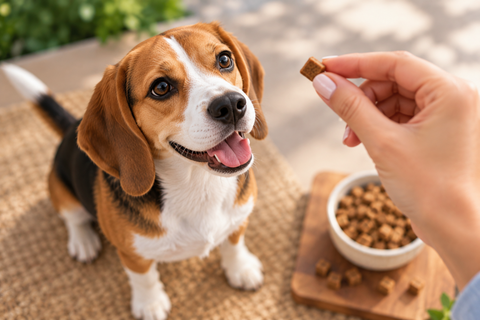
You offer a treat.
And then something interesting happens.
One dog swallows the reward almost immediately and looks up, ready for the next instruction.
Another spends several seconds crunching.
A third drops the treat, investigates it, and decides whether it's worth eating.
Same training exercise. Completely different experience.
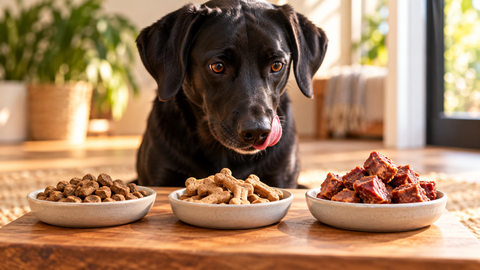
That's because dog treat texture can influence how quickly rewards are consumed, how easily they're handled, and how smoothly a training session moves forward.
Soft treats and crunchy treats both have advantages.
But they're not always equally practical for every situation.
So which texture works best for training?
Soft treats often work well for rapid, repetitive rewards, while crunchy treats can be useful for everyday training, food puzzles, and dogs that prefer a crisp texture.
The best choice ultimately depends on your dog, the activity, and how quickly you need to deliver the next reward.
Why Treat Texture Matters During Dog Training
Training rewards aren't simply snacks.
They're tools used to reinforce behaviors.
When your dog performs something correctly, the reward should arrive promptly and be easy to consume.
If the treat takes too long to chew, the training session may lose momentum.
If the treat crumbles into tiny pieces on the floor, your dog may become distracted searching for leftovers.
And if the texture isn't appealing, the reward may not be motivating enough.
That's why texture deserves attention alongside:
- Flavor
- Aroma
- Treat size
- Ingredient quality
- Calorie content
- Individual preference
The right treat should support the activity rather than interrupt it.
What Are Soft Dog Training Treats?
Soft training treats are foods with a flexible, moist, or tender texture.
They may include commercially prepared soft treats, small pieces of suitable cooked meat, or other appropriately prepared foods.
Their main advantage is convenience during repetitive training.
Many dogs can consume small soft rewards quickly.
That makes them especially useful when practicing behaviors that involve frequent reinforcement.
Think:
Sit.
Stay.
Touch.
Heel.
Recall.
Short, repeated training exercises.
The faster your dog can comfortably consume the reward, the easier it may be to continue the session.
Why Soft Treats Often Work Well for Fast Training
Imagine practicing ten repetitions of a simple behavior.
If every reward takes several seconds to chew, the session may slow down considerably.
Soft treats can help maintain momentum.
Your dog performs the behavior.
Receives the reward.
Swallows.
Returns attention to you.
That makes soft treats particularly practical for training sessions where timing and repetition matter.
However, soft doesn't automatically mean better.
Some soft treats are sticky, messy, or difficult to handle.
The specific product still matters.
What Are Crunchy Dog Treats?
Crunchy dog treats have a firmer, crisp texture that requires some biting or chewing.
They can include:
- Baked biscuits
- Dehydrated treats
- Freeze-dried animal treats
- Other crisp or crunchy rewards
Crunchy treats provide a different sensory experience from soft foods.
Some dogs strongly prefer the texture.
Others may take longer to consume them.
The important consideration is whether the treat's size and firmness fit the training activity.
A tiny crunchy reward may be consumed quickly.
A large, hard biscuit may interrupt the session.
Crunchy Doesn't Always Mean Slow
This is an important distinction.
Not every crunchy treat requires extended chewing.
Some freeze-dried foods have a light, brittle texture that breaks apart easily.
For example, Raw Paws Freeze-Dried Chicken Breast can often be broken into smaller pieces.
That allows owners to use a recognizable animal-based treat in a size that's practical for training.
A small freeze-dried piece may be consumed quickly while still providing a different texture from a soft reward.
So the real comparison isn't simply:
Soft = Fast
Crunchy = Slow
Size and structure matter too.
Freeze-Dried Treats Offer an Interesting Middle Ground
Freeze-drying removes moisture from food while retaining much of its original structure.
The finished texture depends on the ingredient.
Some freeze-dried treats are light and crumbly.
Others are firmer or more substantial.
At Raw Paws Pet Food, options such as:
provide different textures and aromas.
Chicken breast may break apart easily.
Liver can provide small, aromatic rewards.
Chicken hearts have a different tissue structure.
Whole minnows offer a distinctive fish-based crunch.
That variety makes freeze-dried treats useful for owners who want simple animal ingredients without relying exclusively on traditional soft training treats.
Which Texture Is Best for Puppy Training?
Puppies often receive many rewards while learning basic behaviors.
That makes treat size and ease of eating especially important.
Small, soft rewards can be convenient because puppies may consume them quickly.
Some appropriately sized, easily crumbled freeze-dried treats can also work.
Avoid pieces that are excessively hard, large, or difficult for a puppy to manage.
Remember that puppies have developing teeth and specific nutritional requirements.
Training treats should remain small and shouldn't displace meaningful portions of a complete and balanced growth diet.
What About Senior Dogs?
Senior dogs may have different dental needs.
Some have worn teeth, missing teeth, or periodontal disease.
For those dogs, soft treats may be easier and more comfortable to consume.
Crunchy treats aren't automatically inappropriate for every senior dog, but texture should be selected according to the individual's oral health.
If your dog suddenly avoids crunchy treats, chews on one side, drops food, or shows discomfort, consult your veterinarian.
A change in treat preference may reflect a dental problem rather than simple pickiness.
Soft Treats Can Be Useful for Recall Training
Recall training often benefits from rewards that are especially motivating and quick to consume.
When your dog returns to you, you want to reinforce that behavior promptly.
A small soft treat can work beautifully.
But a small piece of freeze-dried beef liver or another highly valued reward may work just as well for some dogs.
The important factors are:
Motivation.
Appropriate size.
Quick consumption.
Reliable delivery.
Texture matters, but your dog's enthusiasm matters too.
Crunchy Treats Can Be Great for Food Puzzles
Training isn't the only way to use treats.
Crunchy, appropriately sized pieces can work well in food puzzles and scent-searching activities.
For example, small freeze-dried treats can be placed inside compatible puzzle feeders or hidden around a safe room.
Your dog then has to:
Sniff.
Search.
Investigate.
Manipulate objects.
Retrieve the reward.
In these activities, immediate consumption isn't always the main goal.
The process of finding the food becomes part of the enrichment.
Does Texture Affect Treat Motivation?
It can.
Dogs have individual preferences for food texture.
Some enjoy soft, moist rewards.
Others prefer crunchy foods.
Some respond differently depending on the situation.
A dog may happily eat crunchy chicken treats at home but prefer a softer reward during a distracting outdoor training session.
That's why it's useful to experiment with different appropriate textures.
Watch which rewards your dog accepts quickly and enthusiastically.
The best training treat is one your dog genuinely wants.
Aroma Can Matter More Than Texture
Sometimes a dog's response has less to do with softness or crunch and more to do with smell.
Dogs rely heavily on scent when evaluating food.
A richly aromatic treat may be more motivating than a milder option, regardless of texture.
Consider:
Freeze-Dried Beef Liver: Distinctive organ-meat aroma.
Freeze-Dried Chicken Hearts: Different animal-tissue scent.
Whole Minnows: Strong natural fish aroma.
These foods may appeal to dogs that are especially motivated by animal-based smells.
But no ingredient is universally high value.
Individual preference still determines the winner.
Which Treat Is Easier to Carry?
Practicality matters too.
Soft treats may be moist or oily, depending on the product.
That can make them messier to handle or store in a training pouch.
Dry, freeze-dried treats are often lightweight and convenient to carry.
However, some may crumble during transport.
If you're training outdoors, consider:
How easily the treats fit into your pouch.
Whether they leave residue.
How quickly you can retrieve one.
Whether they remain suitable during the session.
A great treat isn't particularly useful if you spend half the training session trying to separate pieces from the bottom of a bag.
Treat Size Matters More Than Many Owners Realize
A training reward doesn't need to be large.
In fact, small pieces often work better for repetitive training.
A dog may perform dozens of successful behaviors during a session.
If every reward is substantial, treat intake can increase quickly.
Smaller rewards allow you to reinforce behavior frequently while managing portions.
For many dogs, the value comes from receiving something desirable—not from the physical size of every piece.
Can You Use the Same Treat for Every Training Activity?
You can, but different activities may benefit from different rewards.
For example:
Basic Indoor Training: Small everyday rewards.
Recall Practice: Highly motivating, quickly consumed treats.
Food Puzzles: Appropriately sized dry or crunchy pieces.
Scent Games: Aromatic treats that encourage searching.
Longer Enrichment: Appropriate natural chews or food-stuffable toys.
The goal isn't owning a different treat for every behavior.
It's matching the reward to the job.
Soft vs. Crunchy Dog Treats: Quick Comparison
| Feature | Soft Treats | Crunchy Treats |
| Texture | Tender or flexible | Crisp or firm |
| Eating speed | Often quick | Depends on size and hardness |
| Rapid training | Often convenient | Works when pieces are small |
| Food puzzles | Depends on puzzle design | Often convenient |
| Portioning | Depends on product | Some break into small pieces |
| Portability | May be moist or messy | Often dry and lightweight |
| Dental comfort | May suit dogs needing softer foods | Firm pieces may be uncomfortable for some dogs |
| Best choice | Depends on dog and activity | Depends on dog and activity |
Neither texture is universally better.
The best option is the one that supports your training goals while remaining appropriate for your dog.
Try a Simple Texture Preference Test
Want to know which texture your dog prefers?
Choose two appropriate treats.
One soft.
One crunchy.
Offer small portions during separate, low-distraction moments.
Watch how your dog responds.
Do they accept one more quickly?
Does one seem more motivating?
Do they chew one comfortably?
Do they remain focused after receiving the reward?
Repeat the comparison across several sessions.
You may discover a clear preference.
Or you may find that your dog happily works for both.
Rotate Textures to Keep Training Interesting
Treat rotation doesn't have to involve changing animal proteins every time.
Sometimes switching texture is enough.
For example:
Monday: Small freeze-dried chicken breast rewards.
Tuesday: Appropriate soft training treats.
Wednesday: Freeze-dried beef liver.
Thursday: Small crunchy rewards in a food puzzle.
Friday: A different high-value protein for recall practice.
The goal isn't creating a complicated schedule.
It's giving yourself options when motivation or training needs change.
Don't Forget About Calories
Whether soft or crunchy, treats contribute to your dog's overall food intake.
Training can involve frequent rewards, which makes portion awareness important.
A commonly used guideline is to keep treats and extras within approximately 10% of daily calories unless your veterinarian recommends otherwise.
Using small pieces can help.
You can also use part of your dog's regular food allowance for training when appropriate.
Better training doesn't have to mean feeding more food.
When Texture May Signal a Bigger Issue
If your dog suddenly refuses crunchy treats they previously enjoyed, don't automatically assume they've become picky.
Changes in chewing behavior can sometimes indicate dental discomfort.
Watch for:
Dropping food.
Chewing on one side.
Pawing at the mouth.
Avoiding firm foods.
Unusual hesitation when eating.
If these behaviors appear, consult your veterinarian.
Treat preferences can change, but sudden difficulty chewing deserves attention.
The Best Training Treat Fits the Moment
At Raw Paws Pet Food, our freeze-dried animal treats provide several textures and protein options for training and enrichment.
Chicken breast offers familiar muscle meat.
Beef liver provides rich aroma.
Chicken hearts introduce another animal tissue.
Whole minnows bring a distinctive crunchy fish experience.
But the best treat isn't necessarily the softest or crunchiest.
It's the one your dog can comfortably eat, genuinely enjoys, and responds to during the activity.
For rapid training, small soft treats may be especially convenient.
For food puzzles and scent games, crunchy freeze-dried rewards may work beautifully.
And for dogs that love variety, rotating textures can make the experience more interesting.
Because successful training isn't about choosing one perfect treat texture forever.
It's about choosing the right reward for the dog, the behavior, and the moment.
Comments (0)
There are no comments for this article. Be the first one to leave a message!