


Your cat hears the treat bag open.
Suddenly, they're standing beside you.
One treat.
Then another.
And somehow, they're convincing you that a third is absolutely necessary.
But at some point, you start wondering:
How many treats should a cat actually have in a day?
Is five too many?
What about ten?
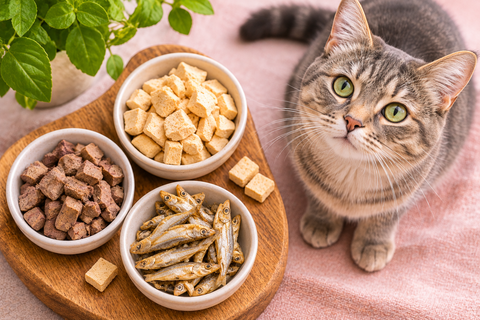
Does it matter whether you're feeding freeze-dried chicken, beef liver, or whole minnows?
The answer isn't simply a number of treats.
Most healthy cats can enjoy daily treats, but the appropriate amount depends on their calorie needs, the size of each treat, and what they're already eating.
A tiny piece of freeze-dried chicken breast isn't nutritionally equivalent to a large commercial cat treat.
And a small amount of nutrient-dense beef liver deserves different consideration than ordinary muscle meat.
Here's how to determine a reasonable daily treat allowance without making feeding unnecessarily complicated.
The 10% Rule: A Good Starting Point for Cat Treats
One of the most commonly used guidelines in pet nutrition is the 10% rule.
It means treats and other nutritionally unbalanced extras should generally provide no more than approximately 10% of your cat's daily calories.
The remaining 90% or more should come from a complete and balanced cat food appropriate for their life stage.
Why?
Because treats aren't necessarily formulated to provide all the nutrients cats require.
Even nutritious animal-based treats can create dietary imbalances when they replace too much complete food.
The goal is keeping treats enjoyable without allowing them to take over the diet.
How Many Treat Calories Does Your Cat Get?
Let's make the 10% guideline practical.
The first step is estimating your cat's daily calorie needs.
Those needs vary depending on:
- Body weight
- Age
- Activity level
- Body condition
- Spay or neuter status Individual metabolism
- Health conditions
Once you know the approximate daily calorie target, calculating a treat allowance becomes straightforward.
Daily calories × 10% = Maximum approximate treat calories
For example, if your cat needs 200 calories per day:
200 × 0.10 = 20 calories.
That means approximately 20 calories could come from treats and other unbalanced extras, with the remaining 180 calories or more coming from complete and balanced food.
This is a general guideline, not a requirement to feed the full 10%.
Cat Treat Calorie Guide: A Simple Example
Here's what the 10% guideline looks like at different daily calorie levels.
| Daily Calorie Needs | Approximate Maximum Treat Calories |
| 150 calories | 15 calories |
| 180 calories | 18 calories |
| 200 calories | 20 calories |
| 220 calories | 22 calories |
| 250 calories | 25 calories |
| 300 calories | 30 calories |
These numbers are examples, not recommendations for how many calories a particular cat should eat.
Your veterinarian can help determine an appropriate daily calorie target, especially if your cat needs weight management or has a medical condition.
Why Counting Treat Pieces Can Be Misleading
Imagine two different treats.
One is a tiny piece of freeze-dried chicken breast.
The other is a large, dense treat.
Both count as one piece.
But they may contain very different amounts of calories.
That's why asking:
"Can my cat have ten treats?"
doesn't provide enough information.
Ten tiny pieces might fit within the daily allowance.
Ten large pieces might exceed it.
The important number is the total calories—not simply how many times you reach into the bag.
How to Calculate the Number of Treats Your Cat Can Have
Once you know the daily treat-calorie allowance, check the product's calorie information.
If the package provides calories per treat, divide the allowance by that number.
For example:
Your cat's daily treat allowance: 20 calories
Calories per treat: 2 calories
20 ÷ 2 = 10 treats
But if each treat contains 5 calories:
20 ÷ 5 = 4 treats
Same cat.
Same daily allowance.
Very different number of treats.
That's why product-specific calorie information is so useful.
Freeze-Dried Treats Can Be More Concentrated Than They Look
Freeze-drying removes most of the moisture from the original animal ingredient.
That creates a lightweight, shelf-stable treat.
But because the water is removed, the remaining food becomes more concentrated by weight.
For example, an ounce of freeze-dried chicken breast represents more original chicken tissue than an ounce of fresh chicken breast.
The same principle applies to beef liver and other freeze-dried animal foods.
That means a small-looking handful may contain more calories and nutrients than expected.
Don't estimate portions based only on how much space the treats occupy.
Freeze-Dried Chicken Breast: An Easy Everyday Option
Chicken breast is familiar muscle meat that provides animal protein.
At Raw Paws Pet Food, our Freeze-Dried Chicken Breast can be broken into smaller pieces, making it useful for portion-controlled treating.
You can use it for:
- Everyday rewards
- Cat training
- Food puzzles
- Treat searches
- Occasional meal topping
Because the pieces can often be divided, one larger treat may become several smaller rewards.
That makes it easier to spread a modest daily allowance across multiple activities.
Beef Liver: Why Portions Matter Beyond Calories
Beef liver is different from chicken breast.
It's a nutrient-dense secreting organ that naturally contains concentrated amounts of certain vitamins and minerals.
These include vitamin A, vitamin B12, iron, and copper.
That makes liver nutritionally interesting.
But it also means liver deserves extra moderation.
Even when a portion fits within your cat's treat-calorie allowance, you should consider how frequently liver is being offered and whether the primary diet already contains liver.
The 10% calorie rule isn't permission to use the entire allowance on liver every day.
Too much vitamin A over time can create health problems.
For liver treats, follow the manufacturer's feeding guidance and consult your veterinarian if you're uncertain about appropriate amounts.
Chicken Hearts: Another Animal Tissue to Rotate
Chicken hearts are muscular organs.
They naturally contain animal protein and nutrients associated with heart tissue, including taurine.
Taurine is especially important in feline nutrition because cats require adequate dietary taurine.
However, chicken heart treats shouldn't be relied upon to meet your cat's complete taurine needs.
A complete and balanced primary diet should provide the nutritional foundation.
Small portions of freeze-dried chicken hearts can offer another texture and animal tissue within a thoughtful treat rotation.
Whole Minnows: Count the Fish Too
Whole minnows may look small, but they're still food.
A whole fish contains muscle, skin, small bones, naturally occurring fats, and other tissues.
At Raw Paws, Freeze-Dried Whole Minnows offer a distinctive whole-fish treat for cats that enjoy fish.
But the size and calorie content of individual minnows may vary.
One minnow isn't automatically equivalent to one small piece of chicken breast.
If you're feeding whole-fish treats regularly, use product-specific nutritional information when available and adjust portions accordingly.
Can Cats Eat Minnows? A Guide to Whole-Fish Treats for Cats – Raw Paws Pet Food
Do Meal Toppers Count as Treats?
Yes.
This is one of the easiest ways to accidentally exceed a daily treat allowance.
You might give your cat:
A few training treats.
A whole minnow.
Some crumbled beef liver over dinner.
A few extra pieces before bed.
Each amount may seem small.
But together, they contribute to the daily intake.
Freeze-dried toppers, snacks, and other nutritionally unbalanced extras should all be included when calculating treat calories.
The location of the food doesn't change its nutritional contribution.
What About Treats Used for Cat Training?
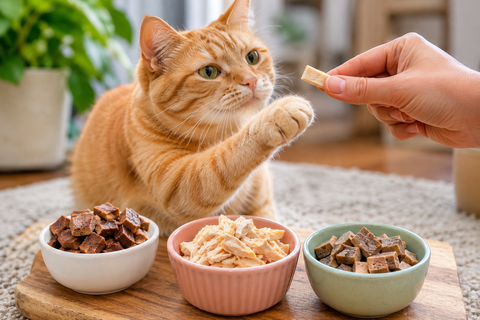
Cats can learn behaviors through positive reinforcement, and small food rewards can be very useful.
For example, you might reward your cat for:
Coming when called.
Touching a target.
Entering a carrier.
Going to a mat.
Cooperating with gentle handling.
The key is using tiny pieces.
A cat doesn't need a large treat every time they perform a behavior.
Small rewards allow repeated reinforcement while keeping total intake manageable.
Make One Treat Become Several Rewards
This is one of the easiest ways to make a treat allowance go further.
Instead of giving a large freeze-dried piece whole, break it into smaller portions.
For example:
One piece of freeze-dried chicken breast may become several tiny training rewards.
A small piece of chicken heart may be divided when practical.
Beef liver can often be crumbled into very small pieces.
The total amount of food doesn't increase.
You're simply creating more opportunities to reward your cat.
Use Treats for Enrichment Instead of Just Handing Them Out
A treat can disappear in seconds.
But the same amount of food can become part of a longer activity.
Try hiding tiny pieces around a safe room.
Place them in an appropriate cat food puzzle.
Use them during a short training session.
Encourage your cat to search and investigate.
Now the treat provides more than flavor.
It creates an opportunity for natural exploration.
Food Enrichment for Cats: How to Turn Treats Into an Activity – Raw Paws Pet Food
Can Cats Have Treats Every Day?
For many healthy cats, yes.
Daily treats can fit into a balanced feeding routine when portions are appropriate.
The important thing is keeping the total amount within the cat's nutritional needs.
A tiny reward every day may contribute fewer calories than several large treats offered occasionally.
Frequency alone doesn't determine whether a treat routine is appropriate.
Total intake and nutritional balance matter more.
How Many Treats Should Kittens Have?
Kittens have different nutritional requirements from adult cats.
They're growing rapidly and need complete and balanced nutrition formulated for growth.
Treats should remain a small part of the diet.
Choose appropriately sized, easy-to-eat pieces and avoid allowing treats to replace meaningful portions of kitten food.
Because kittens vary considerably in age, size, and development, ask your veterinarian for guidance if you're uncertain about appropriate treat amounts.
How Many Treats Should Senior Cats Have?
Senior cats may have different calorie needs and health considerations.
Some remain active and maintain healthy body condition.
Others develop dental problems, weight changes, or medical conditions that influence their diets.
For senior cats, consider:
Daily calorie needs.
Dental comfort.
Primary diet.
Medical conditions.
Treat texture.
A soft or easily crumbled reward may be more comfortable for a cat with dental concerns.
If your senior cat has a prescribed diet, ask your veterinarian which treats are appropriate.
What If Your Cat Is Overweight?
For cats that need weight management, treat calories deserve particular attention.
Even small extras can add up over time.
If your cat is overweight, your veterinarian may recommend a lower treat allowance or using part of the regular food ration as rewards.
You can still provide enrichment without increasing calories.
For example, place a portion of the cat's normal daily food into a puzzle feeder. That creates an activity using food they were already going to eat.
Never impose a severe calorie restriction or rapid weight-loss plan on a cat without veterinary guidance.
What About Cats With Medical Conditions?
Some cats require specific dietary management.
Cats with kidney disease, diabetes, pancreatitis, food allergies, or other medical conditions may have restrictions that affect treat selection.
A treat that's appropriate for a healthy cat may not fit a therapeutic diet.
If your cat has a diagnosed condition or eats prescription food, consult your veterinarian before adding unfamiliar treats.
The 10% guideline is a general starting point, not a substitute for individualized veterinary nutrition advice.
How to Tell If You're Giving Too Many Treats
Treat intake can gradually increase without owners noticing.
Watch for patterns such as:
- Unintended weight gain
- Reduced interest in regular meals
- Treats replacing substantial portions of complete food
- Digestive changes after frequent treating
- Regularly exceeding the planned treat allowance
These signs don't automatically prove that treats are the only cause.
But they can indicate that the overall feeding routine needs review.
A Simple Example of a Daily Cat Treat Routine
Imagine a healthy adult cat with a veterinarian-established daily calorie target of 200 calories.
Using the 10% guideline, the approximate maximum allowance for treats and other unbalanced extras would be 20 calories.
You might divide that allowance across the day.
Morning: A few tiny freeze-dried chicken breast rewards during training.
Afternoon: Small pieces used in a treat-searching game.
Evening: A little crumbled freeze-dried animal treat over dinner.
The actual number of pieces depends on the specific product's calorie content.
The example illustrates how to divide an allowance—not how much every cat should receive.
The Best Treat Routine Doesn't Require Counting Every Crumb Forever
Once you understand your cat's calorie needs and the treats you're offering, portioning becomes easier.
You may find it helpful to measure a small daily treat allowance in advance. Place that amount in a separate container.
Use it throughout the day for training, enrichment, or rewards.
When the allowance is gone, treat time is finished for the day.
This simple approach can prevent accidental overfeeding without making every reward feel like a math problem.
Keep the Complete Diet the Priority
Cats are obligate carnivores with specific nutritional requirements.
Animal-based treats can provide protein and other valuable nutrients.
But that doesn't automatically make them complete foods.
Chicken breast alone isn't a complete feline diet.
Neither are chicken hearts.
Neither is beef liver.
Neither are whole minnows.
The complete and balanced primary food should remain responsible for meeting essential nutritional requirements.
Treats add enjoyment, variety, and opportunities for enrichment around that foundation.
So, How Many Treats Should a Cat Have a Day?
The answer isn't five.
Or ten.
Or twenty.
The right number depends on your cat's daily calorie needs and the calories in each treat.
For many healthy cats, keeping treats and other unbalanced extras within approximately 10% of daily calories is a practical starting point.
At Raw Paws Pet Food, our freeze-dried animal treats make it easy to offer recognizable ingredients in small portions.
Chicken breast provides familiar muscle meat.
Chicken hearts introduce another animal tissue.
Beef liver offers nutrient-dense organ meat that deserves extra moderation.
Whole minnows provide whole-fish variety.
Each can be used for training, enrichment, or occasional meal topping.
But no matter which treat your cat prefers, the principle stays the same. Choose appropriate portions.
Count toppers and extras.
Keep the primary diet complete and balanced.
And use small rewards to make treat time meaningful.
Because the best treat routine isn't about seeing how many treats your cat can convince you to hand over.
It's about making every little reward count.
Comments (0)
There are no comments for this article. Be the first one to leave a message!