


Your cat hears the treat bag open.
Suddenly, they're standing beside you.
Looking up.
Waiting.
And judging how long you're taking.
For many cats, treat time becomes a familiar daily routine.
A little freeze-dried chicken breast after breakfast.
A few tiny pieces during playtime.
Maybe a whole minnow as an occasional reward.
But if you're offering treats every day, you may start wondering:
Is it actually okay for cats to eat freeze-dried treats daily?
The short answer is yes—many healthy cats can enjoy appropriately prepared freeze-dried treats every day, provided the portions fit within a complete and balanced diet.
But frequency isn't the only consideration.
How much you feed, which animal ingredients you choose, and what your cat already eats matter just as much as how often the treat bag opens.
Let's explore how to make daily treating a practical part of your cat's routine.
Are Freeze-Dried Treats Safe for Cats Every Day?
Freeze-dried treats can be suitable for daily use when they're appropriately prepared, portioned, and matched to the individual cat's dietary needs.
But not every freeze-dried product is identical.
Some contain a single animal ingredient.
Others combine several ingredients.
Some are intended only as treats.
Others are formulated as complete and balanced foods.
Before deciding how frequently to offer a product, check its intended use.
A freeze-dried treat isn't automatically a complete cat food simply because it contains animal protein.
For most single-ingredient treats, the goal is providing small complementary rewards rather than replacing meals.
Daily Treating Isn't the Same as Overfeeding
This is one of the biggest misconceptions.
Giving your cat a small treat every day doesn't automatically mean you're feeding too many treats.
The important factor is total intake.
Imagine two cats.
One receives a tiny piece of freeze-dried chicken breast each day.
The other receives several large handfuls of treats every weekend.
The second cat may consume far more treat calories overall, even though treats are offered less frequently.
Frequency tells you how often. Portion size tells you how much.
Both matter, but portion size is especially important when evaluating daily treating.
How Many Freeze-Dried Treats Can a Cat Have Per Day?
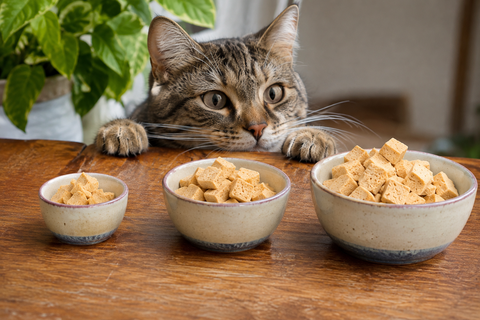
There's no universal number of pieces that works for every cat.
Appropriate portions depend on:
- Body weight
- Daily calorie requirements
- Primary diet
- Other treats and toppers
- Activity level Health and dietary restrictions
A commonly used guideline is to keep treats and other nutritionally unbalanced extras within approximately 10% of daily calories unless your veterinarian recommends otherwise.
For cats, that allowance can be surprisingly small.
A single larger freeze-dried piece may provide several appropriately sized rewards when broken apart.
That's one reason small portions work so well.
Why Freeze-Dried Treats Can Be More Concentrated Than They Look
Freeze-drying removes most of the moisture from the original food.
That creates a lightweight, shelf-stable product.
But removing water also changes how the food compares by weight.
For example, one ounce of freeze-dried chicken breast represents more original chicken tissue than one ounce of fresh chicken breast.
The same applies to freeze-dried liver and other animal ingredients.
That means a small-looking amount of freeze-dried food can contain more calories and nutrients than owners expect.
Don't judge portions only by how large the treat looks.
Check the product's calorie information and feeding directions when available.
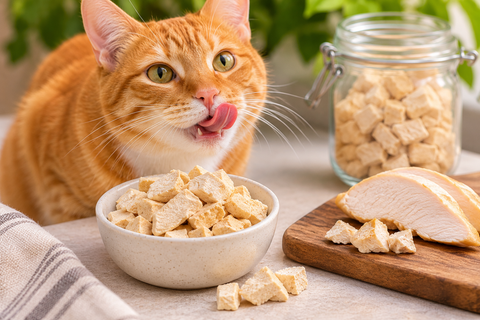
Freeze-Dried Chicken Breast: A Versatile Daily Treat
Chicken breast is a familiar animal protein that many cats enjoy.
It's muscle meat, which gives it a different nutritional profile from organs such as liver.
At Raw Paws Pet Food, our Freeze-Dried Chicken Breast provides a straightforward animal-based treat that can be broken into smaller pieces.
That makes it useful for:
- Everyday rewards
- Cat training
- Food puzzles
- Treat searches
- Occasional meal topping
For cats that tolerate chicken, small portions can fit into a daily treat routine.
The important thing is keeping the overall diet balanced.
Can Cats Eat Freeze-Dried Dog Treats? What Cat Owners Should Know – Raw Paws Pet Food
Chicken Hearts: Another Animal Tissue to Consider
Chicken hearts offer a different experience from chicken breast.
Both come from chicken, but heart is a muscular organ.
Chicken hearts naturally contain animal protein and nutrients associated with heart tissue, including taurine.
Taurine is especially important for cats because they require adequate dietary taurine.
However, a chicken heart treat shouldn't be relied upon to meet your cat's complete taurine requirement.
That responsibility belongs to the complete and balanced primary diet.
Small portions of freeze-dried chicken hearts can add another texture and animal tissue to an appropriate treat routine.
Beef Liver: Why Daily Portions Deserve Extra Attention
Beef liver is a nutrient-dense secreting organ.
It naturally contains concentrated amounts of nutrients such as:
- Vitamin A
- Vitamin B12
- Iron
- Copper
- Other vitamins and minerals
Those nutrients are valuable.
But their concentration means liver deserves particular moderation.
Feeding excessive liver regularly can contribute too much vitamin A or copper over time.
If your cat's complete and balanced primary food already contains liver, additional liver treats contribute to the total intake.
Beef liver can be a wonderful occasional reward, but it shouldn't become an unlimited daily snack.
Can Cats Eat Beef Liver? Benefits, Portions & What to Know – Raw Paws Pet Food
Whole Minnows: Fish-Based Variety
Whole minnows introduce another animal source into the treat routine.
Unlike a fish-flavored biscuit, a whole minnow retains the recognizable structure of the fish. That includes muscle, skin, small bones, and other tissues.
At Raw Paws, Freeze-Dried Whole Minnows provide a distinctive fish-based treat that may appeal to cats that enjoy crunchy textures and strong natural aromas.
However, whole-fish treats still contribute calories and nutrients.
They should be offered in appropriate amounts rather than replacing a complete feline diet.
Can Cats Eat Minnows? A Guide to Whole-Fish Treats for Cats – Raw Paws Pet Food
Should You Rotate Freeze-Dried Treats?
Rotation can be useful, but it isn't mandatory.
Some cats remain enthusiastic about the same treat for years.
Others enjoy different animal proteins and textures.
For example, you might rotate:
Chicken Breast: Familiar muscle meat.
Chicken Hearts: Muscular organ.
Beef Liver: Nutrient-dense secreting organ.
Whole Minnows: Whole-fish variety.
Each provides a different nutritional and sensory experience.
But rotation shouldn't be used as an excuse to increase overall treat intake.
The amount of food can stay consistent while the ingredient changes.
Can You Give Cats Freeze-Dried Treats More Than Once a Day?
Potentially, yes.
You might divide a small daily treat allowance into several tiny rewards.
For example:
One piece during morning training.
Another during an afternoon enrichment game.
A small portion after playtime.
The number of treating occasions isn't necessarily the problem.
The total amount matters.
If you're offering several rewards throughout the day, keep track of how much food they add up to.
Tiny Treats Work Beautifully for Cat Training
Cats can learn behaviors using positive reinforcement.
And because cats generally require smaller rewards than dogs, tiny pieces can be especially useful.
Freeze-dried chicken breast or other appropriate animal treats can be broken into small portions for training.
You might practice:
Coming when called.
Touching a target.
Entering a carrier.
Going to a designated mat.
Cooperating with gentle handling.
Short, positive sessions can provide enrichment without requiring large amounts of food.
Turn Daily Treats Into Food Enrichment
Instead of simply handing over every reward, consider making your cat search for it.
Start with a few tiny treats.
Place them in easy-to-find locations around a safe room.
Encourage your cat to investigate.
As they learn, gradually increase the challenge.
You can also use compatible cat food puzzles or treat-dispensing toys.
The amount of food doesn't necessarily increase.
The experience becomes more interactive.
Food Enrichment for Cats: How to Turn Treats Into an Activity – Raw Paws Pet Food
Can Freeze-Dried Treats Be Used as Daily Meal Toppers?
Yes, small amounts of appropriate freeze-dried treats can be crumbled over a cat's regular food.
For example:
Chicken breast adds poultry aroma.
Chicken hearts introduce another animal tissue.
Beef liver adds a rich scent in small quantities.
Whole minnows provide fish-based variety.
However, toppers still count as treats.
If you're using them daily, include them within the total treat allowance.
The complete and balanced primary food should remain the nutritional foundation.
What About Cats That Need More Moisture?
Freeze-dried treats contain very little moisture in their dry form.
That's part of what makes them shelf-stable.
If your cat's diet needs additional moisture, you may be able to moisten appropriate freeze-dried treats with clean water before serving.
Follow the product's directions and handle rehydrated food as perishable.
However, rehydrating a few treats shouldn't be relied upon to meet your cat's overall hydration needs.
Fresh water and an appropriate primary diet remain essential.
Why Moisture Matters in a Cat's Diet – Raw Paws Pet Food
What If Your Cat Has Food Allergies?
Single-ingredient treats can make the animal source easy to identify.
Chicken breast is chicken.
Beef liver is beef.
Whole minnows are fish.
That simplicity can be useful for owners tracking dietary ingredients.
But if your cat has a diagnosed food allergy or is following a veterinary elimination diet, don't introduce unapproved treats.
Even small amounts of an excluded protein can interfere with a prescribed feeding plan.
What About Cats With Medical Conditions?
Some cats require special dietary management.
For example, cats with kidney disease, pancreatitis, diabetes, food allergies, or other medical conditions may have specific nutritional restrictions.
A treat that's appropriate for a healthy cat may not be suitable for every cat with a medical condition.
If your cat eats a prescription diet or has a diagnosed health concern, ask your veterinarian which treats and portions are appropriate.
Daily treating should support—not interfere with—the feeding plan.
Freeze-Dried Doesn't Automatically Mean Safer
Freeze-drying removes moisture, but it doesn't reliably eliminate all harmful microorganisms.
If a freeze-dried animal treat hasn't undergone a validated pathogen-reduction process, harmful bacteria may remain.
That's why food safety matters.
Follow product storage and handling directions.
Wash hands after handling animal-based treats.
Keep preparation surfaces clean.
Avoid cross-contamination with human food.
And use additional caution in households with people at increased risk of foodborne illness.
How to Tell If You're Feeding Too Many Treats
Sometimes treat intake increases gradually without owners noticing.
A few rewards during training.
More during playtime. A topper at dinner.
Another treat before bed. Individually, the portions may look small.
Together, they may become substantial.
Signs that your cat's overall feeding plan needs review can include:
Unintended weight gain.
Reduced interest in regular meals.
Treats replacing meaningful portions of complete food.
Digestive changes after frequent treating.
Monitor your cat's body condition and overall intake rather than judging treats in isolation.
A Simple Daily Freeze-Dried Treat Routine
You don't need a complicated schedule.
For a healthy adult cat, an example might look like:
Morning: A tiny piece of freeze-dried chicken breast during training.
Afternoon: A small treat-searching game using part of the daily allowance.
Evening: A little crumbled freeze-dried animal treat over dinner.
The specific amount should be determined by the cat's calorie needs and the product's nutritional information.
This example illustrates how one small allowance can be spread across several activities—not how much every cat should receive.
Daily Treats Should Add Enjoyment, Not Replace Nutrition
Cats have specific nutritional requirements that depend on a complete and balanced diet.
Single-ingredient freeze-dried treats can provide animal protein and other naturally occurring nutrients.
But that doesn't make them complete foods.
Chicken breast alone doesn't provide everything a cat needs.
Neither do chicken hearts.
Neither does beef liver.
Neither do whole minnows.
The primary diet should remain responsible for meeting essential nutritional requirements.
Treats provide variety, motivation, and enjoyment around that foundation.
The Best Daily Treat Routine Is Simple
At Raw Paws Pet Food, our freeze-dried animal treats make it easy to introduce recognizable ingredients into a cat's daily routine.
Chicken breast offers familiar muscle meat.
Chicken hearts provide another animal tissue.
Beef liver brings concentrated organ-meat nutrition.
Whole minnows introduce fish-based variety.
Each can serve a different purpose.
Training.
Enrichment.
Occasional meal topping.
Everyday rewards.
But the most important part isn't how many different treats you offer.
It's how they fit into the bigger feeding picture.
So, can cats eat freeze-dried treats every day?
Yes. For many healthy cats, small amounts of appropriate freeze-dried treats can be part of a daily routine.
Choose suitable ingredients.
Keep portions modest. Account for all treats and toppers.
Maintain a complete and balanced primary diet.
And follow safe food-handling practices.
Because a great daily treat routine doesn't require a handful of treats every time the bag opens.
Sometimes one tiny reward is all your cat needs to make the moment worthwhile.
Comments (0)
There are no comments for this article. Be the first one to leave a message!