


You've bought the treats.
You've opened the bag.
You've even offered your cat what you thought would be an irresistible reward.
And your cat? One sniff.
A brief stare.
Then they walk away.
If you've ever tried finding a treat your cat truly loves, you already know that cats can be particular about their food.
But here's something interesting: a treat doesn't have to be expensive, complicated, or covered in artificial flavors to capture a cat's attention.
Sometimes, a small piece of freeze-dried chicken breast is enough.
Other cats may go crazy for beef liver.
And some won't show much interest until they catch the unmistakable aroma of fish.
The best high-value cat treat is one your individual cat finds especially rewarding.
That might sound simple, but understanding what makes certain treats more appealing can completely change how you approach cat training, food enrichment, and rewarding picky eaters.
Let's explore what makes a treat high-value, which animal-based options are worth considering, and how to use them effectively.
What Makes a Cat Treat "High-Value"?
A high-value treat is a reward your cat finds especially desirable.
It's the kind of treat that captures their attention even when something else is happening.
For example, your cat might happily accept an ordinary treat while relaxing on the couch.
But when you're trying to encourage them into a carrier, that same reward may suddenly become much less interesting.
A higher-value treat may be more motivating in that situation.
High-value treats are often associated with characteristics such as:
- Distinctive aromas
- Appealing animal proteins
- Preferred textures
- Familiar or novel flavors
- Easy-to-eat portions
However, no single ingredient is guaranteed to be high-value for every cat.
A treat becomes high-value because of your cat's response—not because of what the package says.
Why Cats Can Be So Particular About Treats
Cats are obligate carnivores with specific nutritional requirements.
Their feeding preferences are also influenced by scent, texture, temperature, and previous experiences.
Some cats prefer poultry.
Others are strongly attracted to fish.
Some enjoy crunchy treats, while others prefer softer foods.
Even the size and shape of a reward can influence whether a cat accepts it.
This helps explain why one cat may enthusiastically eat freeze-dried chicken hearts while another ignores them completely.
Neither cat is necessarily being difficult.
They simply have different preferences.
Finding a high-value treat often involves experimenting with suitable ingredients and paying attention to the response.
1. Freeze-Dried Chicken Breast: A Familiar Favorite
Best for: Everyday training, small rewards, and cats that enjoy poultry.
Chicken breast is a straightforward animal protein that many cats already recognize from their regular diets.
When freeze-dried, chicken breast becomes lightweight and can often be broken into smaller pieces.
That makes it particularly convenient for training.
At Raw Paws Pet Food, our Freeze-Dried Chicken Breast offers a simple animal-based treat that can be used in several ways.
Try offering tiny pieces when your cat:
- Comes when called
- Touches a training target
- Enters a carrier voluntarily
- Investigates a new food puzzle
- Participates in a short training session
Because chicken breast is muscle meat rather than a nutrient-dense secreting organ, it may offer more flexibility for routine treating than liver.
However, portions should still remain modest.
Why it may work: Familiar poultry flavor, animal-based aroma, and pieces that can often be divided into small rewards.
Can Cats Eat Freeze-Dried Chicken Breast? Benefits & Tips – Raw Paws Pet Food
2. Freeze-Dried Beef Liver: A Rich, Aromatic Reward
Best for: Occasional high-value rewards and cats that respond strongly to organ-meat aromas.
If ordinary treats aren't capturing your cat's attention, beef liver may be worth exploring.
Liver has a distinctive aroma and flavor that some cats find especially appealing.
It's also nutritionally different from chicken breast.
Beef liver is a secreting organ that naturally contains concentrated amounts of nutrients such as vitamin A, vitamin B12, iron, and copper.
That makes it a nutrient-dense food—but one that requires careful portioning.
Raw Paws Freeze-Dried Beef Liver can be broken into small pieces for occasional rewards.
For example, you might reserve a tiny piece for a challenging training exercise rather than using liver for every reward throughout the day.
Why moderation matters
Liver contains concentrated preformed vitamin A.
Excessive intake over time can cause health problems, particularly when liver is added to a diet that already provides sufficient vitamin A.
For that reason, liver should be offered conservatively and according to the product's feeding guidance.
Why it may work: Strong natural aroma and a distinctive organ-meat flavor that some cats find highly motivating.
3. Freeze-Dried Chicken Hearts: A Different Animal Tissue
Best for: Protein variety, treat rotation, and cats that enjoy poultry organs.
Chicken hearts offer something different from chicken breast.
Although both come from poultry, heart is a muscular organ with its own nutritional composition and texture.
Chicken hearts naturally contain animal protein and nutrients associated with heart tissue, including taurine.
Taurine is an essential dietary nutrient for cats, but chicken heart treats shouldn't be relied upon to meet their complete taurine requirements.
That responsibility belongs to a complete and balanced feline diet.
Raw Paws Freeze-Dried Chicken Hearts can provide another animal-tissue option for cats that enjoy poultry.
Depending on the size and texture of the individual pieces, you may be able to divide them into smaller rewards.
They can be useful for:
Training sessions.
Treat searches.
Food puzzles.
Occasional meal topping.
Introducing a different animal tissue into the treat rotation.
Why they may work: Distinctive poultry-organ aroma and a texture that differs from ordinary chicken breast.
4. Freeze-Dried Whole Minnows: A Fish-Based Treat With Personality
Best for: Fish-loving cats, food enrichment, and introducing a different animal protein.
Some cats seem to recognize fish the moment the package opens.
That's where whole minnows can become especially interesting.
Unlike a fish-flavored biscuit, a whole minnow retains the recognizable structure of the small fish.
That includes muscle, skin, small bones, and other naturally occurring tissues.
At Raw Paws, our Freeze-Dried Whole Minnows provide a whole-fish treat with a distinctive aroma and crunchy texture.
For cats that enjoy fish, minnows may be particularly motivating.
You can offer an appropriately sized piece as an occasional reward or break the fish into smaller portions when practical.
Whole minnows can also work well for enrichment activities because the fish's natural shape and texture create a different experience from conventional treats.
Why they may work: Distinctive fish aroma, whole-animal structure, and crunchy texture.
Can Cats Eat Minnows? A Guide to Whole-Fish Treats for Cats – Raw Paws Pet Food
Which High-Value Cat Treat Is Best? A Quick Comparison
| Treat | What Makes It Different | Particularly Useful For |
| Freeze-Dried Chicken Breast | Familiar muscle meat; often easy to break apart | Everyday training and tiny rewards |
| Freeze-Dried Beef Liver | Rich organ-meat aroma; concentrated nutrients | Occasional high-value rewards |
| Freeze-Dried Chicken Hearts | Muscular organ with a different texture | Treat rotation and enrichment |
| Freeze-Dried Whole Minnows | Whole fish with distinctive aroma and crunch | Fish-loving cats and treat searches |
These are starting points rather than guarantees.
A cat that loves fish may value minnows above everything else.
Another may prefer chicken breast.
The only way to know is to observe your individual cat.
How to Find Your Cat's Favorite High-Value Treat
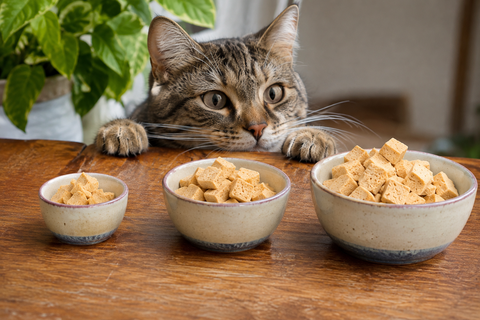
Instead of guessing, try a simple preference test.
Choose two or three appropriate treats with different animal ingredients.
For example:
Chicken breast.
Beef liver.
Whole minnows.
Offer small portions separately during calm, low-distraction moments.
Pay attention to how your cat responds.
Does your cat approach immediately?
Do they eat the reward without hesitation?
Do they return looking for more?
Does one treat consistently generate more interest?
Repeat the comparison across several sessions.
Be mindful that a cat may respond differently depending on hunger, environment, and familiarity with the food.
The goal isn't conducting a perfect scientific experiment.
It's learning which rewards your cat genuinely enjoys.
High-Value Treats Can Make Cat Training Easier
Cats are often described as difficult to train.
But cats can learn many behaviors through positive reinforcement.
The challenge is finding rewards that motivate them.
A treat your cat barely notices may not be particularly useful during training.
A treat they love can make participation more worthwhile.
For example, you might use tiny pieces of freeze-dried chicken breast to teach your cat to touch a target.
Once your cat understands the activity, you could introduce a more exciting reward for a difficult exercise.
Behaviors worth teaching
Cat training can include:
- Coming when called
- Entering a carrier voluntarily
- Touching a target
- Going to a designated mat
- Stepping onto a scale
- Cooperating with gentle grooming or handling
Keep sessions short, positive, and appropriate for your cat's comfort level.
Never withhold necessary meals to make a cat more motivated by treats.
Why Tiny Rewards Usually Work Better for Training
Cats generally need much smaller food rewards than dogs.
That makes portioning especially important.
A large treat may take too long to eat or contribute unnecessary calories.
Tiny rewards can help keep training moving.
Your cat performs the behavior.
Receives a small reward.
Consumes it.
Then returns attention to the next opportunity.
Many freeze-dried treats can be divided into smaller portions, making them useful for repeated reinforcement.
The reward doesn't need to be large to be meaningful.
A tiny piece of something your cat loves may be more effective than a larger portion of something they find ordinary.
Save the Most Exciting Treats for Challenging Moments
Not every training exercise requires your cat's absolute favorite reward.
You might use a familiar treat for easy behaviors in a quiet room.
Then reserve a particularly motivating treat for something more challenging.
For example:
Everyday Training: Small pieces of freeze-dried chicken breast.
Carrier Training: A favorite fish or organ-meat treat.
Recall Practice: Whatever reward consistently captures your cat's attention.
Cooperative Care: Tiny, highly preferred rewards delivered during comfortable, gradual training steps.
This approach gives you flexibility.
But remember that treats should support positive experiences, not pressure a frightened cat into tolerating something overwhelming.
High-Value Treats Aren't Just for Training
Food rewards can also make everyday enrichment more engaging.
Cats have natural behavioral motivations to investigate, search, stalk, and interact with their surroundings.
Treat-based enrichment gives them opportunities to use some of those behaviors.
And you don't need to increase the amount of food to make the activity more interesting.
Sometimes changing how the treat is offered is enough.
Turn Treat Time Into a Mini Hunting Game
Instead of handing your cat a treat, try hiding it.
Start with a few tiny pieces of a favorite freeze-dried reward.
Place them in easy-to-find locations around a safe room.
Let your cat investigate.
As they become familiar with the game, gradually make the hiding places more challenging.
For example, place an appropriate treat:
Beside a cat tree.
On a low, stable platform.
Inside a compatible food puzzle.
Near a favorite resting area.
The goal is encouraging your cat to use their senses and explore.
Always keep treats away from unsafe locations, small detachable objects, and anything your cat could accidentally swallow.
Food Enrichment for Cats: How to Turn Treats Into an Activity – Raw Paws Pet Food
Use High-Value Treats to Introduce Food Puzzles
Some cats immediately understand food puzzles.
Others need encouragement.
A highly preferred treat may help introduce the activity.
Start with a simple puzzle that allows your cat to retrieve food easily.
Place a small amount of their favorite freeze-dried treat inside.
Let them investigate at their own pace.
As they become more confident, gradually increase the difficulty.
If your cat becomes frustrated, simplify the activity.
Enrichment should provide an enjoyable challenge rather than create stress.
Can High-Value Treats Help Picky Eaters?
Sometimes.
A cat that seems uninterested in one treat may respond enthusiastically to another animal protein or texture.
For example, a cat that ignores chicken breast might love whole minnows. Another may prefer the richer aroma of beef liver.
You can also crumble small amounts of appropriate freeze-dried treats over a complete and balanced meal to introduce a different aroma.
However, high-value treats aren't a substitute for investigating a genuine appetite problem.
Cats can become seriously ill when they stop eating, particularly if they're overweight or have underlying health conditions.
If your cat stops eating for approximately 24 hours, seek veterinary advice promptly; kittens and medically fragile cats may need attention sooner.
Don't assume a persistent refusal to eat is simply pickiness.
How to Use Freeze-Dried Treats as Meal Toppers
Freeze-dried treats can be useful when you want to make a familiar meal more interesting.
Try crumbling a small amount over your cat's regular food.
For example:
Chicken Breast: Adds familiar poultry aroma.
Beef Liver: Introduces a rich organ-meat scent in very small amounts.
Chicken Hearts: Provides another animal-tissue option.
Whole Minnows: Adds distinctive fish aroma and texture.
For cats that prefer softer foods, certain freeze-dried treats may be moistened with clean water according to product directions.
Remember that toppers still contribute calories and nutrients.
They should complement the primary food rather than replace substantial portions of it.
Does Texture Matter as Much as Flavor?
For some cats, absolutely.
A cat may enjoy the flavor of chicken but dislike a particular texture.
Another may prefer crisp, crunchy foods.
Some cats favor softer rewards that are easy to consume.
Freeze-dried treats offer different textures depending on the original ingredient.
Chicken breast may break into light, fibrous pieces.
Liver may be more crumbly.
Chicken hearts may retain a firmer structure.
Whole minnows provide a recognizable whole-fish crunch.
If your cat refuses one treat, texture may be part of the reason.
Try an appropriately sized piece or a different presentation before concluding that your cat dislikes the ingredient itself.
Can You Rotate High-Value Cat Treats?
Yes, provided the treats are suitable for your cat and portions remain appropriate.
Rotation can introduce different animal proteins, tissues, aromas, and textures.
For example, a cat might receive:
Monday: Small chicken breast rewards during training.
Wednesday: A tiny amount of beef liver as a special reward.
Friday: Chicken hearts during a food-puzzle activity.
Sunday: A small portion of whole minnows during a treat search.
This is simply an example of variety, not a required feeding schedule.
You don't need to introduce a different treat every day.
And if your cat has a sensitive digestive system, new foods should be introduced gradually.
How Many High-Value Treats Can Cats Have Per Day?
There's no universal number of pieces.
A tiny fragment of freeze-dried chicken breast isn't equivalent to a whole minnow or a larger piece of liver.
Appropriate portions depend on:
- Your cat's daily calorie needs
- The treat's calorie content
- The primary diet
- Other snacks and toppers
- Health conditions and dietary restrictions
A commonly used guideline is to keep treats and other nutritionally unbalanced extras within approximately 10% of daily calories unless your veterinarian recommends otherwise.
For cats, that allowance can be relatively small.
And with nutrient-dense liver, concentrated vitamin A and copper deserve consideration beyond calories alone.
How Many Treats Should a Cat Have a Day? Portion Guide – Raw Paws Pet Food
Are Single-Ingredient Treats a Good Choice for Cats?
Single-ingredient treats offer one especially useful advantage: ingredient transparency.
If a treat contains only chicken breast, you know which animal ingredient you're offering.
The same applies to beef liver, chicken hearts, and whole minnows.
That simplicity can make it easier to identify your cat's preferences and manage protein rotation.
However, single-ingredient doesn't automatically mean complete, balanced, or suitable for every cat.
Cats with diagnosed food allergies or veterinary elimination diets may need to avoid certain proteins entirely.
Always follow the prescribed feeding plan.
What About Food Safety?
Freeze-drying removes moisture, but it doesn't reliably eliminate all harmful microorganisms.
That means animal-based freeze-dried treats still require appropriate handling.
Follow the manufacturer's storage directions.
Wash your hands after handling treats.
Keep food-contact surfaces clean.
Avoid cross-contamination with human food.
Supervise your cat when offering whole or larger pieces.
For households with people at increased risk of foodborne illness, additional precautions may be appropriate.
Food safety matters even when the ingredient list is simple.
What If Your Cat Doesn't Like Any of These Treats?
Not every cat will love chicken, liver, hearts, or fish.
Some cats prefer a different protein.
Others prefer moist food.
Some are more motivated by play or attention than food during certain activities.
If your cat isn't interested in a particular treat, don't force it.
Try a different appropriate reward.
Experiment with texture.
Offer the treat in a calm environment.
And remember that enrichment doesn't always require food.
Interactive toys, climbing opportunities, scratching surfaces, and play sessions can also provide valuable stimulation.
The Best High-Value Cat Treat Is the One Your Cat Chooses
At Raw Paws Pet Food, our freeze-dried animal treats offer several ways to explore what your cat finds rewarding.
Freeze-Dried Chicken Breast provides familiar muscle meat in a convenient, portionable form.
Freeze-Dried Beef Liver offers a richly aromatic organ-meat treat for occasional rewards.
Freeze-Dried Chicken Hearts introduce a different animal tissue and texture.
Freeze-Dried Whole Minnows provide a distinctive whole-fish experience for cats that enjoy fish.
Each can serve a different purpose.
Training.
Food enrichment.
Treat rotation.
Occasional meal topping.
But there's no single high-value treat that every cat will love.
The most useful approach is to experiment with appropriate ingredients, observe your cat's response, and keep portions within a balanced feeding routine.
Because finding the perfect cat treat isn't really about choosing the most expensive or complicated option.
It's about discovering that one little reward your cat considers worth showing up for.
Comments (0)
There are no comments for this article. Be the first one to leave a message!