


Cats can be surprisingly particular about their treats.
One day, they're fascinated by something new.
The next? A quick sniff, a judgmental look, and they're walking away.
But sometimes the simplest ingredients are the most interesting.
Take chicken breast. It's familiar. It's recognizable.
And when freeze-dried, it becomes a lightweight, protein-rich treat that many cats find appealing.
So, can cats eat freeze-dried chicken breast?
Yes. Cats can eat appropriately prepared freeze-dried chicken breast as an occasional treat when it fits their individual dietary needs.
For cats that enjoy poultry, freeze-dried chicken breast provides a straightforward animal-based reward without requiring a complicated recipe.
But there are a few important things to understand about portions, nutritional balance, and food safety before adding it to your cat's treat routine.
What Is Freeze-Dried Chicken Breast?
Freeze-dried chicken breast begins with chicken muscle meat.
The chicken is frozen, and moisture is removed through a process called sublimation.
During sublimation, frozen water transitions directly into vapor under controlled conditions.
This creates a dry, lightweight product that retains much of the recognizable structure of the original chicken.
Unlike treats formed from multiple ingredients, a single-ingredient freeze-dried chicken breast treat can remain remarkably simple.
Chicken breast.
That's the ingredient.
At Raw Paws Pet Food, our Freeze-Dried Chicken Breast provides a convenient animal-based treat for dogs and cats.
Why Chicken Breast Makes Sense for Cats
Cats are obligate carnivores.
That means they have specific nutritional requirements that depend on nutrients found in animal-based foods.
Animal proteins provide amino acids that contribute to normal body functions, including maintaining muscles and supporting tissue repair.
Chicken breast is a source of animal protein.
That makes it a natural fit within the broader category of animal-based cat treats.
However, being animal-based doesn't automatically make a food nutritionally complete.
Chicken breast provides valuable nutrients, but cats require more than chicken muscle meat alone.
What Nutrients Does Chicken Breast Provide?
Chicken breast naturally contains animal protein and several nutrients associated with poultry muscle meat.
These include:
- Protein
- Essential amino acids
- B vitamins
- Phosphorus
- Selenium
- Other naturally occurring nutrients
These nutrients contribute to normal physiological functions.
But chicken breast doesn't provide every nutrient cats need in the correct amounts and proportions.
That's why freeze-dried chicken breast should be treated as a complementary food rather than a complete feline diet unless the specific product is formulated and labeled as complete and balanced.
Why Freeze-Drying Is Useful for Cat Treats
Fresh chicken contains substantial moisture.
Freeze-drying removes most of that water, creating a lightweight treat that's convenient to store and portion.
This offers several practical advantages.
Convenience: No need to cook fresh chicken every time you want to offer a treat.
Portioning: Many freeze-dried pieces can be broken into smaller rewards.
Texture: The finished product provides a different experience from moist food.
Versatility: The same treat can be used for training, enrichment, or meal topping.
Freeze-drying doesn't make chicken nutritionally magical.
It simply creates a convenient way to offer recognizable animal-based food.
Is Freeze-Dried Chicken Breast Good for Cats?
Freeze-dried chicken breast can be a useful occasional treat for cats that tolerate chicken.
It provides animal protein and a simple ingredient profile.
For owners who prefer recognizable foods, that's appealing.
However, the most important consideration is how the treat fits into the overall diet.
A complete and balanced cat food should provide the foundation.
Freeze-dried chicken breast can add variety and enjoyment without replacing the nutritional structure of the primary meal.
Is Freeze-Dried Chicken Breast Better Than Traditional Cat Treats?
That depends on what you're comparing.
Some traditional cat treats contain multiple ingredients, including starches, flavors, or other components used to create a particular texture.
Single-ingredient freeze-dried chicken breast offers a different approach.
The original animal ingredient remains the focus.
But a short ingredient list doesn't automatically make one product superior in every situation.
Manufacturing quality, food safety, nutritional suitability, and your cat's preferences still matter.
The biggest advantage is knowing exactly which animal ingredient you're offering.
Freeze-Dried vs. Traditional Cat Treats: What's the Difference? – Raw Paws Pet Food
Why Cats May Love the Texture
Freeze-dried chicken breast doesn't feel like fresh chicken.
The moisture has been removed, creating a light, dry texture.
Some cats enjoy the way it breaks apart.
Others may prefer softer foods.
Texture preference varies from cat to cat.
A cat accustomed to crunchy kibble may immediately enjoy freeze-dried chicken.
Another cat may need time to investigate the unfamiliar texture.
Neither response is unusual.
Cats can be very specific about how food feels in their mouths.
Can You Break Freeze-Dried Chicken Breast Into Smaller Pieces?
Absolutely.
Many freeze-dried chicken breast pieces can be broken into smaller portions.
That's especially useful for cats because they generally need much smaller treats than dogs.
A single larger piece may provide several rewards.
Smaller pieces can also be easier to use during:
Training.
Food puzzles.
Treat searches.
Interactive enrichment.
The goal is offering a reward your cat can comfortably pick up and consume.
How Much Freeze-Dried Chicken Breast Can Cats Eat?
There's no universal number of pieces that fits every cat.
Appropriate amounts depend on:
- Body weight
- Daily calorie needs
- Primary diet
- Other treats and toppers
- Individual health considerations
A commonly used guideline is to keep treats and other nutritionally unbalanced extras within approximately 10% of daily calories unless your veterinarian recommends otherwise.
For cats, that allowance can be surprisingly small.
That's why breaking treats into tiny pieces is so useful.
A small reward can still be highly motivating.
Can Cats Eat Freeze-Dried Chicken Breast Every Day?
Potentially, yes.
A healthy cat may be able to enjoy a small amount of an appropriate freeze-dried chicken treat daily.
But frequency isn't the only consideration.
Portion size matters.
So does the complete diet.
If your cat receives chicken treats every day, those calories should still fit within the overall feeding plan.
And if your cat has a medical condition, food allergy, or prescribed diet, follow your veterinarian's recommendations.
Daily treating shouldn't gradually replace balanced nutrition.
Can Kittens Eat Freeze-Dried Chicken Breast?
Appropriately prepared freeze-dried chicken breast may be offered in very small portions to kittens that are eating solid food and a complete and balanced growth diet.
Choose pieces that are easy to chew and swallow.
Kittens have specific nutritional needs during development, so treats should remain a small part of the diet.
If you're uncertain about your kitten's readiness for a particular treat, consult your veterinarian.
Can You Use Freeze-Dried Chicken Breast for Cat Training?
Yes.
Cats can learn behaviors through positive reinforcement, and food rewards can be highly effective.
Small pieces of freeze-dried chicken breast may be useful for teaching:
Coming when called.
Touching a target.
Entering a carrier.
Sitting on a designated mat.
Participating in cooperative handling.
Keep training sessions short and positive.
The reward should be easy to eat so your cat can return attention to the activity.
Try a Simple Cat Treat Search
Freeze-dried chicken breast can also become part of a food-enrichment activity.
Start with a few tiny pieces.
Place them in easy-to-find locations around a safe room.
Let your cat investigate.
As they become familiar with the game, gradually introduce slightly more challenging hiding places.
This encourages natural searching and exploration.
For cats, food-based enrichment can provide an opportunity to engage in behaviors related to hunting and investigating their environment.
Food Enrichment for Cats: How to Turn Treats Into an Activity – Raw Paws Pet Food
Can You Use Freeze-Dried Chicken Breast as a Cat Food Topper?
Yes.
A small amount of freeze-dried chicken breast can be crumbled over your cat's regular food. This introduces a different aroma and texture.
For cats that enjoy chicken, the familiar poultry scent may make a meal more interesting.
You can sprinkle the treat over wet food or appropriate dry food.
However, the topper should remain a complementary addition rather than replacing substantial portions of a complete and balanced cat food.
Can You Rehydrate Freeze-Dried Chicken Breast?
Many freeze-dried chicken treats can be moistened with water before serving.
This may create a softer texture that's more appealing to some cats.
Use clean water and follow the product's directions.
Once rehydrated, the food should be handled as a perishable animal product rather than a shelf-stable dry treat.
Serve promptly and discard leftovers according to safe food-handling guidance.
Does Freeze-Dried Chicken Breast Provide Moisture?
In its dry form, freeze-dried chicken breast contains very little moisture.
That's one of the reasons it's shelf-stable.
If you rehydrate it, you're adding water back to the treat.
However, a small amount of rehydrated chicken shouldn't be relied upon to meet a cat's overall hydration needs.
Cats benefit from appropriate access to fresh water and a feeding plan that supports adequate hydration.
Why Moisture Matters in a Cat's Diet – Raw Paws Pet Food
What About Cats With Chicken Allergies?
Single-ingredient treats make the animal source easy to identify.
Chicken breast is chicken.
If your cat has a diagnosed chicken allergy or is following a veterinary elimination diet that excludes chicken, freeze-dried chicken breast isn't appropriate.
If your cat has a prescribed therapeutic diet, check with your veterinarian before introducing additional treats.
Simple ingredients make dietary tracking easier, but they don't override individual medical needs.
Freeze-Dried Doesn't Mean Sterile
This is an important food-safety consideration.
Freeze-drying removes moisture, but it doesn't reliably eliminate all harmful microorganisms.
If a freeze-dried treat is made from raw chicken and hasn't undergone a validated pathogen-reduction step, harmful bacteria may remain.
Follow the product's storage and handling directions.
Wash your hands after handling animal-based treats.
Keep food-contact surfaces clean.
Avoid cross-contamination with human food.
For households with people at increased risk of foodborne illness, additional caution may be appropriate.
What About Freeze-Dried Chicken Breast vs. Beef Liver?
Both can make appealing cat treats, but they're nutritionally different.
Chicken Breast: Muscle meat with animal protein and a relatively straightforward nutrient profile.
Beef Liver: A secreting organ with concentrated amounts of nutrients such as vitamin A and copper.
That means beef liver deserves extra moderation.
Chicken breast may be more flexible for routine treating, although both should remain appropriately portioned.
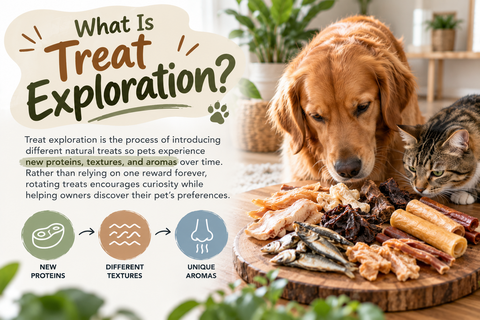
Rotate Chicken Breast With Other Natural Cat Treats
Freeze-dried chicken breast doesn't need to be the only treat your cat receives.
For cats that tolerate multiple proteins, you might rotate:
Chicken Breast: Familiar muscle meat.
Chicken Hearts: Muscular organ with naturally occurring taurine.
Beef Liver: Nutrient-dense secreting organ.
Whole Minnows: Whole-fish variety.
Each introduces different animal tissues, aromas, and textures.
Rotation isn't required for every cat, but it can be a useful way to offer variety.
What If Your Cat Refuses Freeze-Dried Chicken?
Not every cat loves every treat.
Some prefer softer textures.
Others are more interested in fish.
Some enjoy liver but ignore chicken breast.
If your cat seems uncertain, try offering a smaller piece or moistening the treat according to product directions.
You can also explore other appropriate animal proteins.
But if your cat suddenly refuses food generally, loses weight, or shows other concerning symptoms, consult your veterinarian.
A change in appetite shouldn't automatically be dismissed as pickiness.
A Simple Treat With Several Uses
At Raw Paws Pet Food, our Freeze-Dried Chicken Breast is an example of how one recognizable animal ingredient can serve several purposes.
It can become:
A small training reward.
An occasional snack.
A food-puzzle ingredient.
A treat-search reward.
A meal topper.
The ingredient doesn't need to change.
Only the way you offer it does.
So, can cats eat freeze-dried chicken breast?
Yes. When appropriately prepared, portioned, and offered as a complementary treat, freeze-dried chicken breast can be a convenient animal-based option for cats.
Choose small pieces.
Keep the primary diet complete and balanced.
Follow safe handling practices.
And let your cat's preferences guide how you use it.
Because sometimes the most versatile treat in the cabinet isn't the one with the longest ingredient list.
It's the one that keeps things simple.
Comments (0)
There are no comments for this article. Be the first one to leave a message!