

Walk through the pet food aisle and you'll notice something interesting.
Nearly every package promises premium nutrition.
Some highlight protein percentages.
Others advertise added vitamins, probiotics, antioxidants, or superfoods.
But there's one question that often gets overlooked:
What did the food look like before it became pet food?
That's an important question because nutrition isn't just about what's listed on the label. It's also about the journey an ingredient takes before it reaches your dog's or cat's bowl.
The more that journey changes the original food, the further it moves away from the ingredient nature created.
For many pet owners, that's why whole foods have become the foundation of a more thoughtful approach to feeding.
Start With the Ingredient, Not the Formula
Imagine two chefs preparing dinner.
One begins with fresh ingredients and builds a meal around them.
The other starts with isolated components, mixes them together, and shapes them into something designed to resemble food.
Both meals may provide calories.
Both may even contain similar amounts of protein and fat.
But they're built from completely different philosophies.
Whole-food nutrition asks a simple question:
"How can we preserve the natural value of this ingredient?"
Highly processed foods often ask a different one:
"How can we manufacture a consistent product?"
Neither approach exists by accident—but they produce very different results.
Food Is More Than the Sum of Its Nutrients
It's tempting to think nutrition is nothing more than numbers.
Thirty percent protein.
Fifteen percent fat.
Certain vitamin levels.
But real food doesn't exist as isolated statistics.
A beef heart isn't simply protein.
A sardine isn't only omega fatty acids.
A chicken thigh isn't just calories.
Every whole food contains countless naturally occurring compounds working together in ways that science continues to study. Proteins, healthy fats, vitamins, minerals, connective tissue, and moisture all exist as part of the same biological system.
When food stays closer to its natural form, those relationships remain largely intact.
That's one reason whole foods continue to appeal to pet owners looking for a more natural feeding philosophy.
The Ingredient Should Still Be Recognizable
Here's a simple exercise.
If you emptied your pet's treats onto the counter, could you identify what they came from
Many whole-food products make that easy.
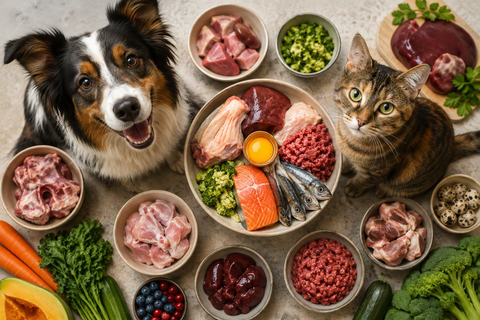
A freeze-dried chicken heart still resembles a chicken heart.
A piece of beef liver still looks like liver.
A whole minnow is unmistakably a fish.
Recognizable ingredients create transparency.
Instead of wondering what's hidden inside a recipe, you're looking directly at the ingredient itself.
That kind of simplicity builds confidence because there's very little left to interpret.
Less Time in the Factory, More Time Being Food
Every processing step changes an ingredient.
Grinding changes structure.
High heat changes texture.
Mixing combines ingredients into something entirely new.
Extrusion reshapes foods into uniform pieces.
These processes exist for practical reasons, but each one moves the finished product farther from the original ingredient.
Whole foods take a different path.
Rather than reinventing the ingredient, the goal is to preserve as much of its original identity as possible.
It's a subtle distinction—but one that matters to many pet owners.
Why Dogs and Cats Respond Differently to Real Foods
Pets don't read marketing claims.
They don't compare guaranteed analysis panels.
They respond with their senses.
The smell of real meat.
The texture of muscle fibers.
The crunch of a freeze-dried fish.
The satisfaction of chewing something that still feels authentic.
These experiences are difficult to manufacture because they naturally exist within the ingredient itself.
That's one reason many dogs and cats become excited the moment a bag of whole-food treats is opened.
Their noses recognize what they're smelling long before they take the first bite.
A Better Way to Think About Variety
Whole foods also encourage something that's easy to overlook:
Diversity.
No single ingredient provides everything in exactly the same proportions.
Beef offers one nutritional profile.
Turkey contributes another.
Fish brings its own naturally occurring fatty acids.
Organ meats provide a completely different collection of nutrients.
Rather than expecting one ingredient to do everything, whole-food feeding embraces variety over time.
Each protein becomes another chapter in the story instead of trying to write the entire book by itself.
Real Food Fits More Than One Feeding Style
Whole-food ingredients aren't limited to raw diets.
They can complement almost any feeding routine.
Some pet owners feed frozen raw recipes.
Others use freeze-dried treats during training.
Some crumble freeze-dried meat over kibble as a meal topper.
Others combine fresh foods with complete commercial diets.
The common thread isn't the feeding method.
It's the decision to include more recognizable ingredients whenever possible.
Whole foods don't demand one "correct" way to feed.
They simply offer another tool for building a thoughtful diet.
Bringing Whole Foods Into Your Pet's Routine
At Raw Paws Pet Food, whole-food nutrition isn't a trend—it's the starting point.
Our frozen raw recipes are crafted with real meat, organs, and bone to provide species-appropriate nutrition using recognizable ingredients. For training, rewarding, or enhancing meals, our single-ingredient freeze-dried treats—including Chicken Breast, Beef Liver, Chicken Hearts, and Whole Minnows—offer the convenience of shelf-stable treats while staying true to the ingredient they began as.
Whether you're introducing raw feeding or simply looking for a better reward, choosing foods that remain close to their natural form makes it easier to know exactly what you're offering your pet.
The Ultimate Guide to Freeze-Dried Treats for Dogs & Cats – Raw Paws Pet Food
Looking Beyond the Label
Ingredient panels will always matter.
Guaranteed analysis will always matter.
But neither tells the entire story.
The next time you choose food or treats for your dog or cat, take a moment to ask a different question:
How much of the original ingredient is still here?
Often, that answer reveals far more than percentages ever could.
Whole foods remind us that nutrition doesn't always need to be reinvented.
Sometimes the smartest approach is simply preserving what nature got right in the first place.
Comments (0)
There are no comments for this article. Be the first one to leave a message!