

Three Fresh Perspectives Before We Begin
Instead of approaching this topic the way most raw feeding articles do ("feed different proteins for better nutrition"), let's look at it from a different angle.
Angle 1: Variety builds nutritional resilience over time rather than chasing perfection in every meal.
Angle 2: Every animal protein tells a different nutritional story, and no single protein can tell the whole story alone.
Angle 3: Nature rarely serves the same meal twice—and neither did your pet's ancestors.
Chosen Direction: Every animal protein tells a different nutritional story. This approach explores variety as a way of creating a richer nutritional picture over weeks and months, making this article distinct from traditional rotation-feeding discussions.
One Protein Can Be Excellent. Several Can Be Better.
Imagine reading only one book for the rest of your life.
Even if it were an incredible book, eventually you'd miss everything it couldn't teach you.
Nutrition works much the same way.
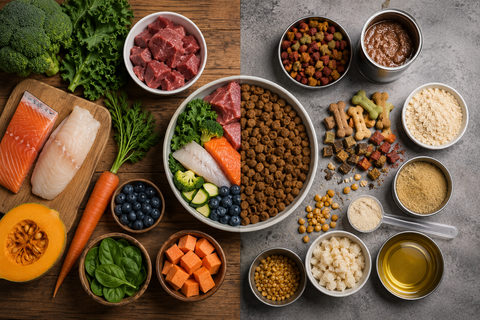
Every animal protein brings something unique to the bowl. Beef isn't simply "red meat." Chicken isn't just "lean protein." Fish isn't only a source of healthy fats.
Each ingredient contributes its own natural balance of amino acids, fatty acids, vitamins, minerals, connective tissue, and organ nutrition.
That's why many raw feeders don't think in terms of finding the perfect protein.
They think about building a complete nutritional picture over time.
Nature Was Never Monotonous
If we could observe the diets of wild canids and felines over the course of a year, one thing would become obvious.
Their menu changes.
Seasonal prey changes.
Available food changes.
Age of prey changes.
Even different parts of the same animal contribute different nutrients.
Nature doesn't provide identical meals every morning.
Instead, it creates nutritional diversity through opportunity.
While our companion animals live very different lives today, many raw feeders embrace that same philosophy by rotating proteins rather than relying on one primary ingredient indefinitely.
Different Proteins Bring Different Strengths
Rather than ranking proteins from "best" to "worst," it helps to think of each one as filling a different role.
For example:
Beef offers rich muscle meat and naturally occurring nutrients that make it a popular staple.
Chicken provides a lean protein that many pets readily enjoy.
Turkey offers another poultry option with its own nutritional profile.
Pork introduces additional variety while providing different naturally occurring fats and amino acids.
Fish, such as salmon or mackerel, contributes marine-based nutrients and omega fatty acids.
Each protein adds another layer to the overall diet.
No single ingredient needs to do everything.
Variety Extends Beyond Muscle Meat
Protein rotation isn't only about changing species.
It's also about experiencing different parts of the animal.
Muscle meat.
Organs.
Edible bone.
Tripe.
Whole fish.
Each serves a different nutritional purpose within a properly balanced raw diet.
Looking at the animal as a whole—not just individual cuts—creates a feeding philosophy centered on balance through diversity.
Rotation Can Keep Mealtime Interesting
Nutrition isn't the only reason variety matters.
Meals should also remain engaging.
Just like people appreciate different flavors and textures, many dogs and cats respond positively to new sensory experiences.
One week might feature beef.
The next might include turkey.
Another meal may introduce salmon or beef with mackerel.
Different aromas.
Different textures.
Different chewing experiences.
Those subtle changes can help maintain enthusiasm without dramatically changing your pet's routine.
A Broader Range of Naturally Occurring Nutrients
Every whole food contains its own unique nutritional fingerprint.
Some proteins naturally contain higher levels of certain vitamins.
Others contribute different minerals or fatty acids.
Instead of trying to identify one "superfood," rotational feeding allows these naturally occurring nutrients to complement one another over time.
The goal isn't nutritional perfection in a single bowl.
It's nutritional completeness across many meals.
Rotation Doesn't Have to Be Complicated
One misconception about protein variety is that every meal needs to be different.
It doesn't.
Many raw feeders simply rotate proteins as each package is finished.
Others alternate weekly.
Some feed one protein in the morning and another in the evening.
Consistency matters more than complexity.
Choose a system that's practical enough to maintain long-term.
Raw Paws Makes Protein Rotation Easy
One of the advantages of feeding Raw Paws Pet Food is the wide variety of responsibly sourced proteins available for both dogs and cats.
Depending on your pet's needs and preferences, you can rotate among options like:
- Beef Recipe
- Chicken Recipe
- Turkey Recipe
- Pork Recipe
- Salmon Recipe
- Beef & Mackerel Recipe
In addition to complete frozen raw diets, Raw Paws also offers freeze-dried treats made from single ingredients like:
- Beef Liver
- Chicken Breast
- Chicken Hearts
- Whole Minnows
These treats make it easy to introduce additional protein variety during training, enrichment activities, or as meal toppers without changing your pet's complete diet.
Variety Isn't About Constant Change
Some pet owners worry that rotating proteins means their pet will never have a stable diet.
In reality, variety works best when it's thoughtful.
The goal isn't to surprise your pet every day.
The goal is to gradually expose them to a broader range of whole-food ingredients over weeks and months.
Think of it as building a diverse nutritional portfolio rather than chasing novelty.
Transition Slowly When Introducing New Proteins
If your dog or cat has been eating the same recipe for a long time, there's no need to overhaul everything overnight.
Instead:
- Introduce one new protein at a time.
- Transition gradually over several meals.
- Monitor stool quality and overall appetite.
- Allow your pet time to adjust before introducing another recipe.
A slow, steady approach helps you identify which proteins your pet enjoys most while making the transition comfortable.
The Long-Term Value of Variety
Raw feeding isn't about finding one magical ingredient.
It's about creating a pattern of nutrition that reflects the diversity found in whole foods.
When different proteins work together over time, they create something no single ingredient can accomplish alone.
A richer nutritional landscape.
A more interesting feeding experience.
And an opportunity to nourish your dog or cat with the kind of variety that nature has always embraced.
Because the healthiest diet isn't built from one exceptional meal.
It's built from hundreds of thoughtfully varied ones.

Comments (0)
There are no comments for this article. Be the first one to leave a message!