

When people compare cat foods, they usually look at protein first.
Then fat.
Then ingredients.
Moisture rarely gets the same attention.
But for cats, water isn't simply something that belongs in a bowl beside their food. It's naturally part of the foods their bodies evolved around.
Think about the prey-based diet of a cat's ancestors.
Meat, organs, blood, and other animal tissues naturally contain substantial amounts of water. Cats weren't eating a dry meal and then heading somewhere else to compensate with a giant drink.
Food and hydration arrived together.
That history helps explain why moisture deserves a much bigger place in the conversation about feline nutrition.
Cats Have an Interesting Relationship With Water
Anyone who lives with cats knows they can be particular about drinking.
One cat loves a fountain.
Another insists on the bathroom faucet. Another seems completely uninterested in the water bowl you carefully refill every morning.
Part of that behavior makes more sense when you consider feline biology.
Cats descended from animals adapted to obtaining a meaningful portion of their water through the prey they consumed.
Modern cats should always have access to clean, fresh drinking water, but the moisture contained in food can also contribute to their overall daily fluid intake.
Food Can Deliver Water With Every Bite
Consider the difference between eating something fresh and eating something completely dried.
The nutritional experience isn't identical.
Fresh animal tissue naturally contains water within its structure.
When a cat eats moisture-rich food, they're consuming both nutrients and water simultaneously.
Frozen raw food naturally retains substantial moisture because water hasn't been intentionally removed to create a dry, shelf-stable product.
That means hydration becomes integrated into mealtime rather than relying exclusively on what happens at the water bowl later.
Dry Foods Tell a Different Story
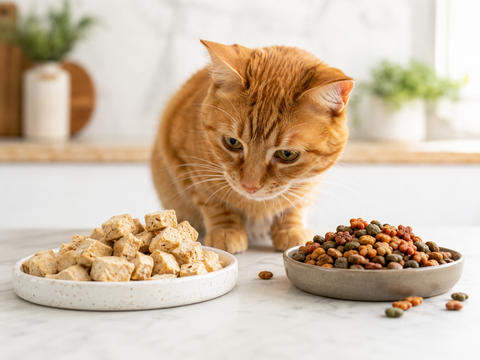
Dry foods are intentionally manufactured with relatively low moisture.
That's one reason they're so convenient.
They're easy to scoop.
Easy to store.
Shelf-stable.
But removing water also changes the physical nature of the food.
The nutrients become more concentrated by weight, and the cat receives considerably less water directly from each bite.
That doesn't automatically make every dry food inappropriate. It simply means moisture intake becomes an important part of understanding the complete feeding picture.
Moisture Changes the Numbers on the Label
Water does something else that's easy to miss:
It changes how nutrient percentages appear.
Imagine two foods.
One contains a substantial amount of natural moisture.
The other is very dry.
The dry food may show a much higher percentage of protein on its guaranteed analysis simply because there is less water diluting the calculation.
That doesn't necessarily mean the difference in actual nutrient concentration is as dramatic as the labels initially suggest.
This is why nutrition professionals sometimes use dry matter basis when comparing foods with very different moisture levels.
It removes water from the equation so the nutrients can be evaluated on a more equal basis.
Moisture Is Part of the Food's Natural Structure
Water isn't simply poured around nutrients.
Inside fresh food, moisture is integrated throughout the tissue itself.
Muscle contains water.
Organs contain water.
Fish contains water.
That natural moisture influences:
- Texture
- Aroma
- Palatability
- Nutrient concentration
- The overall eating experience
This is one reason frozen raw food feels fundamentally different from dry food even when both provide complete nutrition.
The structure of the meal has changed.
Why Raw Feeding Naturally Includes Moisture
One characteristic of frozen raw feeding is that moisture remains part of the original ingredients.
At Raw Paws Pet Food, our frozen raw recipes are made with animal-based ingredients such as meat, organs, and bone while retaining the natural moisture found within those foods.
For cat owners interested in whole-food nutrition, that creates an important connection:
The protein hasn't been separated from the water naturally surrounding it.
They're delivered together.
Fish Adds Another Moisture-Rich Whole Food
Fish fits naturally into this conversation because fresh fish is another animal food with substantial natural moisture.
Marine proteins also contribute their own combination of:
- Animal protein
- Naturally occurring fats
- Trace nutrients
- Distinctive aroma
This makes fish useful not only for protein variety but also as another example of how whole animal foods naturally combine nutrients and water within the same ingredient.
Why Fish Is Such a Valuable Protein for Dogs & Cats – Raw Paws Pet Food
Freeze-Dried Foods Are Different—and That's the Point
Freeze-dried foods begin with moisture-rich ingredients, but the preservation process intentionally removes most of that water.
That's what makes them lightweight and shelf-stable.
Freeze-dried treats such as Chicken Breast, Chicken Hearts, Beef Liver, and Whole Minnows can fit beautifully into a cat's routine as rewards, toppers, or enrichment foods.
But they're not moisture-rich simply because they began as fresh animal ingredients.
Understanding the difference between frozen raw and freeze-dried formats helps pet owners use each for what it does best.
Frozen raw preserves natural moisture.
Freeze-drying removes moisture for convenience and shelf stability.
Both can fit within a whole-food lifestyle for different reasons.
Don't Forget the Water Bowl
Food moisture isn't a replacement for fresh drinking water.
Cats should always have clean water available.
Some cats prefer wide bowls that don't touch their whiskers.
Others enjoy moving water from fountains.
Some seem fascinated by faucets.
Providing multiple appealing water sources throughout the home can encourage cats to drink according to their individual preferences.
The goal isn't choosing between moisture-rich food and drinking water.
It's recognizing that both contribute to the bigger hydration picture.
Look at the Whole Meal, Not Just the Nutrients
Nutrition labels naturally draw our attention toward percentages.
Protein.
Fat.
Fiber.
But food is more than those numbers.
Its physical structure matters too.
How much water does it contain?
How concentrated is it?
How does your cat experience it?
How does that format fit into the rest of their feeding routine?
Those questions help reveal differences that a guaranteed analysis alone cannot show.
Water Belongs in the Nutrition Conversation
Moisture isn't the flashiest nutrient topic.
It doesn't appear on packages with the same excitement as protein or omega fatty acids.
But for cats, it deserves attention.
Their evolutionary history is rooted in consuming moisture-rich animal foods, and modern feeding formats can differ dramatically in how much water they provide directly through meals.
That's why thoughtful feline nutrition looks beyond what's in the food.
It also considers what's been removed.
At Raw Paws, our whole-food philosophy recognizes that frozen raw food naturally brings together animal protein, nutrients, and moisture within the same feeding experience.
Because sometimes one of the most important ingredients in your cat's bowl is the one we barely think about at all:
Water.
Comments (0)
There are no comments for this article. Be the first one to leave a message!