


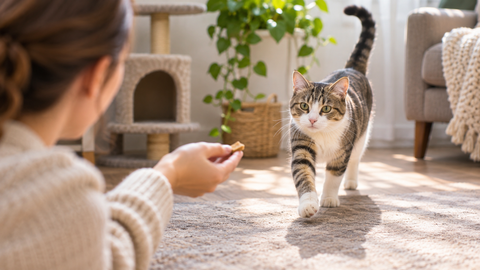
You offer your cat a treat.
They sniff it, take a bite, and you hear that unmistakable little crunch. Then they look up, hoping for another.
Some cats love crunchy treats, while others prefer soft, moist foods. But why does texture make such a difference?
Crunchy treats offer a distinct eating experience that can influence how cats investigate, bite, and enjoy their food. The way a treat breaks apart, its aroma, and its familiarity can all contribute to a cat's preferences.
Understanding these differences can help you choose better treats for training, enrichment, and everyday rewards.
Do Cats Actually Prefer Crunchy Treats?
Some cats do, but there isn't one texture that every cat prefers.
Food preferences can be influenced by several factors, including:
- Previous experiences: Cats may be more comfortable with textures they've eaten before.
- Aroma and flavor: The smell of chicken, beef, or fish may be more important than texture.
- Size and shape: Smaller pieces may be easier to pick up and consume.
- Dental comfort: Cats with oral discomfort may avoid firm or crunchy foods.
- Individual preference: Some cats simply enjoy one texture more than another.
A cat that regularly eats dry kibble may readily accept crunchy treats, while another accustomed to wet food may prefer something softer.
However, familiarity doesn't guarantee preference. Cats can also develop an interest in new textures when introduced gradually.
The best treat is one your cat enjoys and can comfortably eat.
What Makes Crunchy Treats Different?
Texture changes how food feels and breaks apart in a cat's mouth.
Soft treats compress or separate easily, while crunchy treats generally fracture when bitten.
That difference can influence how a cat interacts with the food.
For example, fresh chicken breast and freeze-dried chicken breast begin with the same animal tissue, but they provide very different eating experiences.
Fresh chicken is moist and tender. Freeze-dried chicken is lightweight, dry, and often crisp.
Some cats enjoy that crunchy texture, while others prefer the softer alternative.
Do cats enjoy the sound of crunching?
It's tempting to assume cats love crunchy treats because of the sound they make.
However, there's no established evidence that the crunching sound itself is what makes these treats appealing.
A cat's response may be influenced by aroma, flavor, texture, familiarity, or several factors together.
Rather than assuming the sound is responsible, pay attention to which treats your cat consistently enjoys.
Why Freeze-Dried Treats Have a Unique Texture
Freeze-drying removes most of the moisture from food while retaining much of its original structure.
The resulting texture depends on the ingredient.
Some freeze-dried treats are light and crumbly. Others are firmer or more structured.
At Raw Paws Pet Food, our freeze-dried animal treats offer several different eating experiences.
| Freeze-Dried Treat | Typical Texture | What Makes It Different |
| Chicken Breast | Light, crisp, sometimes fibrous | Muscle meat that can often be broken into small pieces |
| Chicken Hearts | More structured, potentially firmer | A muscular organ with a different texture from breast meat |
| Beef Liver | Often brittle or crumbly | Rich organ-meat aroma and concentrated nutrients |
| Whole Minnows | Crunchy whole-fish structure | Contains muscle, skin, small bones, and other fish tissues |
Actual texture can vary between individual pieces.
Freeze-Dried Chicken Breast
Raw Paws Freeze-Dried Chicken Breast is a convenient option for cats that enjoy poultry.
Many pieces can be broken into smaller portions, making them useful for training, food puzzles, or occasional meal topping.
Freeze-Dried Chicken Hearts and Beef Liver
Chicken hearts introduce a different poultry tissue and texture. They naturally contain animal protein and nutrients associated with heart tissue, including taurine.
Beef liver offers a distinctive organ-meat aroma and often has a more crumbly texture.
However, liver contains concentrated amounts of vitamin A and copper, so it should be offered conservatively rather than in unlimited quantities.
Freeze-Dried Whole Minnows
Whole minnows provide a particularly distinctive crunchy experience.
Unlike treats made from individual cuts of meat, whole minnows retain the recognizable structure of the small fish.
For cats that enjoy seafood, Raw Paws Freeze-Dried Whole Minnows may offer an appealing combination of fish aroma and crunchy texture.
Choose appropriately sized pieces and supervise feeding.
Do Crunchy Cat Treats Help Clean Teeth?
One common misconception is that crunchy treats automatically help clean a cat's teeth.
Crunchiness alone doesn't establish a dental benefit.
Many crunchy treats break apart when bitten without providing meaningful cleaning action along the teeth.
Products specifically designed for dental health may have tested shapes, textures, or formulations intended to reduce plaque or tartar.
Ordinary freeze-dried meat treats shouldn't automatically be considered dental-cleaning products.
If dental health is your goal, look for products with appropriate supporting evidence, such as those accepted by the Veterinary Oral Health Council, and follow your veterinarian's recommendations.
What if your cat has sensitive teeth?
Cats with dental disease, missing teeth, or oral discomfort may prefer softer foods.
Watch for changes such as dropping food, chewing on one side, or suddenly refusing crunchy treats.
If these behaviors appear, consult your veterinarian.
Some freeze-dried treats can also be moistened with clean water according to product directions to create a softer texture.
How Crunchy Treats Can Support Cat Enrichment
Crunchy treats aren't just for handing out as snacks.
Their dry texture and convenient portion sizes can make them useful for food-based enrichment.
Food enrichment encourages cats to explore, investigate, and work for rewards.
For example, you can use small freeze-dried pieces in a compatible food puzzle or create a simple treat-searching game.
Try a crunchy treat search
- Choose a few tiny pieces of your cat's favorite freeze-dried treat.
- Place them in easy-to-find locations around a clean, safe room.
- Allow your cat to investigate and discover the rewards.
- Gradually make the hiding places more challenging as your cat becomes comfortable.
The goal isn't increasing how much food your cat eats.
It's making the experience more interactive.
Are Crunchy Treats Good for Cat Training?
Absolutely, provided your cat enjoys them and can consume them comfortably.
A small piece of freeze-dried chicken breast may work well when teaching a cat to touch a target or come when called.
A tiny amount of beef liver may be especially motivating during a challenging exercise.
And cats that love fish may respond enthusiastically to whole minnows.
The important thing is choosing rewards that are small, appealing, and quick to eat.
If a crunchy treat takes too long to chew or crumbles into scattered pieces, try a smaller portion or a different texture.
How Many Crunchy Treats Should Cats Have?
The appropriate amount depends on your cat's calorie needs, primary diet, and the specific treat.
A commonly used guideline is to keep treats and other nutritionally unbalanced extras within approximately 10% of daily calories, unless your veterinarian recommends otherwise.
That includes training rewards, food-puzzle treats, and meal toppers.
For nutrient-dense ingredients such as beef liver, concentrated vitamins and minerals deserve additional consideration beyond calories.
Remember that freeze-dried treats are generally complementary foods, not complete and balanced meals.
Freeze-drying also doesn't reliably eliminate harmful microorganisms. Follow product handling instructions, wash hands after handling animal-based treats, and keep food-contact surfaces clean.
The Best Crunchy Treat Depends on Your Cat
At Raw Paws Pet Food, our freeze-dried chicken breast, chicken hearts, beef liver, and whole minnows provide different textures and animal-based aromas for cats to explore.
Some cats may prefer the light crunch of chicken breast.
Others may love the distinctive texture of whole minnows or the rich aroma of beef liver.
But crunchy treats aren't automatically healthier than soft treats, and they won't appeal to every cat.
The best approach is to experiment with suitable options, observe your cat's preferences, and keep portions appropriate.
Use crunchy treats for training, enrichment, occasional meal topping, or simple everyday rewards.
Because sometimes what makes a treat interesting isn't just the ingredient.
It's the way your cat experiences every little bite.
Comments (0)
There are no comments for this article. Be the first one to leave a message!