


You buy your cat a comfortable new bed.
It's soft, cozy, and perfectly sized.
But instead of curling up in it, your cat climbs into the cardboard box it arrived in. Sound familiar?
Cats have an incredible ability to turn ordinary household objects into their favorite resting spots.
And cardboard boxes seem to hold a special appeal.
But why do cats love hiding in boxes?
The answer involves several natural feline behaviors, including seeking shelter, observing their surroundings, exploring enclosed spaces, and finding comfortable places to rest.
For many cats, a simple cardboard box offers something surprisingly valuable: a small, sheltered space where they can relax while keeping an eye on what's happening around them.
Let's explore why boxes are so appealing and how you can use them to create an enriching environment for your cat.
1. Boxes Provide a Sense of Security
One of the most important reasons cats seek out boxes is the shelter they provide.
Cats are predators, but their natural behavior also includes avoiding potential threats.
An enclosed space can offer protection from several directions while allowing the cat to observe the surrounding environment.
A cardboard box creates a simple hiding spot with walls that partially shield the cat from activity around them.
For a cat living in a busy household, that can be especially appealing.
Think about a home with children, other pets, or frequent visitors.
A quiet box tucked into a comfortable corner may provide an opportunity to retreat from activity without leaving the room entirely.
Having access to a safe hiding place can help cats manage their environment on their own terms.
2. Cats Naturally Seek Out Hiding Places
Hiding is part of normal feline behavior.
In natural environments, cats may use vegetation, sheltered spaces, or other forms of cover while resting or observing their surroundings.
Domestic cats retain many of these behavioral tendencies.
That's why you may find your cat hiding:
- Beneath furniture
- Inside closets
- Behind curtains
- Under blankets Inside cardboard boxes
These locations provide different degrees of enclosure and privacy.
For many cats, a box is simply another appealing hiding option.
However, there's an important distinction between normal hiding and a sudden change in behavior.
A cat that occasionally naps inside a box is usually behaving normally.
A cat that suddenly hides constantly, refuses food, or avoids interaction may be experiencing stress, pain, or illness.
If hiding becomes unusual or persistent, consult your veterinarian.
3. Boxes Give Cats a Place to Observe Without Being Seen
Have you ever noticed your cat sitting inside a box with only their head visible?
They're not necessarily sleeping.
Sometimes they're watching everything happening around them.
A box can provide partial visual cover while allowing the cat to monitor movement nearby.
This fits naturally with feline behavior.
Cats frequently observe their surroundings before deciding whether to approach, investigate, or remain where they are.
An enclosed space may make that observation feel more comfortable.
Your cat can watch someone walking through the room, follow the movement of a toy, or simply relax without being directly exposed on every side.
Of course, we can't know exactly what an individual cat is thinking.
But the combination of shelter and visibility helps explain why boxes can be such attractive resting and observation spots.
4. Cardboard Boxes Can Be Cozy and Comfortable
Security isn't the only possible attraction.
Cardboard can also provide a comfortable resting surface.
Its structure offers some insulation, and the walls of a small box may help reduce exposure to drafts.
Cats often seek warm resting locations, particularly when sleeping.
A box placed in a comfortable room may provide a sheltered place to curl up.
Some cats seem to prefer boxes that fit relatively closely around their bodies.
Others choose larger boxes where they can stretch out.
The ideal size depends on the individual cat.
A good cat box should allow comfortable movement, turning around, and resting without forcing the cat into an awkward position.
Avoid placing boxes near heaters, open flames, or other potential hazards.
5. Boxes Encourage Curiosity and Exploration
Cats are naturally curious animals.
A new object appearing in their environment can become an opportunity to investigate.
And cardboard boxes offer several interesting features.
They have openings.
Corners.
Different surfaces.
Unfamiliar scents.
And spaces that weren't there yesterday.
Your cat may approach a new box, sniff the edges, step inside, and begin exploring.
Some cats immediately settle down for a nap.
Others turn the box into part of a play session.
They may jump inside, peek over the edge, or bat at a toy from their hiding spot.
These activities can provide opportunities for exploration and play without requiring expensive equipment.
Sometimes the simplest additions to a cat's environment create the most interest.
6. Boxes Can Become Part of Hunting-Style Play
Cats retain natural behaviors associated with stalking, chasing, and pouncing.
A cardboard box can become part of those activities.
For example, your cat may crouch inside a box while watching a toy move nearby.
Then, when the toy passes, they suddenly pounce.
The box provides cover that can make the activity more engaging.
You can encourage this type of play by gently moving an interactive wand toy near the box's opening.
Allow your cat opportunities to catch the toy rather than making it impossible to reach.
Always supervise wand-toy play and put string or ribbon attachments away afterward.
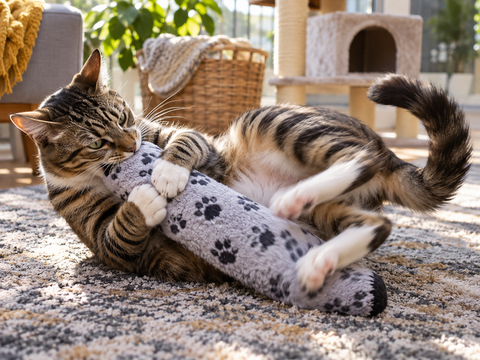
At Raw Paws Pet Food, our catnip-based toys can also be incorporated into suitable play activities for cats that enjoy them.
Not every cat responds to catnip, but those that do may show increased interest in certain toys.
Why Cats Carry Toys Around the House: What It Means – Raw Paws Pet Food
7. Boxes Can Support Environmental Enrichment
Environmental enrichment involves providing opportunities for pets to engage in natural behaviors and interact with their surroundings.
For indoor cats, this can include climbing, scratching, exploring, hiding, and playing.
Cardboard boxes offer an inexpensive way to introduce variety.
Here are four simple ideas.
Create a cardboard hideaway
Place a clean, appropriately sized box in a quiet corner.
Add a soft, washable blanket if your cat enjoys one.
Allow them to enter and leave freely.
Build a simple box tunnel
Arrange two or three sturdy boxes with openings that allow your cat to move between them.
Make sure the boxes are stable and cannot collapse or trap your cat.
Introduce a new play space
Place an empty box in a familiar room and allow your cat to investigate.
You don't need to encourage them immediately.
Sometimes giving your cat time to explore independently is enough.
Combine boxes with food enrichment
Use a few appropriately portioned treats in an easy, supervised searching activity around a clean box.
For example, small pieces of Raw Paws Freeze-Dried Chicken Breast can be used as rewards for investigating a new enrichment setup.
Keep food on clean surfaces rather than inside shipping boxes that may contain dirt or residues.
Is Your Indoor Cat Bored? 9 Signs to Watch For – Raw Paws Pet Food
Are Cardboard Boxes Safe for Cats?
Cardboard boxes can be excellent enrichment tools, but safety still matters.
Before giving your cat a box, check for:
- Staples, sharp edges, or exposed fasteners
- Packing tape and adhesive strips
- Plastic wrapping or loose packaging materials
- Strings, ribbons, or handles that could cause entanglement
- Small detachable pieces that could be swallowed
Choose clean, sturdy boxes and remove damaged cardboard if your cat begins chewing off or swallowing pieces.
Avoid boxes that previously contained hazardous substances.
If your cat enjoys chewing cardboard, supervise closely.
Swallowing pieces can create gastrointestinal problems.
Also, make sure your cat can enter and exit freely.
A hiding place should never become a trap.
Why Does My Cat Suddenly Hide in Boxes All the Time?
Many cats enjoy boxes simply because they're comfortable.
But a sudden increase in hiding behavior deserves attention.
Stressful changes, such as moving, introducing another pet, or having visitors, may influence where a cat chooses to spend time.
Medical problems can also cause cats to withdraw.
Watch for additional signs, including reduced appetite, changes in litter box habits, unusual vocalization, decreased activity, or reluctance to interact.
If your cat's hiding behavior changes significantly, contact your veterinarian.
A box can be a useful retreat, but it shouldn't be used to overlook possible health concerns.
Sometimes the Simplest Things Make Cats Happiest
Cats don't always need elaborate toys or expensive furniture to enjoy their environment.
Sometimes an ordinary cardboard box offers exactly what they're looking for.
A sheltered resting place.
An interesting object to investigate.
A hiding spot during play. Or simply a quiet corner where they can observe the household.
At Raw Paws Pet Food, we believe enrichment should encourage cats to explore, play, and express natural behaviors. Whether that involves a cardboard hideaway, a favorite catnip toy, or a simple treat-searching activity, the best experiences are often the ones that match your cat's individual preferences.
So, why do cats hide in boxes?
Because boxes can provide shelter, comfort, opportunities for observation, and a little everyday adventure.
And the next time your cat ignores an expensive new bed in favor of the box it came in?
You might just understand why.
Comments (0)
There are no comments for this article. Be the first one to leave a message!