


Your cat spots their favorite stuffed toy.
They pounce, wrap their front paws around it, and pull it toward their chest.
Then their back legs start moving.
Kick. Kick. Kick.
Sometimes they bite the toy at the same time. Other times, they roll onto their side and continue kicking with surprising enthusiasm.
If you've witnessed this behavior, you've seen what cat owners commonly call the bunny kick.
But why do cats kick toys with their back legs?
Bunny kicking is a natural movement pattern associated with feline hunting behavior, play, and sometimes self-defense. When directed toward an appropriate toy, it gives cats an opportunity to grab, hold, and kick in ways that resemble their natural behaviors.
Understanding why cats bunny kick can help you choose better toys, recognize playful behavior, and avoid unwanted scratching.
What Is a Cat Bunny Kick?
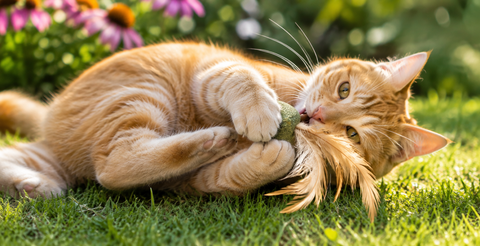
A bunny kick happens when a cat grabs an object with their front paws and rapidly kicks against it using their hind legs.
The movement often occurs while the cat is lying on their side or back.
A typical sequence looks like this:
- The cat grabs a toy with their front paws.
- They pull it toward their body.
- Their back legs deliver repeated kicks.
- They may bite or grip the toy.
- They release it, reposition, or continue playing.
The name comes from the rapid hind-leg movement, which resembles a rabbit kicking.
However, the behavior itself is distinctly feline.
Why Do Cats Bunny Kick Their Toys?
Bunny kicking is closely connected to natural predatory behavior.
Cats retain many movement patterns associated with hunting, including stalking, chasing, pouncing, grabbing, and biting.
When a cat captures an object, they may hold it with their front paws while using their powerful hind legs to kick against it.
This coordinated movement can occur during predatory-style play.
Front paws help grip and stabilize the object, while the hind legs deliver repeated kicks.
The movement can be surprisingly strong, especially when a cat is fully engaged.
Some cats also bite their toys while kicking, combining several natural behaviors into one activity.
This doesn't mean your cat necessarily believes the stuffed toy is living prey.
Instead, the toy provides an opportunity to perform familiar movements.
Does Bunny Kicking Mean Your Cat Is Angry?
Not necessarily.
Bunny kicking can occur during both playful and defensive interactions. The important distinction is the surrounding behavior.
Signs of playful bunny kicking
A cat enjoying play may:
- Voluntarily approach the toy
- Grab, kick, release, and reengage
- Return to the toy after a short pause
- Display relatively relaxed body language between bursts of activity
Signs of defensive behavior
A frightened or overstimulated cat may show:
- Flattened ears
- Hissing or growling
- A tense body
- Attempts to escape
- Forceful biting or scratching
- Other signs of agitation
No single signal tells the entire story.
A cat bunny kicking a favorite toy may be playing, while a cat kicking during unwanted handling may be trying to defend themselves.
Why Does My Cat Bunny Kick My Hand or Arm?
Sometimes bunny kicking happens during petting or rough play.
Your cat may suddenly grab your hand, pull it close, and begin kicking.
This can happen for several reasons.
Playful grabbing: Some cats learn to treat moving hands as toys.
Overstimulation: Continued petting may become uncomfortable, prompting the cat to grab or kick.
Defensive behavior: A cat that feels restrained or threatened may use their claws and hind legs to protect themselves.
Regardless of the reason, avoid encouraging cats to wrestle with your hands.
Even playful kicking can cause painful scratches.
Instead, provide an appropriate kicker toy. If your cat grabs your arm, avoid escalating the interaction and calmly disengage when safe.
This is especially important with kittens. Teaching them that hands are toys can encourage rough play that continues into adulthood.
What Is a Cat Kicker Toy?
A kicker toy is designed to give cats something they can grab with their front paws and kick with their hind legs.
These toys are often longer than ordinary cat balls or small stuffed mice.
Common designs include elongated plush toys, soft fabric tubes, and stuffed animal-shaped toys.
The longer shape allows the cat to hold one section while kicking another.
How to choose a safe kicker toy
Look for a toy that is:
- Long enough for comfortable gripping and kicking
- Lightweight and easy to manipulate
- Made from durable, cat-appropriate materials
- Free from easily detached pieces
- Suitable for your cat's size and play style
Inspect toys regularly for loose seams, exposed stuffing, damaged fabric, or detachable parts.
Remove damaged toys that could create choking or ingestion hazards.
Do Catnip and Silvervine Encourage Bunny Kicking?
For some cats, yes.
Catnip contains naturally occurring compounds that can trigger behavioral responses in susceptible cats.
Those responses may include rolling, rubbing, increased playfulness, or greater interest in nearby toys.
A catnip-filled kicker toy may encourage some cats to grab and kick. However, not every cat responds to catnip.
Sensitivity varies between individuals.
Silvervine is another plant used in feline enrichment. Some cats respond to silvervine even when they show little interest in catnip.
At Raw Paws Pet Food, our catnip-based toys provide another way to introduce scent-based variety into a cat's play routine.
However, catnip and silvervine aren't necessary for bunny kicking.
Many cats happily kick ordinary plush toys without either ingredient.
Is Bunny Kicking Good Enrichment for Indoor Cats?
Bunny-kicking play can be one useful part of an indoor cat's enrichment routine.
Environmental enrichment involves providing opportunities for cats to engage in natural, species-appropriate behaviors.
These include stalking, chasing, pouncing, grabbing, kicking, climbing, and exploring.
An appropriate kicker toy allows cats to physically manipulate an object.
This can complement other enrichment activities such as interactive wand play, scratching surfaces, climbing structures, and food puzzles.
Try a simple bunny-kicking play session
- Begin with a short interactive play session.
- Introduce an appropriately sized kicker toy.
- Allow your cat to investigate and interact voluntarily.
- Let them grab, bite, or kick the toy if they choose.
- End the session when your cat loses interest or shows signs of overstimulation.
Some cats will immediately begin bunny kicking.
Others may prefer batting, carrying, or chasing the toy.
Don't force the activity.
The best enrichment follows your cat's natural preferences.
Do Kittens and Senior Cats Bunny Kick?
Yes. Bunny kicking can occur at different life stages.
Kittens may practice grabbing, biting, and kicking during play with toys or littermates.
Provide appropriately sized toys and avoid encouraging rough play with human hands.
Adult cats may continue bunny kicking throughout their lives, depending on their preferences.
Senior cats may still enjoy the activity, although mobility limitations or conditions such as arthritis can affect comfort.
For older cats, consider softer toys, stable surfaces, and shorter play sessions.
If your cat suddenly stops enjoying familiar activities or appears uncomfortable, consult your veterinarian.
When Should Bunny Kicking Be a Concern?
Bunny kicking is usually normal when it occurs during comfortable play.
However, changes in behavior deserve attention.
Consider veterinary guidance if your cat:
- Suddenly becomes aggressive during ordinary handling
- Shows signs of pain while moving
- Stops participating in previously enjoyed play
- Develops unusual sensitivity to touch
- Appears frightened or distressed during interactions
If your cat begins grabbing and kicking during petting, don't automatically assume they're playing.
They may be communicating discomfort or a desire for the interaction to stop.
Respect those signals and adjust how you interact with them.
Let Your Cat's Play Style Lead the Way
At Raw Paws Pet Food, we believe enrichment should give cats opportunities to explore, investigate, and express natural behaviors.
Some cats love chasing toys across the room.
Others prefer carrying stuffed mice, investigating catnip toys, or grabbing and kicking an appropriately sized plush toy.
Bunny kicking is just one part of that broader range of feline play.
So, why do cats kick toys with their back legs?
It's a natural movement pattern that can appear during predatory-style play, object manipulation, and defensive behavior.
When directed toward a safe, appropriate toy, it can provide an engaging opportunity to grab, hold, and kick. The key is choosing toys that match your cat's preferences, supervising when necessary, and allowing them to participate voluntarily.
Because sometimes the best enrichment isn't about teaching your cat something new.
It's about giving them the right opportunity to express behaviors they already know.
Comments (0)
There are no comments for this article. Be the first one to leave a message!