

Your dog gets a treat.
A few seconds later, it's gone.
Now imagine giving them something that requires a little more effort.
Something they have to investigate.
Sniff.
Lick.
Reposition.
Figure out how to reach the reward inside.
That's the idea behind stuffed cow hooves.
Instead of offering a quick snack, a stuffed hoof combines an edible filling with a natural, hollow structure that encourages dogs to interact with their food.
For dogs that enjoy food-based activities, that can turn treat time into a more involved experience.
But there's an important consideration: cow hooves are extremely hard, and their rigid structure can present dental and swallowing risks. They aren't the right enrichment tool for every dog.
So what makes stuffed cow hooves interesting, and how can owners decide whether they're appropriate?
Let's explore.
What Exactly Is a Stuffed Cow Hoof?
A stuffed cow hoof is a natural cattle hoof with an edible filling placed inside its hollow center.
Cow hooves are primarily composed of keratin, the structural protein also found in nails, hair, and claws.
That gives the outer hoof its naturally hard structure.
The filling creates an entirely different experience.
At Raw Paws Pet Food, stuffed hoof options include:
Rather than simply offering a plain hoof for gnawing, these products introduce flavor and aroma inside the hollow center.
The dog now has something to investigate and work toward.
The Difference Between Eating and Working for Food
Imagine placing a small treat directly in front of your dog.
They eat it.
The interaction ends.
Now imagine placing food inside an appropriate enrichment object.
Your dog has to determine how to access it.
That may involve:
Sniffing.
Licking.
Changing positions.
Moving the object.
Approaching the filling from another angle.
The food hasn't necessarily changed.
The experience has.
That's what makes food enrichment so interesting.
It encourages dogs to interact with their environment rather than simply receiving every reward immediately.
Why Dogs Love Food-Filled Objects
Dogs naturally use their noses and mouths to explore.
A food-filled object combines several sensory experiences at once.
Scent: The filling provides an aroma worth investigating.
Taste: The edible reward motivates continued interest.
Texture: The filling feels different from the surrounding object.
Problem-Solving: The dog has to figure out how to reach the food.
Manipulation: The object may need to be repositioned during the activity.
That combination can make a food-filled object more engaging than an ordinary treat.
The enrichment comes from the interaction—not simply the number of calories offered.
Licking Becomes Part of the Activity
One of the biggest differences between a plain cow hoof and a stuffed one is licking.
A plain hoof primarily invites gnawing.
A stuffed hoof introduces an edible filling that dogs may lick from the center.
That creates another form of oral activity.
Instead of repeatedly biting into the outer material, a dog may focus on retrieving the food inside.
For some dogs, licking and food retrieval can provide a satisfying activity.
However, the hard hoof shell remains present, so owners should still monitor whether the dog begins biting or crushing it.
The Hollow Shape Creates a Challenge
A stuffed hoof doesn't present every bit of filling on a flat, open surface.
Some of the food may sit farther inside the hollow center.
That changes how the dog interacts with it.
They may have to:
Turn the hoof.
Change their head position.
Lick from another angle.
Hold the object steady.
Continue investigating.
This can extend the food interaction compared with simply placing the same filling in a bowl.
And for dogs that enjoy working to access rewards, that extra challenge may be part of the appeal.
Peanut Butter Stuffed Hooves: A Familiar Flavor
Peanut butter is a popular flavor among many dogs.
Its aroma and rich taste can make it especially motivating during food-based enrichment.
A Peanut Butter Stuffed Hoof combines that appealing filling with the natural hollow structure of the hoof.
Instead of immediately consuming the entire reward, the dog may spend time licking and investigating the center.
For peanut-butter-loving dogs, that can make the activity particularly interesting.
As with any peanut butter product, ingredients matter. Peanut butter intended for dogs should never contain xylitol, which is toxic to dogs.
Bacon & Cheese Stuffed Hooves: A Different Sensory Experience
Not every dog is equally interested in peanut butter.
Some are much more motivated by savory flavors.
Bacon & Cheese Stuffed Hooves introduce a different aroma and taste profile.
The filling may encourage dogs to investigate the center, lick, and reposition the hoof as they work toward the reward.
This is a useful reminder that enrichment isn't one-size-fits-all. One dog may love peanut butter.
Another may find a savory filling much more exciting.
The best reward is often the one your individual dog finds motivating.
Food Enrichment Doesn't Need to Mean More Food
Here's one of the most useful principles of enrichment.
You can make the same amount of food more interesting without increasing the portion.
A reward offered directly may disappear quickly.
The same appropriate amount offered through a food-retrieval activity may require more interaction.
That doesn't mean every treat needs to become a puzzle.
Sometimes a snack can simply be a snack.
But introducing occasional food-based challenges can provide another kind of mental engagement.
Why Difficulty Matters
A food-enrichment activity should create curiosity.
Not frustration.
If your dog can't reach the filling at all, the experience may stop being enjoyable.
Some dogs will patiently investigate.
Others may become frustrated and begin biting aggressively at the surrounding object.
With a hard cow hoof, that's particularly important.
If your dog starts forcefully biting the hoof to access the filling, end the activity.
A softer food-stuffable toy may be a better choice for that dog's problem-solving style.
Plain Cow Hooves vs. Stuffed Cow Hooves
These products may look similar from the outside, but the filling changes the activity.
Plain Cow Hoof: Primarily provides a hard surface for recreational gnawing.
Stuffed Cow Hoof: Adds an edible reward that encourages licking, investigation, and food retrieval.
For food-motivated dogs, the stuffed version may generate more immediate interest.
But it's important to understand what doesn't change.
The hoof shell remains extremely hard.
Stuffing doesn't reduce the risk of tooth fractures or damage from aggressive chewing.
Are Cow Hooves Good for Dogs? Benefits, Risks & Safety – Raw Paws Pet Food
Can Stuffed Hooves Keep Dogs Busy Longer?
They may extend the food interaction because the dog has to work to access the filling.
However, there's no universal activity duration.
The experience depends on:
- Amount and consistency of filling
- Dog size
- Food motivation
- Licking behavior
- How easily the filling can be reached
- Whether the dog attempts to chew the hoof itself
One dog may carefully lick for an extended period.
Another may remove the accessible filling quickly.
The goal isn't maximizing minutes at all costs.
It's providing an engaging activity that's appropriate for the individual dog.
Stuffed Hooves vs. Food Puzzles
Stuffed hooves are one type of food-based enrichment, but they're far from the only option.
Food puzzles can also encourage dogs to:
Investigate.
Manipulate objects.
Use their noses.
Work to access food.
The biggest difference is the material surrounding the reward.
A cow hoof is extremely hard.
Many commercial food-stuffable rubber toys are designed with more flexibility.
For dogs with dental concerns or aggressive chewing habits, a softer enrichment toy may be preferable.
Why the Filling Matters More Than the Shell
This is an interesting way to think about stuffed hooves.
What creates the food-enrichment experience?
Is it the hardness of the hoof?
Or is it the process of accessing the filling?
Much of the enrichment comes from the second.
The dog smells food.
Investigates.
Licks.
Changes position.
Works toward a reward.
Those same behaviors can be encouraged using appropriately designed rubber toys, food puzzles, or other safer alternatives for dogs that shouldn't interact with very hard objects.
You don't necessarily need extreme hardness to create a meaningful challenge.
Are Stuffed Cow Hooves Good for Power Chewers?
Not automatically.
Power chewers often apply substantial force when working on objects.
That can make extremely hard cow hooves a poor match.
A dog that attempts to crack the hoof or crush the shell may risk damaging their teeth.
For these dogs, consider whether a softer food-enrichment product would provide the same reward-seeking activity without the rigid outer structure.
More chewing strength doesn't automatically mean harder is better.
What About Gentle Chewers?
Gentle chewers may be more interested in licking the filling than biting the hoof.
That can create a different experience from a dog that immediately attacks the hard shell.
However, gentle chewing doesn't eliminate all risks.
The hoof can still crack, develop sharp edges, or become small enough to swallow.
Supervision remains essential.
Owners should also consider the dog's dental health before offering a very hard product.
Stuffed Hooves Still Count Toward Treat Intake
The filling is food.
That means calories count.
Peanut butter and cheese-based fillings can be relatively calorie dense.
When offering stuffed hooves, consider the reward alongside:
- Training treats
- Meal toppers
- Other natural chews
- Everyday snacks
Treats and extras should complement a complete and balanced primary diet.
A food puzzle doesn't make the food inside nutritionally invisible.
Watch for Food Sensitivities
Different fillings introduce different ingredients.
Peanut butter products may contain peanuts and other formulation ingredients.
Bacon-and-cheese fillings can introduce dairy and meat ingredients. If your dog has food allergies, digestive sensitivities, or dietary restrictions, check the specific product's ingredient list before offering it.
Don't assume that because the outside is a cow hoof, the entire product contains only beef-derived ingredients.
The filling matters.
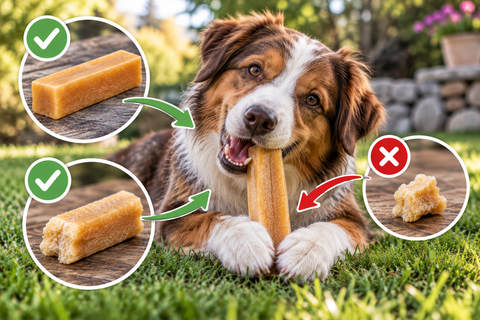
When Should You Take a Stuffed Cow Hoof Away?
Supervise the entire activity and remove the hoof if:
- Your dog begins aggressively biting or crushing the shell
- Cracks or sharp edges develop
- Pieces separate from the hoof
- Your dog attempts to swallow a large fragment
- The hoof becomes small enough to swallow whole
- Your dog shows signs of dental discomfort
- The product becomes unsuitable for continued use
Don't wait for the filling to be completely gone if the hoof itself becomes a concern.
Safety takes priority over finishing the reward.
Make Food Enrichment Part of a Larger Routine
Stuffed hooves are only one possible enrichment activity.
A varied routine might include:
Food Puzzles: Encourage problem-solving and food retrieval.
Treat Searches: Let dogs use their noses to locate rewards.
Stuffed Enrichment Toys: Create licking and food-access activities.
Natural Chews: Provide appropriate chewing opportunities.
Training Games: Combine mental engagement with rewards.
Different activities encourage different behaviors.
our dog doesn't need one product to provide every kind of enrichment.
Let Your Dog's Behavior Guide the Choice
Watch what your dog actually enjoys.
Do they carefully lick the filling?
Reposition the object?
Remain engaged without aggressively biting the shell?
Or do they immediately attempt to crack the hoof apart?
Those behaviors tell you whether this type of enrichment is a suitable match.
A dog that enjoys licking may benefit from a softer food-stuffable toy.
A dog that prefers chewing may enjoy an appropriately sized, more forgiving edible chew.
The activity should fit the dog—not the other way around.
The Real Value Is Turning Food Into an Experience
At Raw Paws Pet Food, our Peanut Butter Stuffed Hooves and Bacon & Cheese Stuffed Hooves combine natural cattle hooves with flavorful fillings that can encourage dogs to sniff, lick, investigate, and work toward a reward.
That's what makes the concept interesting.
The food becomes something to interact with rather than simply something to swallow.
But the hard hoof shell also deserves careful consideration.
These products aren't appropriate for every dog, and softer food-enrichment alternatives may be preferable when dental safety is a concern.
So why do stuffed cow hooves appeal to dogs?
Because they combine several experiences in one object:
Scent.
Taste.
Licking.
Investigation.
Problem-solving.
The reward isn't just what's inside.
It's everything the dog gets to do while trying to reach it.
And that's the bigger lesson behind food enrichment:
Sometimes the best way to make a treat more interesting isn't changing the food. It's changing the experience around it.
Comments (0)
There are no comments for this article. Be the first one to leave a message!