


Your dog has food.
A comfortable bed.
Plenty of toys.
And a family that loves them.
So why are they still following you around the house, stealing socks, or barking at absolutely nothing?
Sometimes the answer isn't more food, another walk, or a new toy.
It may be more meaningful enrichment.
Dogs need opportunities to explore, sniff, chew, investigate, learn, and interact with their environment. When those opportunities are limited, some dogs develop behaviors that owners interpret as stubbornness, excess energy, or attention-seeking.
But boredom doesn't look the same in every dog.
Some become restless.
Others get destructive.
And some simply lose interest in the same routine.
Here are eight everyday behaviors that may suggest your dog could benefit from more mental and physical enrichment—and what you can do about them.
What Is Dog Enrichment?
Dog enrichment means providing activities and experiences that allow dogs to engage in natural behaviors.
That can include:
- Sniffing and exploring
- Chewing
- Searching for food
- Learning new behaviors
- Playing
- Investigating different textures
- Solving simple problems
- Interacting with people and other dogs appropriately
Enrichment isn't simply keeping a dog busy.
It's giving them opportunities to use their senses, make choices, and engage with their surroundings.
And it doesn't necessarily require expensive equipment.
Sometimes a handful of treats and a few minutes of creativity are enough to make an ordinary day more interesting.
1. Your Dog Constantly Looks for Something to Do
You sit down.
Your dog appears.
You move to another room.
They're right behind you.
You stop working.
They bring you a toy.
Then another.
Then a sock.
Some dogs naturally enjoy staying close to their people, so following you isn't automatically a sign of boredom.
But if your dog repeatedly seeks interaction and struggles to settle despite having their basic needs met, they may benefit from more structured activities.
Try this: Introduce a short scent-searching game or five-minute training session before expecting your dog to relax.
A little focused engagement may be more useful than repeatedly telling them to lie down.
2. They're Chewing Things That Aren't Theirs Shoes.
Furniture.
Remote controls.
The corner of a pillow.
Dogs explore and interact with objects through their mouths, and chewing is a normal canine behavior.
But when your dog consistently targets household items, it may indicate they need more appropriate outlets.
That doesn't mean every destructive chewing problem comes from boredom. Puppy teething, separation-related distress, anxiety, and other factors can contribute too.
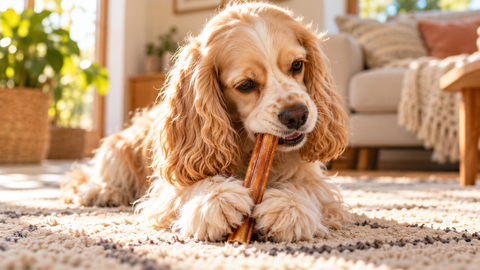
Try this: Provide appropriately sized chew toys or supervised natural chews that match your dog's chewing style.
At Raw Paws Pet Food, options such as bully sticks, collagen sticks, beef cheek rolls, and lighter ear chews offer different textures and chewing experiences.
The goal is giving your dog something appropriate to work on rather than expecting them to stop wanting to chew.
Why Dogs Need to Chew: More Than Just a Bad Habit – Raw Paws Pet Food
3. They Bark at Every Little Sound
A car passes.
Bark.
Someone walks down the sidewalk.
Bark.
A leaf moves.
Apparently, another emergency.
Barking is normal communication, and some dogs are naturally more vocal than others.
But excessive alert barking can sometimes become more frequent when a dog has limited opportunities for engagement throughout the day.
Without other activities, ordinary household sounds may become major events.
Try this: Add sniffing walks, food puzzles, and short training games that reward calm behavior.
You can also manage visual triggers when necessary.
If barking appears rooted in fear, anxiety, or distress, work with a qualified behavior professional rather than assuming enrichment alone will resolve it.
4. They Seem Restless Even After Exercise
You just finished a walk.
Your dog had plenty of opportunities to move.
But they're still pacing around the house.
Why?
Because physical exercise and mental enrichment aren't exactly the same thing.
A walk focused entirely on distance may provide movement without much opportunity to investigate the environment.
Dogs also benefit from using their noses, exploring new information, and making choices.
Try this: Turn part of your next walk into a sniffing walk.
Allow your dog to investigate appropriate areas at their own pace.
Instead of measuring success only by distance, pay attention to how much opportunity your dog has to explore.
A slower walk can sometimes provide a different kind of satisfaction than a faster one.
5. They Lose Interest in Their Toys Quickly
You buy a new toy.
Your dog loves it.
For approximately twelve minutes.
Then it joins the growing collection of forgotten toys.
Sound familiar?
Dogs can become familiar with objects that are continuously available.
That doesn't mean the toys are bad. It may simply mean they no longer provide much novelty.
Try this: Rotate toys rather than leaving every option available all the time.
Put some away.
Bring different ones out later.
You can also introduce variety through different textures, shapes, and interactive activities.
A familiar toy may become interesting again when it returns after a break.
6. They Steal Household Items to Start a Game
Your dog grabs a sock.
Looks directly at you.
Waits.
You stand up.
They run.
Congratulations.
You've been invited to play chase.
Some dogs learn that grabbing forbidden objects creates immediate interaction.
And if the resulting chase is exciting, the behavior may become self-reinforcing.
Try this: Provide appropriate opportunities for interactive play before your dog starts inventing their own games.
Short retrieve sessions, tug with suitable toys, or treat-based training can offer engagement.
Also teach a positive trade behavior so your dog learns to release objects without turning the situation into a confrontation.
7. They Spend a Lot of Time Digging or Searching
Some dogs love digging.
Others constantly investigate corners, blankets, cushions, or the yard.
These behaviors aren't automatically problems.
Digging and searching can be natural, rewarding activities.
But when your dog has few appropriate outlets, they may begin directing those instincts toward places you'd rather they didn't.
Try this: Create a supervised digging area or a simple scent-searching game.
Hide small, appropriate treats around a safe room and encourage your dog to find them.
Start with easy locations.
Gradually increase the challenge.
Now your dog has a productive opportunity to investigate and search.
8. They Struggle to Settle Into a Routine
Some dogs seem to move constantly from one activity to another.
They ask to go outside.
Come back inside.
Grab a toy.
Drop it.
Pace.
Seek attention.
Repeat.
A dog that has difficulty settling may benefit from a more predictable balance of activity and rest.
But restlessness can also reflect discomfort, anxiety, or medical issues.
If the behavior is new, persistent, or accompanied by other changes, consult your veterinarian.
Try this: Build a routine that includes short enrichment sessions followed by opportunities for quiet rest.
For example:
A sniffing walk.
A brief training game.
An appropriate food puzzle.
Then a comfortable resting period.
Enrichment should support a balanced day—not keep your dog constantly stimulated.
Boredom Isn't the Only Explanation
This is an important distinction.
The eight behaviors above may suggest that your dog needs more enrichment, but none proves boredom on its own.
Similar behaviors can occur because of:
Anxiety
Separation-related distress
Pain or discomfort
Changes in routine
Insufficient physical exercise
Age-related changes
Medical conditions
If your dog's behavior changes suddenly, becomes intense, or interferes with normal daily life, consult your veterinarian.
Enrichment is valuable, but it shouldn't replace appropriate medical or behavioral care.
Start With Your Dog's Natural Interests
Not every dog enjoys the same activities.
Some love sniffing.
Others prefer chewing.
Some are happiest chasing a toy.
Others become completely absorbed in food puzzles.
Pay attention to what your dog voluntarily chooses.
Do they investigate every interesting smell during walks?
Carry toys around the house?
Settle down happily with a chew?
Enjoy learning new behaviors?
Those preferences provide clues about which enrichment activities may be most rewarding.
Chewing Can Be a Valuable Enrichment Activity
Chewing gives dogs an opportunity to engage in a natural behavior while physically interacting with an object.
Different chews create different experiences.
Bully Sticks: Firm, gradually softening animal-based chewing.
Collagen Sticks: Another edible texture.
Beef Cheek Rolls: A broader chewing project.
Cow Ears: Lighter, crunchy chewing.
Lamb Ears: Smaller ear-style chewing.
Choose products appropriate for your dog's size, dental health, and chewing habits.
Always supervise natural chews and remove pieces that become swallowing hazards.
Natural Dog Chew Rotation: 7 Chews to Keep Dogs Interested – Raw Paws Pet Food
Food Enrichment Can Make Meals More Interesting
Your dog already needs to eat.
Why not occasionally turn part of that food into an activity?
Instead of placing every meal directly into a bowl, consider using a portion of your dog's regular food in an appropriate puzzle feeder or enrichment toy.
You can also use small amounts of treats for supervised searching games.
At Raw Paws, freeze-dried options such as Chicken Breast, Beef Liver, Chicken Hearts, and Whole Minnows can be used as appropriately sized rewards.
The important thing is keeping food portions consistent.
More enrichment doesn't have to mean more calories.
Try a Simple Treat Search
This is one of the easiest enrichment activities to introduce.
Start with a few small treats.
Let your dog watch you place them in easy locations around a safe room.
Then encourage them to search.
As your dog learns the game, gradually make the hiding places more interesting.
The activity encourages sniffing and problem-solving while allowing your dog to work for rewards.
For food-motivated dogs, this can be a great way to add variety without buying additional toys.
Rotate Activities, Not Just Products
Enrichment doesn't require a new purchase every day.
Try changing the activity instead.
One day might involve a sniffing walk.
Another could include a food puzzle.
Another might feature supervised chewing.
A different day could involve learning a new trick.
The goal is creating a variety of appropriate experiences.
A dog doesn't need every activity every day.
They need a routine that offers meaningful opportunities to engage.
How Much Enrichment Does a Dog Need?
There's no universal number of minutes that works for every dog.
Needs vary according to:
- Age
- Breed tendencies
- Health
- Activity level
- Temperament
- Daily routine
- Individual preferences
A young, active dog may need different activities from an older dog that prefers shorter sessions.
Start with manageable amounts.
Observe how your dog responds.
Adjust gradually.
The goal isn't filling every waking minute.
It's creating a healthy balance between activity, enrichment, and rest.
Watch for Signs That Enrichment Is Helping
Once you introduce new activities, pay attention to your dog's behavior.
Do they engage willingly?
Can they complete the activity without becoming frustrated?
Do they appear comfortable afterward?
Are they better able to settle during appropriate rest periods?
Has unwanted attention-seeking decreased?
These observations can help you understand whether the new routine is a good fit.
If an activity consistently creates frustration or overexcitement, simplify it or try something different.
You Don't Need an Expensive Enrichment Collection
Some of the most useful activities require very little equipment.
A cardboard box can become a supervised searching game.
A familiar toy can become interesting again after rotation.
A walk can become a scent adventure.
A handful of treats can become a training session.
A properly selected chew can provide another kind of engagement.
The value comes from what your dog gets to do—not how much the activity costs.
A Simple Daily Enrichment Routine
If you're not sure where to begin, try building a few short activities into your existing schedule.
Morning: Allow extra sniffing opportunities during a walk.
Midday: Offer a short training session or food puzzle.
Afternoon: Rotate an interactive toy or play a brief game.
Evening: Provide an appropriate supervised chew or another calming activity your dog enjoys.
This is only an example.
Your dog's age, health, and preferences should determine the actual routine.
Your Dog May Be Asking for More Than Another Toy
At Raw Paws Pet Food, we believe enrichment is about giving dogs opportunities to enjoy the natural behaviors that make them dogs.
Chewing.
Sniffing.
Exploring.
Searching.
Playing.
Learning.
Sometimes unwanted behaviors are a clue that a dog needs more appropriate outlets for those instincts.
Other times, they signal something that requires veterinary or behavioral attention.
The important thing is paying attention.
If your dog constantly seeks activities, chews household objects, loses interest in toys, or struggles to settle, consider whether their routine offers enough meaningful engagement.
Start small.
Introduce variety.
Use activities your dog naturally enjoys.
And remember that enrichment isn't about keeping your dog busy every second.
It's about making the moments they're awake more interesting, rewarding, and fulfilling.
Comments (0)
There are no comments for this article. Be the first one to leave a message!