

Your dog has a favorite chew.
They recognize the bag.
Know exactly where you keep it.
And appear almost instantly whenever you open the cabinet.
But even a dog that loves bully sticks doesn't necessarily need the same chewing experience every time.
Think about how different it feels to crunch something crispy versus slowly working through something chewy.
Dogs experience those differences too.
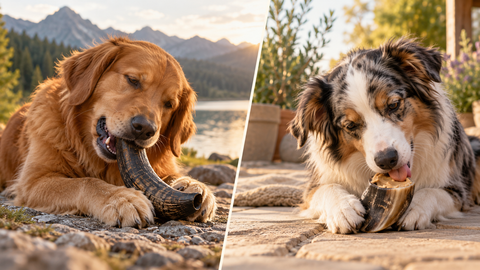
A natural dog chew rotation introduces different textures, shapes, animal tissues, and chewing challenges without requiring you to constantly increase the number of treats your dog receives.
One day might feature a lighter, crunchy ear. Another might involve a thick bully stick.
A different session could introduce a collagen stick or substantial beef cheek roll.
The goal isn't finding seven chews that all last as long as possible.
It's building a rotation where each chew serves a different purpose.
Here's how to get started.
Why Rotate Natural Dog Chews?
Dogs have a natural drive to chew, but not every chew creates the same experience.
Some products encourage steady gnawing.
Others provide lighter crunching.
Some gradually soften.
Others have broad shapes that require repositioning.
Rotating between appropriate natural chews introduces variety through:
- Texture
- Shape
- Density
- Animal protein
- Chewing duration
- Physical interaction
That variety can make chew time more interesting without requiring every session to become a major project.
And because different chews have different characteristics, rotation also allows you to match the activity to the occasion.
First, Know Your Dog's Chewing Style
Before building a rotation, pay attention to how your dog actually chews.
A gentle chewer may carefully nibble and take frequent breaks.
A moderate chewer may make steady progress.
A persistent chewer may settle in and work continuously.
A power chewer may finish lighter products surprisingly quickly.
Those differences matter because a chew that's appropriate for one dog may not suit another.
Dog size helps determine appropriate chew dimensions. Chewing style helps determine the type of experience.
A smaller dog isn't automatically a gentle chewer.
And a larger dog isn't automatically a power chewer.
Watch the individual dog first.
Chew #1: Bully Sticks for the Everyday Chewing Experience
Bully sticks are one of the most versatile natural dog chews because they're available in different lengths and thicknesses.
Made from beef pizzle, they provide a firm animal-based chew that gradually softens as saliva works into the material.
Dogs can hold the stick between their paws, work from one end, rotate it, and gradually consume it.
For a natural chew rotation, bully sticks can serve as the dependable regular option.
Choose thinner varieties for lighter chewing experiences or more substantial thicknesses for dogs that need additional material to work through.
Thin vs. Thick Bully Sticks: Which Size Is Best for Your Dog? – Raw Paws Pet Food
Chew #2: Collagen Sticks for a Different Beef-Based Texture
Collagen sticks provide another stick-shaped chewing experience, but they're made from collagen-rich animal tissue rather than beef pizzle.
That creates a different texture and structure.
For dogs already familiar with bully sticks, collagen introduces variety without necessarily changing the animal protein.
Your dog still receives a beef-based chew.
But the material behaves differently.
That makes collagen sticks useful when you want to rotate textures while keeping the familiar stick format.
Chew #3: Beef Cheek Rolls for a Bigger Project
Some dogs want something more substantial.
That's where Beef Cheek Rolls become interesting.
Their broad, rolled structure creates a different challenge from a narrow stick.
Dogs may work an edge.
Rotate the roll.
Soften one section.
Switch sides.
Return to another area.
For persistent chewers, the shape itself can create additional engagement.
Beef cheek rolls can fill the role of a larger chewing project within the rotation, provided the product is appropriately sized and the dog works through it safely.
How Long Do Beef Cheek Rolls Last? What Determines Chew Time – Raw Paws Pet Food
Chew #4: Cow Ears for Lighter Crunch
Not every chewing session needs to involve a dense stick or substantial roll.
Cow ears offer a lighter, flatter, crunchier experience.
Their broad shape encourages dogs to work around edges and reposition the chew differently.
For gentle and moderate chewers, a cow ear may provide plenty of activity.
For power chewers, it may become a relatively quick treat.
That's okay.
A shorter chewing experience can still be worthwhile.
Cow ears fill a different role from long-lasting chews, which is exactly what makes them useful in a rotation.
Chew #5: Lamb Ears for a Smaller Chewing Experience
Lamb ears introduce another animal protein while providing a naturally smaller ear-style chew.
Compared with many cow ears, lamb ears are generally lighter and more compact.
That can make them particularly interesting for smaller dogs, gentle chewers, or owners looking for a shorter activity.
They're also useful when you want to rotate beyond beef.
Instead of simply changing the shape of a cattle-based chew, you're introducing lamb as the animal source.
Lamb Ears for Dogs: Benefits of This Smaller Natural Chew – Raw Paws Pet Food
Chew #6: Pig Ears for a Richer, Crunchy Option
Pig ears provide another variation within the natural ear-chew category.
They're generally richer and fattier than cow ears, giving them a different nutritional and sensory profile.
That richness can make pig ears especially appealing to many dogs.
But it also means portion awareness matters.
Pig ears can work as an occasional option within a varied chew routine rather than something that needs to be offered constantly.
Think of them as a different experience:
Cow Ear: Generally leaner, lighter crunch.
Pig Ear: Richer pork-based chew.
Lamb Ear: Smaller lamb-based option.
Three ear chews.
Three different experiences.
Chew #7: Compressed Rawhide for Dense, Methodical Gnawing
Compressed rawhide offers a different kind of chewing activity.
Prepared animal hide is pressed tightly together to create a dense structure.
Instead of quickly crunching through a lighter chew, dogs may gradually gnaw, scrape, soften, and reposition the compressed material.
Compressed rawhide may fit dogs that gnaw methodically, but it isn't appropriate for dogs that aggressively tear off or swallow large pieces. Rawhide can present choking or intestinal obstruction risks, so some owners may prefer a more digestible chew or a flexible enrichment toy.
Are Compressed Rawhide Bones Good for Dogs? What to Know – Raw Paws Pet Food
Your Seven-Chew Rotation at a Glance
| Natural Chew | Main Difference | Rotation Role |
| Bully Sticks | Beef pizzle; gradually softens | Everyday chewing |
| Collagen Sticks | Collagen-rich tissue | Texture variety |
| Beef Cheek Rolls | Broad, rolled structure | Larger chewing project |
| Cow Ears | Thin, crunchy beef-based chew | Lighter activity |
| Lamb Ears | Smaller lamb-based chew | Smaller portions and protein variety |
| Pig Ears | Richer pork-based chew | Occasional crunchy reward |
| Compressed Rawhide | Dense, compressed hide | Methodical gnawing, where appropriate |
These aren't rankings.
They're different options for different dogs and occasions.
Do You Need All Seven Chews?
Absolutely not.
A rotation doesn't need to contain seven products simply because this guide includes seven examples.
For some dogs, three well-chosen options provide plenty of variety.
You might start with:
A bully stick.
A cow ear.
A collagen stick.
Then observe which textures your dog enjoys.
Add another option only when it makes sense.
A thoughtful rotation is more useful than an overflowing chew cabinet.
How Often Should You Rotate Chews?
There's no universal schedule.
Some owners offer different natural chews throughout the week.
Others rotate less frequently.
The important thing is considering the size and nutritional contribution of each chew.
Edible chews count toward overall treat intake.
A substantial beef cheek roll isn't equivalent to a small training treat.
A rich pig ear may contribute more fat than a lighter chew.
Your dog's complete and balanced primary diet should remain the nutritional foundation.
A commonly used guideline is to keep treats and extras within approximately 10% of daily calories unless your veterinarian recommends otherwise.
A Simple Weekly Chew Rotation Example
Here's an example of how you might introduce variety without offering an edible chew every day.
Monday: Appropriately sized bully stick.
Wednesday: Cow ear or lamb ear.
Friday: Collagen stick.
Weekend: Beef cheek roll or another suitable chew.
On other days, provide enrichment through activities such as food puzzles, training, scent games, or interactive play.
The schedule isn't a rule.
It's simply a way to avoid relying on the same product every time.
Adjust frequency and portions to your dog's nutritional needs.
Change Texture, Not Just Protein
Protein rotation gets plenty of attention.
But chew rotation can also focus on physical characteristics.
For example:
A bully stick and collagen stick may both come from cattle.
But they use different animal tissues.
A cow ear also comes from cattle, yet it creates a completely different crunchy experience.
A beef cheek roll adds another structure.
That means one animal species can provide several distinct chewing activities.
Variety isn't always about introducing a new protein.
Sometimes it's about changing what your dog gets to do with the chew.
Match the Chew to the Occasion
Different situations may call for different types of enrichment.
Maybe you want a lighter chewing activity after a walk.
A cow ear may fit.
Maybe your dog enjoys settling down for a more substantial supervised session.
A thick bully stick or beef cheek roll may be appropriate.
Maybe you want to introduce a new animal protein.
A lamb ear could provide another option.
Thinking about the purpose of the session helps prevent every chew from serving exactly the same role.
Don't Rotate Into Something Too Hard
It's tempting to include every type of natural chew available.
But not every product is appropriate for every dog.
Extremely hard options such as yak chews, horns, hooves, and recreational bones can increase the risk of dental fractures.
They aren't necessary for a successful chew rotation.
A dog that aggressively bites down on hard objects may benefit from more forgiving edible chews or appropriate rubber enrichment toys instead.
The goal is variety—not maximum hardness.
Watch for Food Sensitivities
Rotating animal proteins can introduce new foods.
That's useful for many dogs, but not every dog should receive frequent dietary changes.
If your dog has a diagnosed food allergy, sensitive digestion, or a prescribed elimination diet, choose chews that fit the veterinary feeding plan.
Introduce unfamiliar edible chews gradually and observe for digestive changes.
A single-ingredient chew can make the animal source easier to identify, but it doesn't guarantee that the product will agree with every dog.
Supervision Is Part of Every Rotation
Different chews create different potential concerns.
Bully sticks can become short enough to swallow whole.
Ears may develop pieces that a dog attempts to gulp.
Beef cheek rolls can soften and separate.
Rawhide can create swallowing and obstruction concerns.
Always supervise chewing sessions.
Remove pieces that become unsuitable.
Take the remaining chew away before it becomes small enough to swallow whole.
And watch how your dog responds to each new product.
A chew that's appropriate at the beginning of a session may not remain appropriate until the end.
Keep Track of What Your Dog Actually Enjoys
You don't need a complicated system.
Simply notice:
Which chew gets the most excitement?
Which texture keeps your dog engaged?
Which products are finished quickly?
Which ones does your dog approach carefully?
Does a particular chew cause digestive upset?
Those observations help you build a rotation based on your dog's actual preferences rather than generic recommendations.
Your dog will usually provide plenty of feedback.
You just have to watch.
The Best Chew Rotation Is Built Around Your Dog
At Raw Paws Pet Food, our natural chew collection includes bully sticks, collagen sticks, beef cheek rolls, cow ears, lamb ears, pig ears, compressed rawhide, and other animal-based options.
Each offers something different.
Bully sticks provide familiar, gradually softening chewing.
Collagen introduces another texture.
Beef cheek rolls create a larger project.
Ears bring lighter crunch and protein variety.
Compressed rawhide provides dense gnawing for dogs that can handle it appropriately.
But you don't need every chew.
And you certainly don't need to offer them all in one week.
Start with a few appropriate options.
Rotate textures. Introduce variety thoughtfully.
Monitor portions.
Supervise.
Adjust based on your dog's preferences.
Because the best natural dog chew rotation isn't about owning the largest collection.
It's about making each chewing experience a little different—and choosing the right one for the dog waiting beside you.
Comments (0)
There are no comments for this article. Be the first one to leave a message!