

You hand your dog a yak chew.
They carry it to their favorite spot, settle down, and start gnawing.
Thirty minutes later, it barely looks different.
The next day?
Still plenty left.
That's one of the reasons yak chews have become popular among dog owners looking for long-lasting natural chews.
But then another owner mentions their dog finished one surprisingly quickly.
So, how long do yak chews actually last?
Yak chews can last anywhere from a single chewing session to multiple supervised sessions, depending on the size of the chew, its density, and how your dog chews.
Some dogs gradually wear down the surface over time. Others are much more efficient at working through firm materials.
There's no universal stopwatch for yak chews, and that's exactly why understanding the factors behind chew time is so useful.
What Makes Yak Chews So Long-Lasting?
Yak chews, also commonly called Himalayan dog chews, are traditionally made from milk that's processed into a dense, hardened cheese.
Depending on the product, the milk may come from yaks, cows, or a combination of the two.
During production, moisture is removed and the cheese is pressed and dried into a firm structure.
The result is very different from ordinary cheese. Instead of being soft and easy to bite through, yak chews are hard and compact.
Dogs generally have to gradually gnaw or scrape the surface to make progress.
That dense, low-moisture structure is the main reason yak chews can provide extended chewing sessions.
Size Is the First Factor That Affects Chew Time
A larger yak chew generally contains more material than a smaller one.
That gives your dog more to work through.
But bigger doesn't automatically mean better.
The chew still needs to be appropriate for your dog's:
- Body size
- Mouth size
- Jaw strength
- Chewing habits
- Dental health
At Raw Paws Pet Food, yak chews are available in Small, Medium, Large, and Extra-Large sizes, making it easier to select an option suited to different dogs.
The goal isn't simply choosing the largest product. It's choosing a size your dog can manage appropriately.
Thickness Matters Too
Imagine two yak chews of similar length.
One is relatively thin.
The other is considerably thicker.
Even though they're the same length, they don't provide the same amount of chewing material.
The thicker option gives the dog more material to work through across the chew.
That can influence duration, particularly for dogs that gradually wear down the surface.
However, thickness doesn't eliminate the importance of chewing technique.
A determined dog may still work through a substantial yak chew faster than expected.
Density Creates Resistance
Yak chews are known for their dense structure.
Unlike softer edible treats that can be broken apart quickly, a hardened milk-based chew requires more persistent effort.
Your dog may:
Gnaw an edge.
Scrape the surface.
Rotate the chew.
Work another section.
Return to the original area.
That repeated interaction takes time.
For dogs that prefer slow, methodical gnawing, the density can make the chew especially engaging.
But hardness also introduces an important consideration: dental safety.
Harder Doesn't Automatically Mean Better
It's easy to assume the toughest chew must provide the greatest value.
But extremely hard chews can increase the risk of tooth fractures, especially in dogs that bite down forcefully.
A yak chew may last a long time because it's very hard.
That doesn't automatically mean it's appropriate for every dog.
If your dog aggressively crunches hard objects rather than gradually gnawing them, a less rigid chew may be a better choice.
Dogs with existing dental problems, damaged teeth, or a history of fractures should be evaluated by a veterinarian before receiving particularly hard chews.
The goal is enjoyable chewing—not maximum resistance at any cost.
Gentle Chewers May Make Yak Chews Last a Long Time
Gentle chewers tend to approach natural chews slowly.
They may:
Nibble occasionally.
Take frequent breaks.
Carry the chew around.
Work one small area at a time.
For these dogs, a yak chew may provide several supervised sessions.
But there's another side to consider.
If your dog is so gentle that they barely make progress, the chew may be harder than necessary.
A long-lasting product isn't automatically useful if your dog finds it frustrating or uncomfortable.
Watch their interest and chewing technique.
Moderate Chewers Often Make Steady Progress
Moderate chewers generally apply consistent pressure without attempting to break the entire chew apart.
They may spend time working different edges and surfaces.
For these dogs, yak chews can provide an extended gnawing activity when the hardness is appropriate.
The chew may gradually become smaller over several sessions.
However, individual results vary.
A dog that enjoys firm surfaces may spend considerable time with one chew, while another may prefer something that softens more quickly.
Power Chewers Can Change Everything
Power chewers are often surprisingly efficient.
They may quickly identify the best angle for applying pressure and focus on one section until they make significant progress.
But here's where owners need to be careful.
A power chewer isn't automatically a good candidate for an extremely hard yak chew.
Dogs that bite down aggressively may be at greater risk of damaging their teeth on rigid products.
If your dog tends to crack or crush hard chews, consider a more forgiving alternative rather than simply choosing a larger or harder yak chew.
Long-lasting should never become an indestructibility contest.
Saliva Gradually Changes the Surface
Even very firm chews change as dogs work on them.
Saliva moistens the surface.
Repeated gnawing wears down small amounts of material.
The dog may then move to another section.
With yak chews, this process can be slower than with softer animal-tissue chews because of the hardened cheese structure.
That's part of what makes the experience different.
The dog isn't necessarily removing large amounts of material with every bite.
They may be gradually wearing down the surface instead.
Why Some Dogs Finish Yak Chews Faster Than Others
Two dogs can receive the same size yak chew and have completely different experiences.
Consider these differences:
Dog A: Gently scrapes the surface, takes breaks, and returns later.
Dog B: Gnaws continuously and applies greater pressure.
Dog A may enjoy the chew over several sessions.
Dog B may make faster progress—or may need a different type of chew if they're attempting to crack it.
Chew time depends on the interaction between the product and the individual dog.
The size printed on the package can't predict everything.
Do Yak Chews Last Longer Than Bully Sticks?
They can, but there's no universal winner.
Yak chews are typically harder and denser than bully sticks.
Bully sticks are made from beef pizzle and gradually soften as dogs chew.
Yak chews are made from hardened milk-based material and generally wear down through persistent gnawing.
Those differences can influence how long each lasts.
But bully sticks also come in different thicknesses and lengths.
A thick bully stick may provide a substantial chewing session without the same degree of hardness as a yak chew.
How Do Yak Chews Compare With Collagen Sticks?
Collagen sticks offer another type of natural chewing experience.
They're made from collagen-rich animal tissue rather than hardened dairy.
As dogs chew, collagen sticks gradually soften and are consumed.
Yak chews generally retain a firmer structure throughout much of the session.
That doesn't mean one category always lasts longer.
Product dimensions, density, and chewing style still influence the result.
For dogs that enjoy a less rigid chew, collagen sticks may provide an appealing alternative.
Can One Yak Chew Last Several Days?
For some dogs, yes.
A dog may work on a yak chew for a short supervised session and return to it another day if the product remains suitable for continued use.
But it's important to distinguish between:
Active chewing time: How long your dog actually spends gnawing.
Calendar duration: How many days the chew remains available.
A yak chew lasting three days doesn't necessarily mean the dog chewed continuously for three days.
They may have enjoyed several short sessions.
That's why owner reviews describing chew duration can be difficult to compare.
You Don't Have to Let Your Dog Finish the Entire Chew
A chewing session can end before the product disappears.
If your dog has been working on a yak chew for an appropriate period, you can remove it and offer it again later if it remains suitable and is handled according to the manufacturer's instructions.
This also gives you an opportunity to inspect the chew for damage.
Your dog may not appreciate the interruption.
But responsible chew management doesn't require unanimous approval.
What Happens When a Yak Chew Gets Too Small?
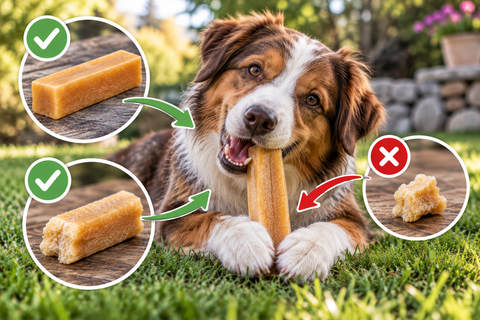
As the chew wears down, the remaining piece eventually becomes small enough that swallowing it whole could become a concern.
That's when it should be removed.
Some yak-chew manufacturers recommend transforming suitable leftover pieces into puffed treats using a microwave.
If your specific product includes those instructions, follow them carefully.
Allow the puffed treat to cool completely and confirm that it's an appropriate size and texture before offering it.
Never assume every yak chew can be prepared this way without checking the manufacturer's directions.
How to Know When the Chewing Session Should End
Monitor your dog throughout the session.
Take the chew away if:
- It becomes small enough to swallow whole
- Your dog attempts to crack it into large pieces
- Sharp or concerning fragments develop
- Your dog appears uncomfortable
- Your dog begins biting down aggressively
- The product becomes unsuitable for continued use
There's no universal remaining length for every dog.
The appropriate decision depends on the dog's mouth size and behavior.
Are Yak Chews Good for Puppies?
Puppies have developing teeth and jaws, which makes chew hardness especially important.
Because yak chews are very firm, they may not be appropriate for young puppies or dogs with developing or vulnerable teeth.
Choose age-appropriate chews and consult your veterinarian when uncertain.
A softer, more forgiving chewing option may be a better match during certain stages of puppy development.
How to Make a Yak Chew Last Longer
If your dog handles yak chews appropriately and you want to get more use from each one, focus on sensible management rather than increasing hardness.
Consider:
Choose the right size. A properly sized chew provides appropriate material without creating unnecessary swallowing concerns.
Offer supervised sessions. The chew doesn't need to remain available all day.
Rotate with other activities. Use food puzzles, training, and interactive play so chewing isn't the only enrichment option.
Inspect between sessions. Remove damaged or undersized pieces before reuse.
Store appropriately. Follow the manufacturer's instructions for keeping partially used chews in suitable condition.
The goal is extending the experience responsibly.
Yak Chews Still Count as Food
A yak chew may feel like a toy because your dog spends so much time working on it.
But it's an edible dairy-based product.
That means the amount consumed contributes to overall calorie intake.
Consider yak chews alongside:
Training treats.
Meal toppers.
Other natural chews.
Everyday snacks.
Your dog's complete and balanced primary diet should remain the nutritional foundation.
A chew that lasts longer may spread consumption across several sessions, but the calories don't disappear.
Build a Rotation Instead of Relying on One Chew
If your dog enjoys natural chewing, yak chews don't have to be the only option.
A varied routine might include:
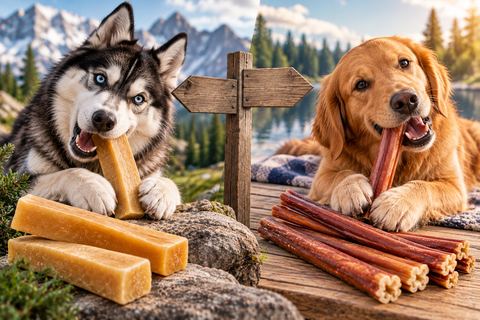
Yak Chew: Very firm, milk-based gnawing.
Bully Stick: Gradually softening beef-pizzle chew.
Collagen Stick: Another edible animal-based texture.
Beef Cheek Roll: Broad rolled chewing project.
Cow Ear: Lighter crunchy activity.
Different chews provide different shapes, textures, and levels of resistance.
That variety can help keep enrichment interesting while allowing you to choose products appropriate for your dog's individual chewing style.
Measure Engagement, Not Just Minutes
A dog spending thirty minutes happily working through an appropriate chew may be getting a valuable enrichment experience.
A chew that lasts several weeks but barely interests the dog isn't necessarily a better purchase.
Instead of focusing exclusively on durability, consider:
Does my dog enjoy it?
Can they work through it comfortably?
Does the hardness seem appropriate?
Do they remain engaged?
Does the chew change in a manageable way?
Those observations tell you more than the clock alone.
The Real Answer Depends on Your Dog
So, how long do yak chews last?
Some dogs may enjoy one over multiple supervised sessions, while others may work through the same size much faster.
At Raw Paws Pet Food, our yak chews are available in Small, Medium, Large, and Extra-Large sizes, giving owners options for different dogs.
But the right choice isn't simply the largest or hardest chew.
It's the one that fits your dog's mouth, dental health, and chewing behavior.
Start with an appropriate size.
Watch how your dog interacts with it.
Supervise every session.
Remove the remaining piece before it becomes a swallowing concern.
And remember:
The best long-lasting chew isn't the one your dog can never finish.
It's the one that provides an enjoyable, appropriately challenging chewing experience without asking your dog's teeth to do more than they should.
Comments (0)
There are no comments for this article. Be the first one to leave a message!