

There’s a quiet difference between food that’s made… and food that’s simply kept.
Frozen raw beef falls into that second category.
It isn’t reshaped, reformulated, or rebuilt. It’s prepared, portioned, and then frozen—essentially pressing pause before anything changes.
And for dogs, that distinction matters more than most labels ever could.
What Frozen Raw Beef Actually Is
At its core, frozen raw beef for dogs is exactly what it sounds like:
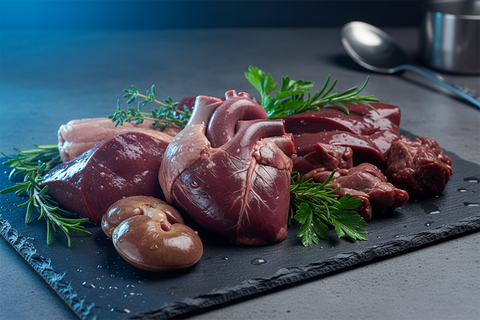
Real beef—muscle meat, often paired with organ and bone—is prepared and frozen while still in its natural state.
- No high-heat processing.
- No structural breakdown.
- No need to reconstruct it later.
When thawed, it doesn’t become something new.
It simply continues where it left off.
Why Freezing Matters More Than It Sounds
Freezing isn’t just about preservation—it’s about protection.
It helps:
- Maintain the food’s natural structure
- Preserve moisture content
- Keep nutrients intact without altering them
Think of it like capturing a moment before anything shifts.
Because once food is exposed to heat and pressure, it doesn’t go back. Freezing avoids that change entirely.
Why Beef Is Such a Strong Foundation
Beef isn’t just popular—it’s functional.
It naturally provides:
- High-quality protein to support muscle and daily activity
- Essential fats for energy and body function
- A broad nutrient profile from both muscle and organ components
It’s the kind of protein that does more than one job—and does it efficiently.
The Role of Grass-Fed Beef
Not all beef is raised the same way.
Grass-fed beef comes from animals that are fed a natural forage-based diet, which can influence the composition of the meat—especially its fat profile.
But beyond the technical side, there’s a simpler way to look at it:
It’s a sourcing choice that stays closer to how the animal was meant to eat.
How Frozen Raw Beef Behaves in the Body
Dogs don’t evaluate food the way we do.
They don’t look at labels or percentages.
They respond to how food:
- moves through digestion
- breaks down
- delivers nutrients
Frozen raw beef enters the body—with its natural moisture, structure, and nutrients intact.
That changes how efficiently the body can use what it’s given.
Frozen vs. Other Forms of Raw Beef
At first glance, all raw options can seem similar.
But how they’re handled changes everything.
- Frozen raw → preserved in original form
- Freeze-dried → moisture removed, then reintroduced
- Dehydrated → altered through low heat
Each has its place.
But frozen raw stays closest to the original experience.
Frozen Raw vs Freeze-Dried Raw
Feeding Frozen Raw Beef: What to Know
Feeding frozen raw beef is straightforward—but it benefits from consistency.
A simple approach:
- Thaw in the refrigerator
- Serve fresh
- Portion based on your dog’s size and needs
And just as important:
Handle it with the same care you would any real food.
How long can raw dog food stay out?
A Simpler Way to Look at It
Some foods are built layer by layer.
Frozen raw beef isn’t one of them.
It’s not engineered—it’s preserved.
And because of that, it doesn’t need to be explained as much.
It just needs to be recognized for what it is.
Final Thought
Frozen raw beef isn’t trying to improve on anything. It’s simply holding onto what already works.
And when you give your dog food that stays this close to its original form, you’re not asking their body to adapt. You’re giving it something it already understands.

Comments (0)
There are no comments for this article. Be the first one to leave a message!