

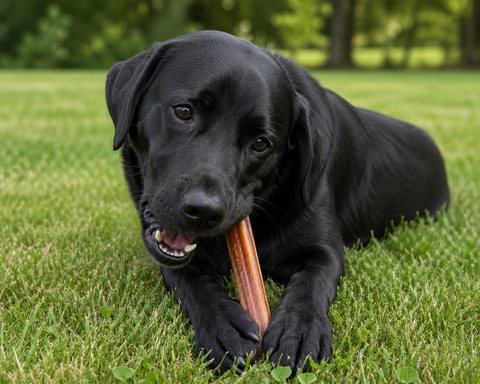
If you’ve ever handed your dog a bully stick, you’ve probably noticed how quickly they lock in.
No hesitation—just focus.
Which naturally leads to the question:
Is this actually good for them? And more importantly… is it safe?
Short answer: yes—when used the right way, bully sticks are one of the more straightforward, dependable chews you can give your dog.
But the reason why matters.
Why Bully Sticks Are a Good Fit for Dogs
Start with what they are.
Bully sticks are made from a single ingredient—beef muscle—gently air-dried into a chew. That simplicity does a lot of the heavy lifting.
They naturally provide:
- Protein to support muscle and daily function
- Digestibility compared to many heavily processed chews
- Engagement that keeps dogs occupied and mentally settled
There’s no long ingredient list to interpret.
And because nothing is artificially built in, there’s nothing extra for your dog’s body to sort through.
What “Safe” Really Means With Dog Chews
Safety with chews isn’t just about ingredients—it’s about behavior.
How does it break down?
How does your dog interact with it?
Does it match your dog’s chewing style?
Bully sticks stand out because they:
- Soften gradually as they’re chewed
- Wear down over time instead of splintering
- Break apart in a way the body can handle
That combination makes them feel more like something your dog can work through, not something that fights back.
Why They’re Often Chosen Over Traditional Chews
Many chews are built for durability first.
That can mean:
- Dense, rigid textures
- Heavy processing
- Ingredients that don’t break down easily
Bully sticks take a different approach.
They still last—but they don’t resist your dog indefinitely. They give a little. They change as they’re chewed.
Bully Sticks vs Rawhide: Which Is the Better Dog Chew?
That difference matters more than it sounds.
How to Make Bully Sticks Even Safer
Even a good chew needs the right setup.
A few simple habits go a long way:
- Choose the right size for your dog
- Supervise while chewing
- Remove small end pieces once they get too short
- Offer fresh water nearby
Think of it less like a snack—and more like something your dog is actively interacting with.
Are bully sticks safe for dogs?
Matching the Chew to the Dog
This is where most safety questions are really answered.
- Smaller dogs → thinner sticks
- Moderate chewers → standard size
- Strong chewers → thicker, longer-lasting options
A chew that’s too small gets finished too quickly.
Too large, and it becomes frustrating.
The right fit makes everything smoother.
Where Bully Sticks Fit in a Routine
Bully sticks aren’t meant to replace meals.
They’re meant to:
- Give your dog something to focus on
- Provide a natural chewing outlet
- Add structure to downtime
Used this way, they become part of your dog’s rhythm—not just an occasional treat.
Final Thought
So—are bully sticks good for dogs? Are they safe?
When chosen thoughtfully and used with a little awareness, they check both boxes.
They’re simple. They’re natural. And most importantly—they behave in a way that makes sense for your dog.
Sometimes the safest option isn’t the one that’s engineered the most.
It’s the one that stays closest to what your dog already understands.
Comments (0)
There are no comments for this article. Be the first one to leave a message!