


Your dog has a basket full of toys.
A comfortable bed.
A favorite spot on the couch.
And somehow, they're still following you around the house looking for something to do.
Sound familiar?
The good news is that dog enrichment doesn't require expensive toys, elaborate equipment, or a backyard obstacle course.
Sometimes all you need is a towel.
An empty cardboard box.
A handful of treats.
Or a natural chew your dog already loves. Enrichment is about giving dogs opportunities to engage in natural behaviors like sniffing, searching, chewing, exploring, and problem-solving.
And many of those activities can happen right inside your home.
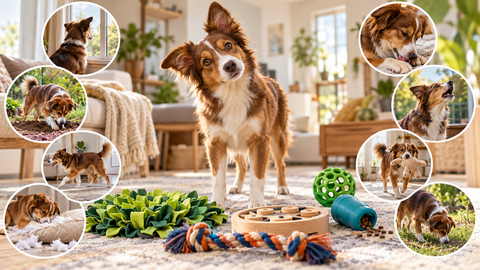
Here are 12 easy dog enrichment activities you can try using treats, chews, and everyday household items.
What Is Dog Enrichment—and Why Does It Matter?
Dog enrichment involves creating opportunities for dogs to use their senses, bodies, and minds in meaningful ways.
Instead of simply keeping a dog occupied, enrichment encourages natural behaviors.
Think:
Sniffing.
Searching.
Chewing.
Investigating.
Manipulating objects.
Learning.
Making choices.
These activities can provide mental stimulation, encourage exploration, and introduce variety into your dog's daily routine.
And they don't have to be complicated.
Sometimes the simplest activities are the ones dogs enjoy most.
1. The Towel Treat Roll
What you'll need: A clean towel and a few small treats
This is one of the easiest homemade dog enrichment activities.
Lay a towel flat on the floor.
Place a few small treats along its length.
Roll the towel loosely so the treats become hidden inside the folds.
Then let your dog investigate.
They may:
Sniff.
Nudge.
Unroll.
Use their paws.
Work through the fabric to find the rewards.
Start with a loose roll so the activity is easy to understand.
As your dog becomes more experienced, you can make the folds slightly more challenging.
Why it works: The activity combines scent searching with simple problem-solving.
Use this only with supervision, and remove the towel if your dog starts chewing or swallowing fabric.
2. The Cardboard Box Treasure Hunt
What you'll need: A clean cardboard box, some crumpled paper, and treats.
Before recycling your next delivery box, consider giving it one more job.
Place a few loosely crumpled sheets of plain paper inside.
Hide small treats among the paper.
Then let your dog investigate.
They may push the paper around, sniff different sections, and work to locate the rewards.
For beginners, leave treats partially visible.
For more experienced dogs, hide them deeper among the paper.
Why it works: Dogs get to explore, investigate unfamiliar textures, and use their noses to locate food.
Avoid staples, tape, plastic packaging, and other materials that could be swallowed. Supervise closely and discontinue the activity if your dog begins eating cardboard or paper.
3. Hide-and-Seek With Freeze-Dried Treats
What you'll need: A few small freeze-dried dog treats.
This game turns an ordinary room into a scent-searching adventure.
Start by placing a treat somewhere easy to find.
Let your dog watch. Encourage them to search.
Once they understand the activity, begin hiding treats in slightly more challenging locations.
Try:
Beside a chair leg.
Near a familiar toy.
Along the edge of a rug.
Inside an open, dog-safe container.
At Raw Paws Pet Food, freeze-dried options like Chicken Breast, Beef Liver, and Chicken Hearts can work well for this type of activity when broken into appropriately sized pieces.
Why it works: Dogs use their noses to locate rewards instead of simply waiting for treats to be handed to them.
4. The Natural Chew Relaxation Session
What you'll need: An appropriately sized natural dog chew.
Not every enrichment activity needs to involve running around the house.
Sometimes dogs enjoy settling down with something they can gradually work through.
Natural chews provide opportunities to:
Hold.
Gnaw.
Reposition.
Rotate.
Explore texture.
Different chews create different experiences.
Bully Sticks: Gradually softening beef-based chewing.
Collagen Sticks: Another edible animal-based texture.
Beef Cheek Rolls: A broader chewing project.
Cow Ears: Lighter, crunchy chewing.
Choose a chew that fits your dog's size, dental health, and chewing style.
Why it works: Chewing provides an outlet for a natural behavior while giving dogs something to physically manipulate.
Always supervise edible chews and remove them before remaining pieces become swallowing hazards.
Natural Dog Chew Rotation: 7 Chews to Keep Dogs Interested – Raw Paws Pet Food
5. The Muffin Tin Treat Puzzle
What you'll need: A muffin tin, a few treats, and appropriately sized dog-safe balls.
Place a small treat into several muffin cups.
Cover some of the cups with balls that are too large for your dog to swallow.
Now let your dog investigate.
They'll need to move the balls to reach the hidden rewards.
Start with only one or two covered compartments.
As your dog learns, cover more.
Why it works: The activity encourages object manipulation and problem-solving.
Make sure the balls are appropriate for your dog's size and cannot be swallowed or torn apart. Supervise throughout the game.
6. Turn Mealtime Into a Food Puzzle
What you'll need: Your dog's regular food and an appropriate puzzle feeder.
Your dog already needs to eat.
Why not occasionally make part of that meal more interactive?
Instead of serving the entire meal in a bowl, place an appropriate portion into a food puzzle or slow feeder.
Your dog may need to:
Move pieces.
Investigate compartments.
Use their nose.
Work around obstacles.
For dogs eating raw or moist food, choose a feeder designed for that food type and clean it thoroughly after use.
Why it works: The activity turns routine feeding into an opportunity for exploration and problem-solving.
And because you're using part of the regular meal, you don't necessarily need to add extra calories.
7. The Treat Cup Shuffle
What you'll need: Two or three sturdy, dog-safe cups and a small treat.
Place a treat beneath one cup while your dog watches.
Then encourage them to find it.
Start without moving the cups.
Once your dog understands the game, gently switch their positions.
Let your dog use their nose to identify the correct cup.
Keep the activity easy enough that your dog remains interested.
Why it works: It combines scent recognition, attention, and simple problem-solving.
Use cups that won't shatter or become a swallowing hazard, and supervise to prevent chewing the cups.
8. The DIY Snuffle Mat Alternative
What you'll need: A clean towel or fleece blanket and small treats.
You don't necessarily need to purchase a snuffle mat to create a similar searching activity.
Spread a towel or blanket on the floor.
Create loose folds.
Place small treats between them.
Then let your dog search.
The folds create little hiding places that encourage sniffing and investigation.
For a beginner, keep the treats easy to locate.
For an experienced dog, add more folds.
Why it works: The activity encourages scent-based exploration and allows dogs to work for small food rewards.
As with other fabric-based enrichment activities, supervise and remove the material if your dog begins chewing it.
9. Teach a New Trick in Five Minutes
What you'll need: Small training treats and a little patience.
Enrichment doesn't always require an object.
Sometimes the activity is learning. Choose a simple behavior.
Touch your hand with their nose.
Spin.
Go to a mat.
Offer a paw.
Then reward small steps toward success.
Keep sessions short and positive.
Freeze-dried treats can be especially useful because many pieces can be broken into tiny rewards.
Why it works: Training encourages attention, learning, communication, and interaction with you.
A few focused minutes can provide meaningful mental engagement.
10. The Toy Rotation Surprise
What you'll need: Toys your dog already owns.
If your dog has twenty toys available all the time, some may lose their novelty.
Try rotating them.
Leave a few favorites available.
Put the others away.
After several days, switch them.
A toy your dog hasn't seen recently may suddenly become interesting again.
You can also rotate different types of toys:
Soft toys.
Tug toys.
Balls.
Puzzle toys.
Chew toys.
Why it works: Changing what's available introduces novelty without requiring new purchases.
Sometimes the best new toy is an old one your dog hasn't seen in a while.
11. The Indoor Obstacle Adventure
What you'll need: A few stable household objects and treats.
Create a simple indoor course using dog-safe items.
For example:
Walk around a chair.
Step over a very low obstacle.
Move between two cushions.
Follow you around a table.
Stop at a designated mat.
Reward your dog as they complete each activity.
Keep everything low, stable, and appropriate for your dog's age and mobility.
Avoid jumping exercises for dogs with joint concerns, growing puppies, or seniors unless your veterinarian has approved them.
Why it works: The activity combines movement, coordination, attention, and learning.
You don't need a professional agility course to make indoor movement interesting.
12. The "Find Your Favorite Toy" Game
What you'll need: One of your dog's favorite toys.
Start by showing your dog the toy.
Place it somewhere easy to see.
Encourage them to find it.
Celebrate when they approach or retrieve it.
As they learn, begin hiding the toy in more interesting locations.
Behind a chair. Beside their bed.
Partially under a blanket.
Eventually, some dogs learn to search for a specific toy when given a familiar cue.
Why it works: It encourages searching, memory, and interactive play without requiring food rewards every time.
For toy-motivated dogs, this can become one of the most enjoyable enrichment games in the house.
Which Enrichment Activities Are Best for Your Dog?
Not every dog enjoys the same activities.
Some are highly food motivated.
Others love toys.
Some prefer chewing.
Others want to sniff every corner of the room.
A useful starting point is matching the activity to your dog's natural interests.
| Your Dog Enjoys | Activities to Try |
| Sniffing and searching | Treat hunts, towel folds, snuffle games |
| Chewing | Appropriate natural chews |
| Food puzzles | Muffin tin, puzzle feeders, cup games |
| Learning | Short training sessions |
| Toys and retrieving | Toy searches, toy rotation |
| Movement | Indoor obstacle activities |
You don't need to offer every activity.
Start with two or three and see what your dog enjoys.
How Much Enrichment Does a Dog Need Each Day?
There's no universal number of minutes that works for every dog.
Needs vary depending on:
- Age
- Health
- Breed tendencies
- Activity level
- Temperament
- Daily routine
A young, active dog may enjoy several different activities throughout the day.
A senior dog may prefer shorter, gentler sessions.
The goal isn't keeping your dog busy every waking minute.
It's creating a healthy balance of activity, mental stimulation, and rest.
You Don't Need More Treats—Just More Ways to Use Them
One of the easiest mistakes with food enrichment is gradually increasing treat intake.
A few treats for training.
A handful for a puzzle.
More for a scent game.
Then another chew in the evening.
It adds up.
Instead, consider using part of your dog's regular food allowance for enrichment activities.
When using treats, keep portions small and account for them within the daily diet.
A commonly used guideline is that treats and extras should make up no more than approximately 10% of daily calories unless your veterinarian recommends otherwise.
More enrichment doesn't have to mean more food.
Freeze-Dried Treats Are Especially Versatile
At Raw Paws, our freeze-dried animal treats can serve several different enrichment purposes.
Freeze-Dried Chicken Breast: Easy-to-portion training rewards.
Freeze-Dried Beef Liver: Richly aromatic, high-value rewards.
Freeze-Dried Chicken Hearts: Another animal-based texture.
Freeze-Dried Whole Minnows: A distinctive fish treat for appropriate reward and searching activities.
Instead of buying separate treats for every game, one bag may support several different activities.
Break pieces into appropriate sizes and use them strategically.
Natural Chews Add Another Kind of Enrichment
Food puzzles and scent games encourage searching and problem-solving.
Natural chews provide a different kind of activity.
Dogs have to physically manipulate the chew.
Hold it.
Rotate it.
Work through the material.
Different natural chews create different experiences.
For example, a bully stick doesn't behave like a cow ear.
A collagen stick doesn't have the same structure as a beef cheek roll.
That variety can make chewing more interesting.
Dog Chew Types Explained: Bully Sticks, Rawhide, Collagen & More – Raw Paws Pet Food
Safety Matters With DIY Dog Enrichment
Household items weren't necessarily designed to become dog toys.
That means supervision is important.
Before introducing a DIY activity, consider:
Swallowing Hazards: Could your dog swallow part of the object?
Materials: Could fabric, paper, plastic, or another material be torn apart and consumed?
Stability: Could an object tip over or cause injury?
Food Safety: Is the food appropriate for your dog?
Difficulty: Is the activity manageable without creating frustration?
If your dog begins destroying or swallowing the materials, end the activity.
For dogs that aggressively chew household objects, purpose-built enrichment toys may be a better choice.
Don't Make Every Activity Too Difficult
Enrichment should encourage curiosity.
It shouldn't create constant frustration.
Start with easy challenges.
Let your dog succeed.
Then gradually increase difficulty.
For example, begin with a treat that's clearly visible beneath a towel fold.
Once your dog understands the game, hide it more deeply.
The same principle applies to food puzzles, scent games, and training.
Success builds interest.
A puzzle that's impossible to solve isn't necessarily better enrichment.
Watch for Signs Your Dog Needs More Variety
Sometimes dogs show you when their routine could use a change.
They may lose interest in familiar toys.
Seek attention constantly.
Begin investigating household objects.
Struggle to settle.
Or repeatedly look for activities.
These behaviors aren't always caused by boredom, and sudden changes should be discussed with a veterinarian.
But they can be useful reminders to evaluate how much meaningful engagement your dog receives.
Build a Simple Weekly Enrichment Rotation
You don't need twelve activities every day.
Try spreading them throughout the week.
Monday: Towel treat roll.
Tuesday: Five-minute training session.
Wednesday: Natural chew session.
Thursday: Cardboard treasure hunt.
Friday: Indoor toy search.
Saturday: Food puzzle.
Sunday: Sniffing game or toy rotation.
Adjust based on your dog's preferences and needs.
The goal is variety—not following a rigid schedule.
The Best Enrichment Doesn't Have to Come From a Store
At Raw Paws Pet Food, we love natural chews and whole-food treats because they can help turn ordinary moments into enjoyable activities.
But enrichment doesn't always require another purchase.
A towel can become a puzzle.
A cardboard box can become a treasure hunt.
A familiar toy can become a searching game.
A few freeze-dried treats can become a training session.
An appropriately selected natural chew can provide another kind of engagement.
What matters most is giving your dog opportunities to explore, learn, sniff, chew, and interact with the world around them.
Start with what you already have.
Try something simple.
Watch what your dog enjoys.
And keep changing the experience.
Because sometimes the best way to make your dog's day more interesting isn't bringing home something new.
It's finding a new way to use something that's already there.
Comments (0)
There are no comments for this article. Be the first one to leave a message!