

Chicken hearts occupy an interesting place in feline nutrition.
They look like organ meat.
They're found alongside organs.
We commonly call them organ meat.
But nutritionally, the heart has an interesting distinction:
The heart is an organ, but it's also primarily muscular tissue.
After all, its entire job is to contract continuously throughout an animal's life.
That gives chicken hearts a nutritional character different from secreting organs like liver or kidney—and makes them an especially interesting whole-food treat for cats.
So, can cats eat chicken hearts?
Yes. Chicken hearts can be an appropriate animal-based food or treat for cats when offered in suitable portions as part of an overall complete and balanced diet.
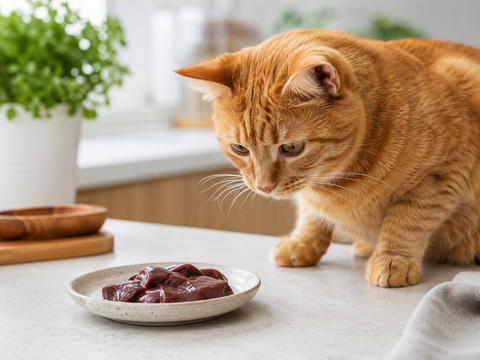
And judging by how many cats react when the bag opens, they don't need much convincing.
Why Chicken Hearts Are Different From Liver
Put a chicken heart and a piece of liver side by side and you're looking at two organs with very different jobs.
Liver performs numerous metabolic functions and stores concentrated amounts of certain vitamins and minerals.
The heart is a muscle responsible for pumping blood.
That means chicken heart is generally classified nutritionally closer to muscle meat than to secreting organs when building many raw feeding ratios.
This distinction matters because "organ meat" isn't one nutritional category where every ingredient can simply replace another.
Different organs bring different things to the bowl.
What Do Chicken Hearts Provide?
Chicken hearts naturally provide high-quality animal protein along with a range of naturally occurring nutrients.
They're also known as a natural source of taurine. Taurine deserves special attention when we're talking about cats because cats cannot synthesize enough of it on their own to meet their nutritional needs. They must receive adequate taurine through their diet.
Animal tissues provide taurine naturally, with heart tissue among the commonly recognized sources.
That makes chicken hearts especially interesting within the larger conversation about species-appropriate feline nutrition.
Cats Are Built to Eat More Than One Kind of Animal Tissue
Cats are obligate carnivores.
But that doesn't mean their natural nutritional pattern revolves around eating chicken breast all day.
Whole prey contains different tissues.
Muscle.
Heart.
Liver.
Other organs.
Fat.
Bone.
Each contributes something different.
Chicken hearts fit naturally into that bigger picture because they provide another animal tissue with its own texture, nutrient profile, and feeding experience.
The value isn't simply "more protein."
It's different animal-based nutrition.
Why Are Chicken Hearts So Appealing to Cats?
Your cat probably isn't thinking about amino acid profiles when they hear the treat bag open.
They're thinking with their nose.
Chicken hearts have a distinctive animal-based aroma that many cats find immediately interesting.
Freeze-drying can make that experience especially convenient because the food remains recognizable while becoming lightweight and shelf-stable.
At Raw Paws Pet Food, Freeze-Dried Chicken Hearts contain a simple, recognizable animal ingredient that can be offered without turning it into an elaborate treat recipe.
For many cats, the ingredient itself provides all the excitement necessary.
Texture Adds Another Layer
Chicken hearts don't create the same experience as freeze-dried chicken breast.
That's part of their appeal.
Different animal tissues naturally have different structures, and freeze-drying preserves much of that individuality.
A cat rotating between:
isn't simply experiencing four flavors.
They're encountering four different textures, aromas, shapes, and animal tissues.
For naturally curious cats, those differences can make treating considerably more interesting.
How Much Chicken Heart Can a Cat Have?
Portion size still matters, even with a simple whole-food treat.
If chicken heart is included within a complete and balanced cat food, the overall formulation should account for its nutritional contribution.
If you're offering freeze-dried chicken hearts separately as treats, keep portions appropriate for your cat's size and total daily food intake.
For treating, small pieces are usually plenty.
Freeze-dried hearts can also be broken apart, allowing one piece to become several smaller rewards.
Treats should complement the complete diet—not gradually become the diet.
Chicken Heart Doesn't Replace Every Other Organ
This is an especially important point for raw feeders.
Because the heart is nutritionally treated more like muscle meat in many raw feeding models, it shouldn't automatically replace organs such as liver or kidney in a recipe that requires secreting organs.
Heart brings its own strengths.
Liver brings different ones.
That's exactly why whole-animal nutrition values multiple tissues rather than trying to identify one "super organ."
Each has a job.
An Easy High-Value Reward for Cats
Cats can absolutely learn through positive reinforcement.
The challenge is finding something they consider worth working for.
Freeze-dried chicken hearts can be broken into smaller pieces and used for:
- Carrier training
- Recall
- Food puzzles
- Interactive play
- Grooming cooperation
- Everyday positive reinforcement
Because the pieces can be portioned down, you don't need to offer an entire heart every time your cat does something right.
A tiny reward can still feel highly valuable.
Chicken Hearts Can Make Enrichment More Interesting
Instead of placing every treat directly in front of your cat, make the experience more engaging.
Hide small chicken heart pieces around a room.
Place them inside a puzzle feeder.
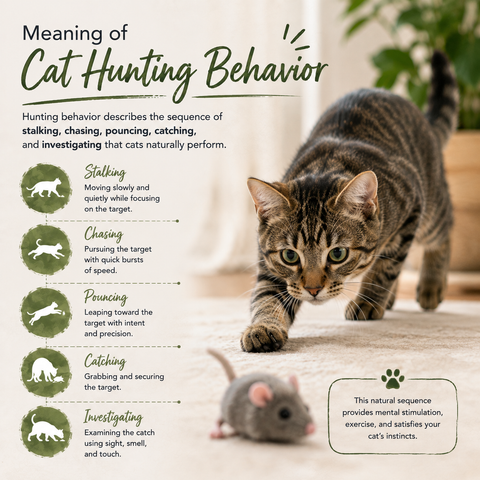
Use them at the end of a hunting-style play session.
Encourage your cat to search for them.
Now the chicken heart isn't simply food.
It becomes motivation for natural feline behaviors like investigating, searching, stalking, and problem-solving.
That's a much richer experience than simply opening the bag.
A Simple Way to Add Whole-Food Variety
One of the biggest advantages of single-ingredient treats is how easy they make variety.
You know exactly what changed.
Chicken breast yesterday.
Chicken heart today.
Minnow tomorrow.
At Raw Paws Pet Food, Freeze-Dried Chicken Hearts can fit alongside other single-ingredient favorites such as Freeze-Dried Chicken Breast, Beef Liver, and Whole Minnows, giving cat owners several ways to rotate animal-based treats without introducing complicated formulations.
A Heart Is More Interesting Than Its Name Suggests
Calling chicken heart "organ meat" is accurate anatomically.
But it doesn't tell the whole nutritional story.
Heart is a hardworking muscle with characteristics that distinguish it from organs like liver, making it another unique piece of the whole-animal nutrition puzzle.
For cats, that means animal protein, naturally occurring nutrients such as taurine, a distinctive texture, and an aroma many find difficult to ignore.
For owners, it means something equally appealing:
A treat that's remarkably easy to understand.
One ingredient.
One animal tissue.
One very interested cat waiting for the next piece.
Comments (0)
There are no comments for this article. Be the first one to leave a message!