

Some chews challenge a dog.
Others invite them in.
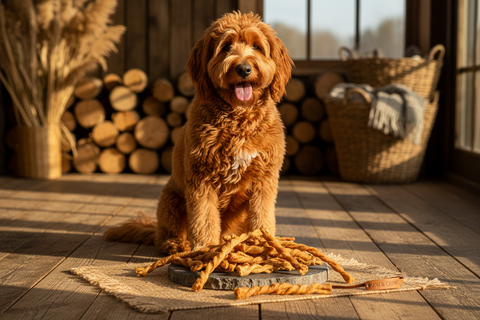
Beef esophagus treats fall into that second category.
They’re not brick-hard. They don’t require aggressive gnawing or endless jaw pressure. Instead, they create a lighter, more flexible chewing experience that still feels satisfying without becoming overly demanding.
That balance is exactly why so many dogs lock onto them immediately.
The chew gives resistance—but not too much. Crunch—but not brittleness. Structure—but still enough flexibility to feel natural while chewing.
And for many dogs, that middle ground is where chewing becomes the most enjoyable.
Why the Texture Feels So Different
Beef esophagus naturally has a hollow, layered structure. Once dried, that structure creates a chew that’s airy and slightly flexible instead of extremely dense.
As dogs chew:
- The outer surface softens first
- Layers compress and break apart gradually
- The chew changes texture throughout the session
That progression creates movement during chewing instead of forcing dogs to work against one solid object the entire time.
It’s less like chewing on wood… and more like gradually working through something alive with texture.
The Crunch-to-Chew Transition
One of the most interesting things about beef esophagus treats is how the experience changes mid-chew.
At first:
- There’s light crunch
- Slight resistance
- Audible texture feedback
Then, as moisture from chewing interacts with the treat:
- The structure softens
- The chew becomes more pliable
- Dogs settle into a steadier chewing rhythm
That transition keeps the experience dynamic instead of repetitive.
And dogs tend to stay engaged longer when the chew keeps evolving.
Why Dogs Respond So Quickly to It
Dogs don’t usually analyze treats by ingredient panels.
They react to:
- Scent release
- Texture variation
- Resistance
- Mouth feel
Beef esophagus naturally checks all four boxes.
The scent is rich without being overpowering, and the layered texture gives dogs something they can manipulate rather than simply consume.
That interaction creates interest almost immediately.
Not Every Dog Wants an Ultra-Hard Chew
There’s a common assumption in the dog chew world that harder automatically means better.
But many dogs actually prefer chews that:
- Flex slightly
- Break down progressively
- Offer manageable resistance
Beef esophagus sits comfortably in that space.
It provides enough structure to encourage active chewing while remaining approachable for dogs that aren’t interested in extremely dense chews like antlers or large marrow bones.
What Makes the Shape Important
Unlike flat treats, beef esophagus pieces often maintain a naturally tubular or curved shape.
That changes:
- How dogs grip the chew
- How they reposition it while chewing
- Which parts soften first
In other words, the shape itself becomes part of the engagement.
The chew doesn’t stay static in the mouth—it moves and adapts as dogs work through it.
A Chew That Feels More Interactive
Some treats disappear too quickly to become interesting.
Others last so long they become frustrating.
Beef esophagus creates a middle experience:
- Interactive
- Moderate-lasting
- Texturally active
That’s part of why it works well for enrichment without becoming overwhelming.
The Simplicity Is the Advantage
A lot of modern dog treats rely heavily on:
- Artificial smoke flavors
- Sweet coatings
- Added aromas
Beef esophagus doesn’t need those additions because the ingredient already creates enough sensory interest naturally.
The chew succeeds because of:
- Structure
- Texture
- Natural scent
Not because it’s been engineered to imitate them.
Where Beef Esophagus Fits Best
These treats work especially well:
- As enrichment between meals
- For moderate chewing sessions
- For dogs that enjoy softer resistance
- As a higher-interest reward chew
Because they’re easier to work through than extremely hard chews, they often create a calmer, more relaxed chewing pace.
The Part Most People Overlook
Dogs don’t just enjoy chewing because it tastes good.
They enjoy the process of working through something.
That’s why structure matters so much.
Beef esophagus treats succeed because they create movement, texture shifts, and progression during chewing rather than remaining rigid and predictable from beginning to end.
And for dogs, that changing experience is often what keeps the chew rewarding long after the first bite.

Comments (0)
There are no comments for this article. Be the first one to leave a message!