

Your cat has food.
Fresh water.
A warm bed.
A scratching post.
Several toys scattered across the floor.
So they couldn't possibly be bored...right?
Indoor cats live safer, more predictable lives than cats that roam outdoors, but that predictability can also mean fewer opportunities to explore, hunt, climb, investigate, and encounter something new.
And feline boredom doesn't always look like a cat dramatically demanding entertainment.
Sometimes it's subtle.
An extra-long nap.
A 2 a.m. sprint through the hallway.
A sudden obsession with knocking things off the counter.
Learning to recognize these behaviors can help you create a home that gives your cat more opportunities to do what cats naturally love to do.
Here are nine signs worth watching.
1. Your Cat Sleeps—and Then Sleeps Some More
Cats naturally sleep a lot, so an afternoon nap isn't evidence of boredom.
The question is what happens between those naps.
Does your cat regularly explore, play, watch the environment, interact with you, groom, climb, or investigate?
Or does almost every waking period quickly turn into another sleeping session?
A cat with few interesting opportunities may simply have fewer reasons to get up.
Adding short play sessions, window observation, climbing opportunities, or food enrichment can create more reasons to engage with the day.
2. The Midnight Zoomies Have Become a Major Event
You're asleep.
Your cat has other plans.
Suddenly they're sprinting through the hallway, launching onto furniture, and behaving as though your bedroom has become a racetrack.
Some nighttime activity is completely normal for cats.
But if your cat regularly seems to save an enormous amount of energy for the middle of the night, consider whether they're getting enough appropriate opportunities for activity during their waking hours.
A short interactive play session in the evening can give that energy somewhere productive to go.
3. Your Feet Have Become Prey
You're walking through the kitchen.
Suddenly:
Pounce.
Indoor cats don't stop being hunters simply because their meals arrive in bowls.
Without enough appropriate outlets for stalking and chasing, moving hands, ankles, and feet can become extremely interesting targets.
Rather than punishing the instinct, redirect it.
Wand toys and other interactive toys give cats something appropriate to:
- Watch
- Stalk
- Chase
- Pounce on
- Capture
Your feet will appreciate the substitution.
4. Your Cat Keeps Knocking Things Over
Pen on the desk?
Gone.
Water bottle?
On the floor.
That decorative item you specifically moved away from the edge?
Your cat has accepted the challenge.
Cats use their paws to investigate objects, and watching something move or fall can be surprisingly interesting.
Sometimes this behavior is simply classic feline curiosity.
But a cat with few other opportunities to manipulate, chase, and explore objects may create their own entertainment.
Puzzle toys, rolling toys, food games, and interactive play provide more appropriate things to investigate.
5. They've Suddenly Become Your Full-Time Supervisor
Some cats are naturally affectionate shadows.
That's personality.
But if your cat constantly follows you while repeatedly trying to initiate interaction, they may be looking for something to do.
Opening the refrigerator?
They're there.
Folding laundry?
Supervisor has arrived.
Trying to work?
Your keyboard apparently requires a cat.
Instead of assuming every request for attention means petting, try offering different types of engagement.
A five-minute play session.
A treat search.
A food puzzle.
A window perch.
Sometimes your cat isn't asking for affection.
They're asking for an activity.
6. Their Toys Are Basically Furniture Now
That toy mouse hasn't moved in three weeks.
The ball hasn't rolled since Tuesday.
Your cat walks past the toy basket like it doesn't exist.
That doesn't necessarily mean you need more toys.
It may mean the existing ones have become too familiar.
Try toy rotation.
Put most toys away and leave only a few available.
After several days, swap them.
A toy that disappears for a while can become interesting again when it returns.
Novelty doesn't always require buying something new.
Sometimes it just requires a closet.
7. Food Has Become the Most Exciting Event of the Day
Does your cat start campaigning for dinner hours before it's due?
Food motivation is normal.
But when meals and treats become the only consistently interesting events in the day, there may be an opportunity to make the rest of the routine richer.
Instead of simply increasing food, increase the experience around food.
Try:
- Puzzle feeders
- Treat searches
- Hunting-style games
- Small freeze-dried rewards during training
- Food-based enrichment
Same reward.
Much bigger activity.
8. Scratching Has Expanded to Every Surface You Own
Scratching is normal feline behavior.
Cats scratch to stretch, maintain their claws, communicate, and leave visual and scent information.
So scratching itself isn't evidence of boredom.
But if your cat seems to be searching constantly for new scratching targets, look at what you've provided.
One tiny scratching post tucked into an unused corner may not be enough.
Experiment with:
- Vertical scratchers
- Horizontal scratchers
- Cardboard
- Different textures
- Scratchers near resting areas
- Scratchers near frequently used household spaces
Giving cats choices helps them express normal behavior without making your sofa the most interesting option available.
9. Your Cat Rarely Seems Curious About Anything
This may be the easiest sign to overlook.
Healthy enrichment isn't only about high-energy play.
It's about curiosity.
Watching birds through a window.
Investigating a cardboard box.
Sniffing something new.
Climbing to a different perch.
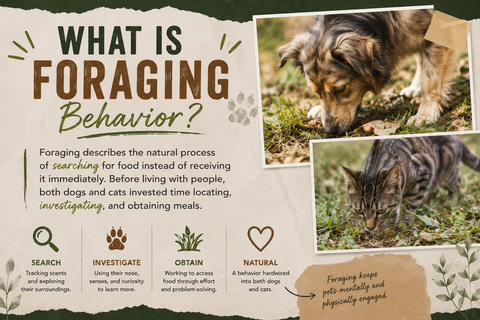
Searching for a hidden treat.
Following the movement of a wand toy.
A well-enriched environment regularly gives cats reasons to investigate.
If every day looks exactly the same, adding small changes can make the environment feel much larger without changing the size of your home.
Boredom Doesn't Mean You Need a House Full of Toys
This is where enrichment can become unnecessarily expensive.
Your cat doesn't need fifty toys.
They need opportunities to perform different behaviors.
Think in categories:
Climb: Cat tree, shelves, perches.
Scratch: Different orientations and textures.
Hunt: Wand toys and moving toys.
Search: Food puzzles and hidden treats.
Observe: Window perches.
Explore: Boxes, tunnels, safe new objects.
Interact: Short play and training sessions with you.
One activity from several categories can create much more enrichment than twenty nearly identical toys.
Five Minutes Can Make a Difference
Don't assume enrichment requires an elaborate daily schedule.
A five-minute wand session before breakfast.
A few freeze-dried treats hidden around the room in the afternoon.
A cardboard box placed somewhere new.
A short play session before bed.
Small experiences add up.
Consistency usually matters more than creating one enormous enrichment session every weekend.
Know When It's Probably Not Boredom
Behavioral changes deserve context.
Suddenly sleeping much more, withdrawing, eating differently, grooming excessively, eliminating outside the litter box, becoming unusually aggressive, or losing interest in activities can have causes unrelated to boredom.
If your cat's behavior changes noticeably or you're concerned about their health, talk with your veterinarian rather than assuming enrichment is the solution.
Boredom is one possible explanation for behavior.
It isn't an explanation for everything.
Give Your Indoor Cat More Reasons to Be a Cat
Indoor enrichment isn't about keeping your cat entertained every second.
It's about creating opportunities.
Something to climb.
Something to scratch.
Something to investigate.
Something to stalk.
Something to find.
Something to watch.
Something to catch.
Your cat already knows what to do with those opportunities.
The instincts are there.
Sometimes all we have to do is make the indoor world interesting enough for them to use them.
Because a comfortable home gives your cat everything they need to live indoors.
An enriched home gives them more opportunities to live like a cat while they're there.

Comments (0)
There are no comments for this article. Be the first one to leave a message!