


Two bags of freeze-dried dog treats.
One contains beef liver.
The other contains chicken hearts.
Both are made from recognizable animal ingredients.
Both provide protein.
Both can make your dog come running when the bag opens. But nutritionally, they're surprisingly different.
Beef liver is a nutrient-dense secreting organ, while chicken heart is a muscular organ with a nutritional profile more closely related to muscle meat.
That difference influences the nutrients each provides, how much you may want to offer, and how they fit into your dog's treat routine.
So which is better?
Freeze-dried beef liver or chicken hearts?
The answer depends on what you're looking for—and which one your dog finds most rewarding.
Let's compare.
First, They're Both Organ Meats—but Not the Same Kind
This is the most important distinction.
Both liver and heart are organs anatomically.
But within animal nutrition, they're commonly categorized differently.
Beef Liver: A secreting organ.
Chicken Heart: A muscular organ.
The liver performs specialized metabolic functions within the animal.
The heart is primarily muscular tissue responsible for pumping blood.
Those different biological roles create different nutritional profiles.
That's why the two ingredients shouldn't automatically be treated as interchangeable simply because they're both called organ meats.
What Nutrients Does Beef Liver Provide?
Beef liver is often described as one of nature's most nutrient-dense animal foods.
That's because relatively small amounts contain concentrated levels of certain vitamins and minerals.
Beef liver naturally provides:
- Animal protein
- Vitamin A
- Vitamin B12
- Other B vitamins
- Iron
- Copper
- Additional trace minerals
Those nutrients participate in numerous normal functions throughout the body.
But the important thing about liver isn't simply that it contains valuable nutrients.
It's that some of those nutrients are highly concentrated.
That makes portion size particularly important.
What Nutrients Do Chicken Hearts Provide?
Chicken hearts offer a different nutritional profile.
Because heart is muscular tissue, it contains nutrients more closely associated with animal muscle.
Chicken hearts naturally provide:
- Animal protein
- Iron
- Zinc
- B vitamins
- Taurine
- Other naturally occurring nutrients
Taurine is particularly interesting because it's naturally found in animal tissues, including heart.
Dogs can generally synthesize taurine from other amino acids under normal circumstances, while cats have a strict dietary requirement for adequate taurine.
That doesn't make chicken hearts a substitute for a properly formulated taurine supplement when one is medically indicated.
It simply highlights how different animal tissues naturally contain different nutrients.
Beef Liver vs. Chicken Hearts: Quick Comparison
| Feature | Freeze-Dried Beef Liver | Freeze-Dried Chicken Hearts |
| Animal source | Beef | Chicken |
| Tissue type | Secreting organ | Muscular organ |
| Protein | Animal protein | Animal protein |
| Notable nutrients | Vitamin A, B12, iron, copper | Taurine, B vitamins, iron, zinc |
| Aroma | Rich, distinctive organ-meat aroma | Savory poultry-organ aroma |
| Texture | Often crumbly or easy to break | May be firmer and more structured |
| Portion considerations | Extra moderation due to concentrated nutrients | Moderate portions as part of treat allowance |
| Common uses | High-value training, meal topping | Training, enrichment, protein rotation |
| Best choice | Depends on the dog and purpose | Depends on the dog and purpose |
Neither ingredient needs to be the universal winner.
They provide different nutritional and sensory experiences.
Why Beef Liver Is Often a High-Value Training Treat
Beef liver has a naturally rich aroma.
For many dogs, that makes it particularly motivating.
A familiar treat may work perfectly during basic training at home.
But during recall practice or training around distractions, a stronger reward may help maintain attention.
That's where freeze-dried beef liver can be useful.
At Raw Paws Pet Food, our Freeze-Dried Beef Liver can be broken into small rewards for training.
Because liver is nutrient dense, you don't need to offer large pieces.
A tiny reward may provide plenty of motivation.
Chicken Hearts Offer a Different Kind of Reward
Chicken hearts have their own distinctive aroma and texture.
For dogs that enjoy poultry, they may be especially appealing.
Freeze-dried chicken hearts can be used for:
Everyday rewards.
Training.
Food puzzles.
Treat searches.
Meal topping.
Protein rotation.
Their recognizable heart shape also creates a different experience from flat or irregular pieces of liver.
The ingredient itself provides the texture and aroma.
No complicated recipe required.
Which Treat Is Better for Training?
Both can work beautifully.
The difference often comes down to your dog's preferences and how easily you can portion the treats.
Beef Liver: May be particularly useful when you want a richly aromatic, high-value reward.
Chicken Hearts: May be a good choice for dogs that enjoy poultry and a different animal-tissue texture.
For repetitive training, smaller pieces are generally more practical than large rewards.
Choose portions your dog can consume comfortably without interrupting the session.
High-Value Dog Treats Explained: What Motivates Dogs? – Raw Paws Pet Food
Why Portion Size Matters More With Beef Liver
This is one of the biggest practical differences.
Liver contains concentrated amounts of certain nutrients, particularly vitamin A and copper.
Those nutrients are essential, but excessive intake over time can create nutritional imbalances or toxicity.
That means beef liver is best offered in controlled amounts.
If your dog's complete and balanced primary food already contains liver, additional liver treats contribute to the overall intake.
More liver isn't automatically better.
Chicken hearts also need appropriate portioning, but they don't generally have the same concentrated vitamin A profile as liver.
Can Dogs Eat Chicken Hearts More Often Than Beef Liver?
Chicken hearts may offer more flexibility within a treat routine because their nutrient profile is closer to muscle meat.
However, that doesn't mean they should be fed without limits.
Both treats contribute calories and nutrients.
Appropriate frequency depends on:
- Dog size
- Daily calorie needs
- Primary diet
- Other treats and chews
- Individual health and dietary needs
A commonly used guideline is to keep treats and other unbalanced extras within approximately 10% of daily calories unless your veterinarian recommends otherwise.
For liver, nutrient concentration deserves consideration in addition to calories.
Which Treat Is Better for Picky Dogs?
There's no universal answer.
Some dogs love the strong aroma of liver.
Others prefer poultry.
A dog that ignores chicken breast may become excited about chicken hearts. Another may consider beef liver the most valuable reward in the house.
The easiest way to learn is to offer small, appropriate portions during separate sessions and observe the response.
Watch for:
Immediate interest.
Enthusiastic eating.
Continued attention.
Preference during training.
Your dog may make the decision surprisingly easy.
Beef vs. Chicken: Protein Source Matters Too
The difference isn't only the organ.
It's also the animal species.
Beef liver comes from cattle.
Chicken hearts come from poultry.
That makes these treats useful for owners who intentionally rotate animal proteins.
But it also matters for dogs with dietary restrictions.
If your dog has a diagnosed beef allergy, beef liver may not be appropriate.
If your dog needs to avoid chicken, chicken hearts aren't a workaround simply because they're an organ.
Single-ingredient treats make the animal source easy to identify.
That's especially useful when managing a restricted diet.
What About Texture?
Freeze-drying removes most of the moisture from the original animal tissue.
But different tissues don't necessarily become identical after freeze-drying.
Beef liver may have a relatively brittle or crumbly texture.
Chicken hearts may retain a more structured shape.
Those differences can influence how easily the treats break into smaller rewards.
For training, choose pieces that are easy for your dog to consume.
For food enrichment, a different texture may make the activity more interesting.
Can You Use Both as Dog Food Toppers?
Yes.
Freeze-dried beef liver and chicken hearts can both be used as occasional meal toppers.
Beef Liver: Crumble a small amount over the meal to introduce rich aroma.
Chicken Hearts: Break into appropriate pieces to add another animal-tissue texture. Both can be added to suitable complete and balanced dog foods.
However, the topper should remain a complementary addition rather than replacing substantial portions of the primary diet.
With liver, moderation is especially important because of its concentrated vitamin and mineral content.
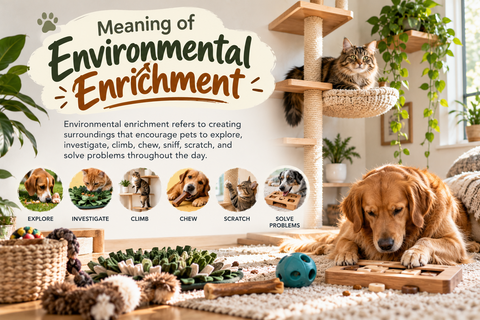
Which Is Better for Food Enrichment?
Both can work.
For example, small pieces of freeze-dried beef liver may be useful in scent-searching games because of their distinctive aroma.
Chicken hearts may provide another texture for treat puzzles or reward-based activities.
You can also rotate the two across different enrichment sessions.
The amount of food doesn't necessarily increase.
The sensory experience changes.
That's one of the simplest ways to make treat time more interesting.
Can Puppies Eat Beef Liver and Chicken Hearts?
Appropriately prepared beef liver and chicken hearts may be offered in small portions to puppies eating a complete and balanced growth diet.
However, puppies have specific nutritional requirements.
Treats shouldn't replace meaningful portions of their primary food.
Beef liver deserves particular moderation because of its concentrated nutrients.
Choose pieces appropriate for the puppy's size and chewing ability.
If you're uncertain about portions or dietary suitability, consult your veterinarian.
Do Freeze-Dried Treats Have the Same Nutrients as Fresh Organs?
Freeze-drying removes moisture while retaining much of the original food's structure and many nutrients.
However, some nutrient changes can occur during processing and storage.
Because most of the water is removed, freeze-dried foods are more concentrated by weight than their fresh counterparts.
That matters when comparing serving sizes.
An ounce of freeze-dried liver isn't equivalent to an ounce of fresh liver in terms of the amount of original tissue represented.
Always use the specific product's feeding directions and nutritional information when available.
Are Single-Ingredient Treats Better?
Single-ingredient treats offer a particular advantage:
Simplicity.
If the ingredient list says beef liver, you know which animal tissue you're feeding. If it says chicken hearts, you know that too.
That makes it easier to compare proteins, rotate animal tissues, and understand what's in the treat bag.
However, single-ingredient doesn't automatically mean nutritionally complete or appropriate for every dog.
Treats should still complement a balanced primary diet.
Best Single-Ingredient Dog Treats: How to Choose the Right Protein – Raw Paws Pet Food
You Don't Have to Choose Just One
This may be the simplest answer.
If your dog enjoys both treats and tolerates them well, there's no reason you must permanently choose between beef liver and chicken hearts.
They can serve different roles.
For example:
Beef Liver: Occasional high-value training reward.
Chicken Hearts: Everyday treat rotation in appropriate portions.
Chicken Breast: Familiar muscle-meat reward.
Whole Minnows: Fish-based variety.
Now you're introducing different animal tissues and proteins without relying on complicated multi-ingredient treats.
Let Your Dog Help Decide
Try offering both treats during separate sessions.
Pay attention to which one creates more interest.
Does your dog respond immediately to beef liver?
Do they seem especially excited about chicken hearts?
Does one work better during training?
Does your dog prefer one texture?
Those observations can help you assign each treat a useful role.
You may find that your dog prefers liver during challenging training but happily accepts chicken hearts for everyday rewards.
That's a perfectly useful result.
Two Organ Treats, Two Different Jobs
At Raw Paws Pet Food, our freeze-dried animal treats make it easy to explore different parts of the animal without complicated ingredient lists.
Freeze-Dried Beef Liver provides a richly aromatic, nutrient-dense secreting organ.
Freeze-Dried Chicken Hearts offer a muscular organ with a different nutritional profile and naturally occurring taurine.
Both can be used for training.
Both can become meal toppers.
Both can contribute to food enrichment.
But they don't have to serve identical purposes.
If you're looking for an occasional, highly aromatic reward, beef liver may be an excellent choice.
If you're looking for another animal-tissue treat with a muscle-like nutritional profile, chicken hearts may fit beautifully.
And if your dog loves both?
Rotate them.
Because the best whole-food treat routine doesn't require choosing one animal tissue forever.
Sometimes the most interesting variety comes from understanding how different parts of the animal bring different things to the bowl.
Comments (0)
There are no comments for this article. Be the first one to leave a message!