

Walk through the natural dog chew section and things get confusing quickly.
They all give dogs something to chew, but that's about where the simple comparison ends.
Some are gradually consumed.
Others are primarily designed for persistent gnawing.
Some provide lighter crunch.
Others become an entire chewing project.
And even two chews from the same animal can create completely different experiences because they're made from different tissues.
So instead of asking:
"What's the best dog chew?"
Start with:
"What kind of chew is this—and how is my dog supposed to interact with it?"
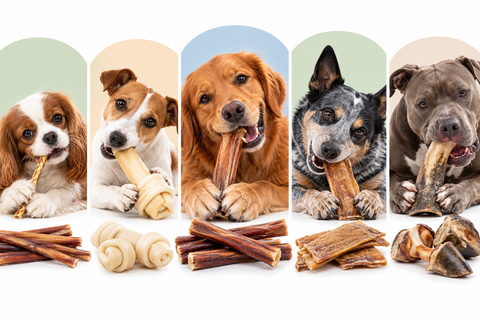
Here's your guide to the major natural dog chew types.
Bully Sticks: The Familiar Beef Chew
Bully sticks are made from beef pizzle.
They're one of the most recognizable natural dog chews because they combine a simple animal-based ingredient with an extended chewing experience.
A bully stick begins relatively firm.
As your dog chews, saliva gradually softens the surface and the dog works through the tissue.
Bully sticks also come in different:
- Lengths
- Thicknesses
- Sizes
That makes them particularly easy to match to different dogs.
A gentle chewer may be perfectly satisfied with a thinner stick.
A determined chewer may benefit from a thicker or jumbo option.
Best fit: Dogs that enjoy a gradually consumable stick-style chew.
Collagen Sticks: Same Animal, Different Tissue
Collagen sticks may look somewhat similar to bully sticks, but they're not the same product.
Instead of beef pizzle, collagen sticks are made from collagen-rich beef tissue.
That gives them a different structure and chewing texture.
For owners already feeding bully sticks, collagen sticks provide an easy way to introduce variety without necessarily changing the animal protein.
Beef stays on the menu.
The tissue changes.
So does the chewing experience.
Best fit: Dogs that enjoy stick-shaped natural chews but could use a different texture in the rotation.
Bully Sticks vs. Collagen Sticks: Which Is Better for Dogs? – Raw Paws Pet Food
Beef Cheek Rolls: The Bigger Project
A beef cheek roll creates a dramatically different experience from a narrow stick.
These chews are made from beef cheek tissue that's prepared and rolled into a substantial shape.
Instead of simply progressing from one end toward the other, dogs can work:
Edges.
Outer sections.
Different sides.
Softened areas.
The broad rolled structure gives them more surface area to investigate.
For dogs that like settling down with something substantial, beef cheek rolls can turn chew time into a project.
Best fit: Persistent chewers that enjoy larger, more involved chewing activities.
Traditional Rawhide: The Classic Hide-Based Chew
Rawhide is made from the inner layer of animal hide, most commonly cattle hide.
Traditional rawhide can be constructed in several ways.
It may be:
Rolled.
Folded.
Twisted.
Knotted.
Layered.
Those different constructions influence how the product behaves as the dog works through it.
Saliva gradually softens the hide, and dogs gnaw and manipulate the material throughout the session.
Because rawhide products vary significantly in construction, it's useful to look beyond the word rawhide and understand the specific product you're buying.
Best fit: Dogs whose chewing style appropriately matches the specific rawhide construction and who are supervised throughout use.
Compressed Rawhide: Rawhide With More Density
Compressed rawhide begins with the same general material category as traditional rawhide.
The difference is construction.
Prepared hide material is pressed tightly together under pressure to create a dense structure rather than relying primarily on rolled, folded, or knotted layers.
That density gives dogs something they have to gradually:
Gnaw.
Scrape.
Soften.
Rotate.
Work through.
At Raw Paws Pet Food, our compressed rawhide is sourced from India using hides from free-range cattle raised without antibiotics or added hormones. No bleach is used in processing, and the finished chews are inspected and hand-packed in Indianapolis.
Best fit: Methodical chewers that enjoy persistent gnawing and appropriately work through dense hide-based chews.
What Is Compressed Rawhide? Compressed vs. Traditional Rawhide – Raw Paws Pet Food
Cow Ears: A Lighter, Crunchier Chew
Not every dog needs a massive chewing project.
Cow ears provide a lighter chewing experience with a shape and texture completely different from sticks and rolls.
They're:
Broad.
Relatively thin.
Easy to grip.
Naturally variable in shape.
Dogs that enjoy crunching may appreciate ears when you want something more substantial than a quick treat but lighter than a dense long-lasting chew.
Best fit: Gentle to moderate chewers and dogs that enjoy lighter, crunchy natural chews.
Pig Ears: Another Classic Ear Chew
Pig ears offer another recognizable animal-based chewing experience.
Like cow ears, their flatter structure creates a different physical challenge from bully sticks or collagen sticks.
The dog can work:
Edges.
Corners.
Different sections.
Because the shape is broad rather than narrow, dogs may use a different chewing technique entirely.
Best fit: Dogs that enjoy crunchy, flavorful chews without necessarily needing maximum durability.
Lamb Ears: A Smaller Ear Option
Lamb ears introduce another protein and typically provide a smaller chewing experience than larger cattle ears.
That can make them especially interesting for smaller dogs or owners looking to add another animal source to the chew rotation.
Again, the value isn't simply duration.
Different animal tissues, shapes, and textures create different experiences.
Best fit: Smaller dogs, lighter chewers, and dogs that enjoy crunchy ear-style chews.
Yak Chews: Dense and Built for Persistent Gnawing
Yak chews are completely different from animal-tissue chews like bully sticks or ears.
They're traditionally made from hardened milk-based ingredients, creating an extremely dense chew.
Dogs generally work the surface gradually rather than quickly consuming large sections.
That can make yak chews appealing to dogs that enjoy persistent gnawing.
Because they're particularly firm, owners should consider their dog's chewing technique and teeth when determining whether this type of chew is appropriate.
Best fit: Dogs that enjoy firm, persistent gnawing and appropriately handle dense chews.
Water Buffalo Horns: A Different Kind of Chewing Experience
A horn isn't really a traditional treat at all.
It's a natural structure designed primarily around gnawing.
Water buffalo horns give dogs opportunities to:
Scrape.
Gnaw.
Explore edges.
Reposition.
Return to different areas.
Rather than quickly consuming the entire product, many dogs interact with a horn over extended periods.
The structure makes it especially different from softer edible chews.
Best fit: Appropriate dogs that enjoy persistent gnawing rather than quickly consuming a chew.
Lamb Horns: Similar Concept, Different Size and Source
Lamb horns create another horn-based chewing experience.
They offer the natural shape and structure of horn while introducing a different animal source and potentially different dimensions from larger buffalo options.
As with any particularly firm natural chew, owners should evaluate the individual dog's chewing intensity and supervise use.
Best fit: Dogs that enjoy natural horn structures and persistent gnawing.
Cow Hooves: Hollow Chews With Multiple Possibilities
Cow hooves provide another distinctive natural structure.
Their hollow center creates opportunities beyond ordinary chewing.
They can be offered as a chew or, depending on the specific product, filled with appropriate foods to create another enrichment experience.
Raw Paws also offers filled hoof options such as Peanut Butter Stuffed Hooves and Bacon & Cheese Stuffed Hooves, adding another dimension to the activity.
The hoof itself encourages gnawing while the filling gives dogs an additional reason to investigate the center.
Best fit: Dogs that enjoy firm gnawing and interactive stuffed-chew experiences.
Camel Skin Chews: Another Hide-Based Option
Camel skin provides a different hide-based chew for owners looking beyond more familiar cattle products.
Its structure and texture create another chewing experience while introducing a less commonly encountered animal source.
For dogs that enjoy hide-style chews, camel skin can help add variety to the chew cabinet.
Best fit: Dogs that enjoy natural hide-based chews and owners looking for a different protein source.
Beef Headskin: Dense Beef-Hide Chewing
Beef headskin offers another beef-based hide chew.
Like other skin and hide products, it creates a different physical experience from muscle or pizzle-based treats.
Dogs gradually work through the dense material, making it useful for owners who want another substantial beef chew in the rotation.
Best fit: Dogs that enjoy persistent hide-based chewing.
What About Marrow Bones?
Bones belong in their own category.
Recreational marrow bones aren't the same as edible chews like bully sticks.
Their purpose is primarily:
Gnawing.
Licking.
Scraping.
Exploring.
Dogs may spend considerable time working around the bone and accessing marrow, but the dense bone itself isn't intended to be consumed like a bully stick.
Because hard bones can present dental risks for some dogs, selecting an appropriate product and supervising the session are important.
Best fit: Appropriate dogs that enjoy supervised recreational bone chewing.
Edible Bones Are Different Again
Raw meaty bones such as appropriately sized poultry necks belong to a different category from recreational bones.
They're intended to be consumed as part of an appropriately balanced feeding approach rather than simply serving as long-lasting recreational chews.
That's why "bone" doesn't automatically tell you how a product should be used.
The Difference Between Recreational Bones and Edible Bones – Raw Paws Pet Food
Which Chews Are Edible?
This is where understanding the product becomes particularly important.
Different natural chews break down differently.
A bully stick is gradually consumed as digestible animal tissue.
Collagen and cheek products create their own edible chewing experiences.
Rawhide behaves differently, with small swallowed pieces generally passing rather than digesting like ordinary meat tissue.
Horns and recreational bones are primarily about gnawing rather than consuming the entire structure.
Don't assume every product in the chew aisle is meant to disappear the same way.
Which Chew Lasts the Longest?
There's no honest universal answer.
Chew time depends on both the product and the dog.
Important variables include:
- Material
- Size
- Thickness
- Density
- Construction
- Dog size
- Jaw strength
- Chewing intensity
- Individual technique
A cow ear might last one gentle dog surprisingly long.
A power chewer could finish it quickly.
A beef cheek roll may become a multi-session project for one dog and a considerably shorter experience for another.
Your dog's history is often the best predictor.
A Quick Way to Think About the Categories
If your dog prefers lighter crunch, consider ears.
If your dog likes gradually consumable sticks, consider bully sticks or collagen.
If your dog wants a larger chewing project, consider beef cheek rolls.
If your dog enjoys dense hide-based gnawing, compressed rawhide may fit.
If your dog prefers persistent firm gnawing, yak chews or appropriate horns may offer another experience.
If your dog loves licking and recreational gnawing, appropriately selected recreational bones or hooves create another category entirely.
These aren't rankings.
They're different jobs.
Build a Chew Cabinet, Not a Single Favorite
Dogs don't necessarily need one chew for life.
A varied rotation might look like:
Monday: Bully Stick
Wednesday: Cow Ear
Friday: Collagen Stick
Weekend: Beef Cheek Roll or another appropriate longer activity
Another week might introduce compressed rawhide, yak chews, or another option that fits your dog.
Rotation changes:
Texture.
Shape.
Density.
Animal tissue.
Chewing technique.
That keeps natural chewing from becoming the exact same experience every time.
Let Your Dog's Chewing Style Guide You
The package can tell you what the chew is made from.
Your dog tells you whether it's a good match.
Watch:
Do they nibble?
Crunch?
Gnaw?
Scrape?
Try to tear pieces?
Finish quickly?
Return later?
Those behaviors help identify whether your dog is a gentle, moderate, persistent, or power chewer.
Best Natural Dog Chews by Chewing Style: Gentle to Power Chewers – Raw Paws Pet Food
Supervision Connects Every Category
The chews may be different.
This rule isn't.
Supervise your dog.
Monitor how the product changes.
Choose an appropriate size.
Remove pieces that become unsuitable.
Take edible chews away before the remaining portion becomes small enough to swallow whole.
Follow the manufacturer's instructions for the specific product.
And remember that a dog can interact safely with one type of chew while handling another completely differently.
Every new chew deserves observation.
There's More Than One Way to Satisfy a Dog That Loves to Chew
The natural dog chew category can look complicated because there are so many options.
But those differences are actually useful.
A bully stick doesn't need to behave like a beef cheek roll.
A cow ear doesn't need to last like compressed rawhide. A yak chew doesn't need to feel like collagen. Each provides a different experience. At Raw Paws, that's why our chew collection spans Bully Sticks, Collagen Sticks, Beef Cheek Rolls, Compressed Rawhide, Cow Ears, Pig Ears, Lamb Ears, Yak Chews, Water Buffalo Horns, Lamb Horns, Cow Hooves, Camel Skin, Beef Headskin, Marrow Bones, and more.
Dogs don't all chew the same way.
And even the same dog doesn't necessarily want the same chew every time.
Learn the categories.
Watch your dog.
Build some variety.
Because once you understand what each chew actually does, the crowded dog-chew aisle starts looking a lot less confusing—
and a lot more like a menu of different experiences.
Comments (0)
There are no comments for this article. Be the first one to leave a message!